
Following visits to Ishigaki Island, Miyako Island, and Okinawa, the weaving journey continued to Niigata, Japan. Through a weaving experience in Ojiya and craft demonstrations in Shiozawa, participants learned about Echigo jōfu, Ojiya chijimi, and Shiozawa silk textiles. The visits revealed how the snowy environment contributes to textile production and how local traditions are preserved and incorporated into everyday life.
In Hokuetsu Seppu (Snow Country Tales), Suzuki Bokushi describes people making yarn, weaving, washing cloth, and laying it out on the snow, portraying Echigo textiles as creations shaped jointly by people and nature. Although this visit took place in summer, the artisans’ explanations conveyed the inseparable relationship between snow and local life.
Weaving in Ojiya: Precise Pattern Alignment Through Edge Marks
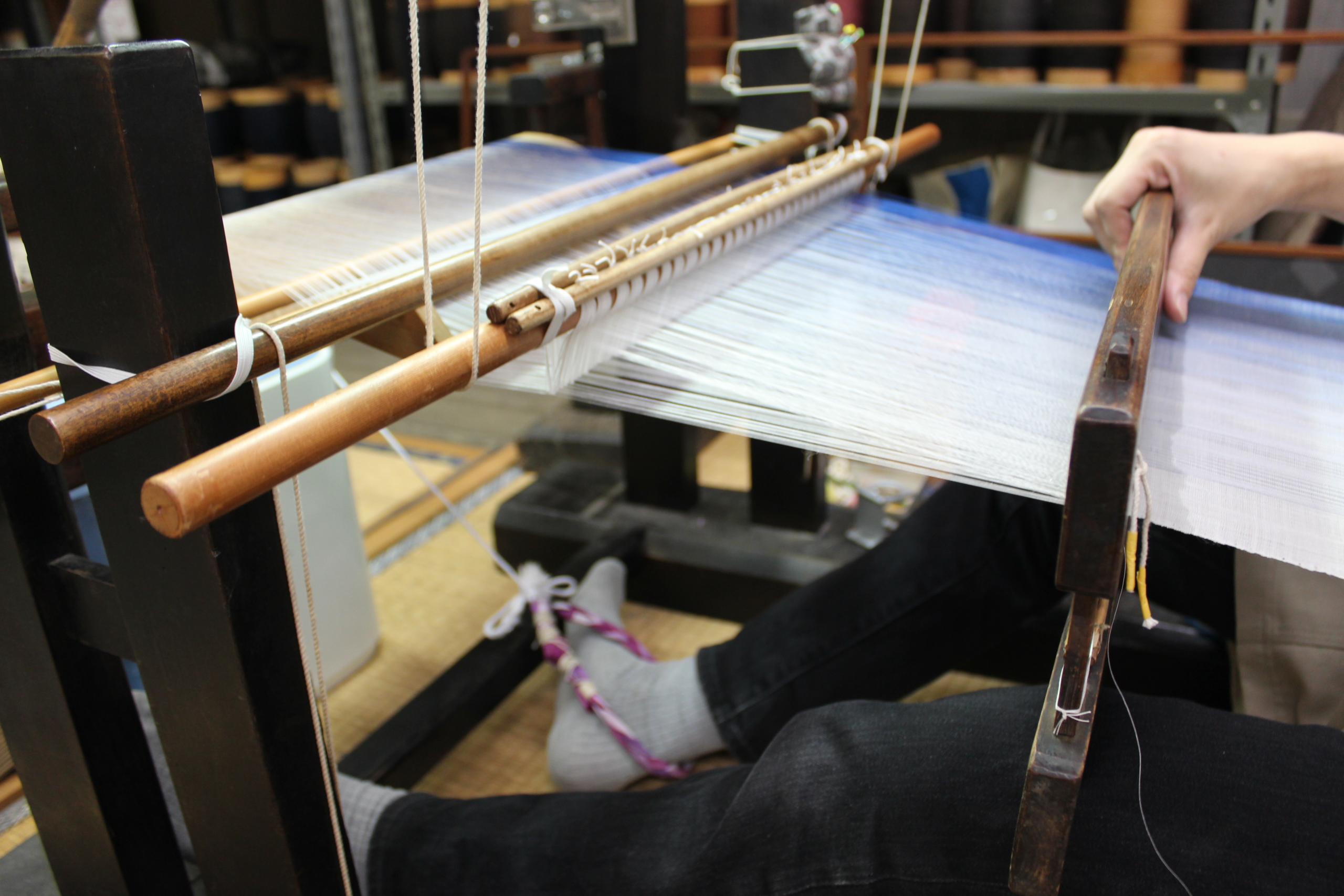
On August 24, participants visited the Ojiya Textile Association for a weaving experience. After selecting patterns, they operated the looms under an instructor’s guidance, using foot pedals to raise the shafts and passing the shuttle by hand to gradually create their own pieces. Even an accompanying family member who had never woven before enjoyed the process with the instructor’s patient support.
A particularly striking discovery was the red and green marks at either end of the weft yarn. By aligning these marks accurately with the edges of the fabric, the pattern gradually took shape. Known as mimijirushi, or edge marks, these guides offered a different approach to pattern alignment from the technique learned on Ishigaki Island, where patterns were created by adjusting the weft’s position.
The instructor explained that, once a pattern is designed, wooden guides called koba jōgi are used to mark the sections of yarn to be dyed or left undyed. The edge marks help the weaver identify the boundaries. Behind this seemingly simple alignment process lies meticulous planning involving design, measurement, and yarn dyeing.
The demonstration also showed how a natural sizing solution made by boiling funori seaweed is used to treat ramie yarn. It helps secure the spliced sections and smooth loose fibers, making the yarn more suitable for weaving. From local materials to tool design, each detail reflected the artisans’ knowledge of fiber characteristics.
After the weaving session, participants learned about the differences between Ojiya chijimi and Echigo jōfu. Ojiya chijimi develops its fine, natural crepe texture through tightly twisted weft yarn and subsequent kneading and washing in hot water, contrasting with the smoother surface of Echigo jōfu. The association also has a retail exhibition space featuring traditional kimono and fabrics alongside contemporary clothing made from bast fibers. These garments retain the materials’ breathability and comfort while bringing traditional textiles into modern wardrobes.
Local Life and Snow Country Streetscapes
After leaving the association, participants visited a nearby farm produce shop and Nishikigoi no Sato, a koi exhibition facility. Local fruit, vegetables, pickles, and koi displays offered a glimpse into Ojiya’s diverse everyday culture. The facility’s water temperature monitoring and use of stable underground temperatures also provided insights into environmental management and energy conservation.
The journey then continued to Shiozawa for a walk along Bokushi Street, named after Suzuki Bokushi. The street maintains a coordinated traditional architectural style, with covered walkways known as gangi extending along the fronts of buildings to allow passage during the snowy season. Framed by mountains and rice fields, the streetscape showed how local residents work together to maintain the living landscape of snow country.
Shiozawa Textiles: Diverse Techniques from Ramie to Silk
At the Shiozawa Textile Museum, the instructor began with ramie processing for Echigo jōfu, demonstrating fiber scraping, hand-splicing, yarn dyeing, and operation of a traditional jibata loom. Foot movements control the opening between the warp threads, while a shuttle that also serves to beat the weft into place distinguishes this method from treadle loom weaving. Cross and tortoiseshell kasuri motifs also illustrated features shared by local textiles.
Snow bleaching is an important finishing process after weaving. The instructor explained how cloth is spread over snow, using natural conditions to whiten the fabric and make its patterns clearer. Dependent on season and weather, this process revealed that snow is an active part of the craft itself.
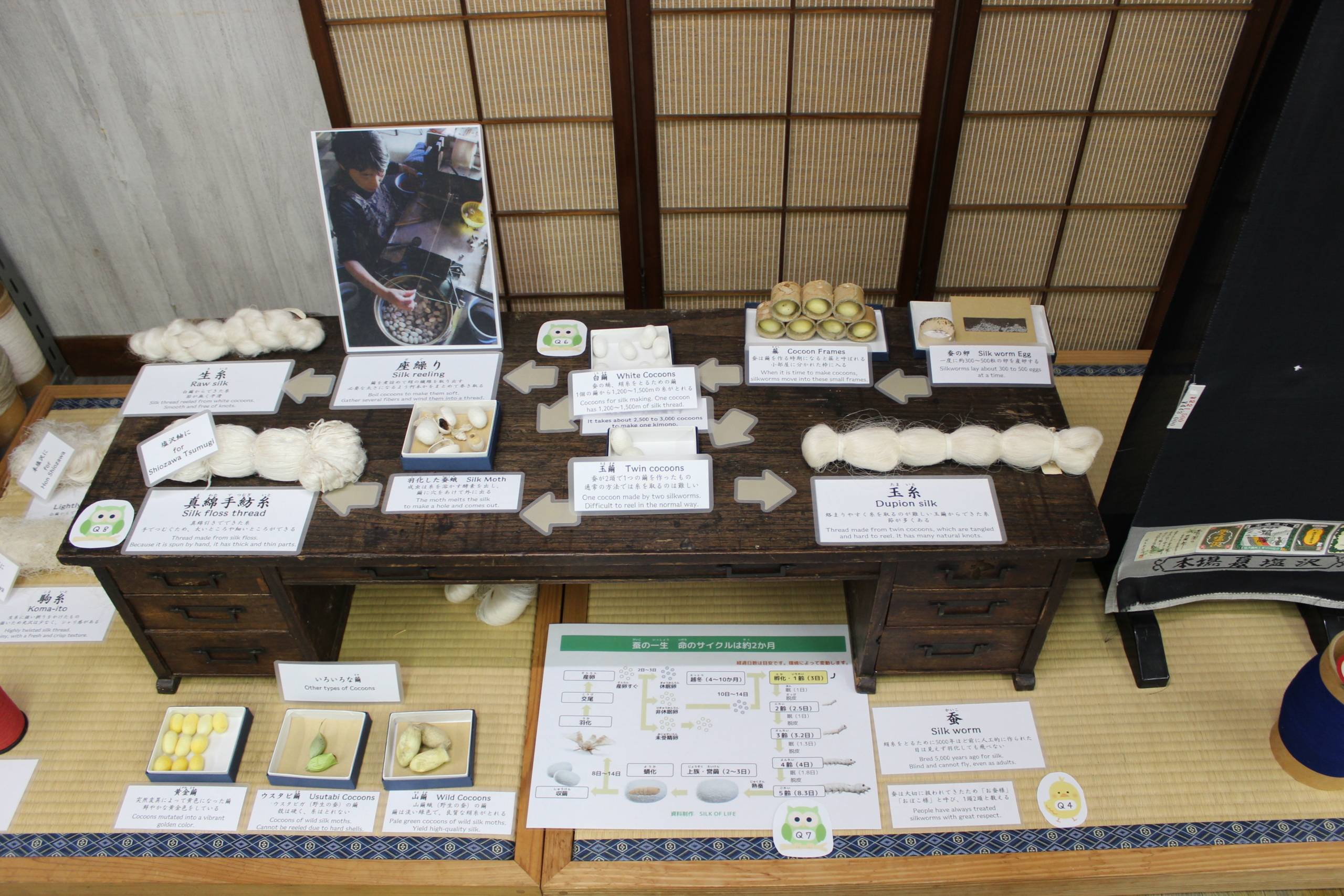
Participants then learned about silk textiles including Shiozawa tsumugi, Hon-Shiozawa, and Natsu-Shiozawa. Demonstrations involving cocoons, yarn making, and weaving helped explain how different methods of processing silk affect the thickness, texture, and uses of the finished fabric. The museum also displayed natural dyes and color samples, including safflower, showcasing the rich palette of Niigata textiles.
From hands-on weaving to craft demonstrations, this journey revealed the precise techniques, knowledge of nature, and local cooperation behind Niigata’s textiles. These experiences will be shared with local partners as references for Atayal weaving education, material applications, and cultural exchange.
Written by Hsu, Yu-Chun
Edited by Li, Ruo-Jia
Photos by Hsu, Yu-Chun