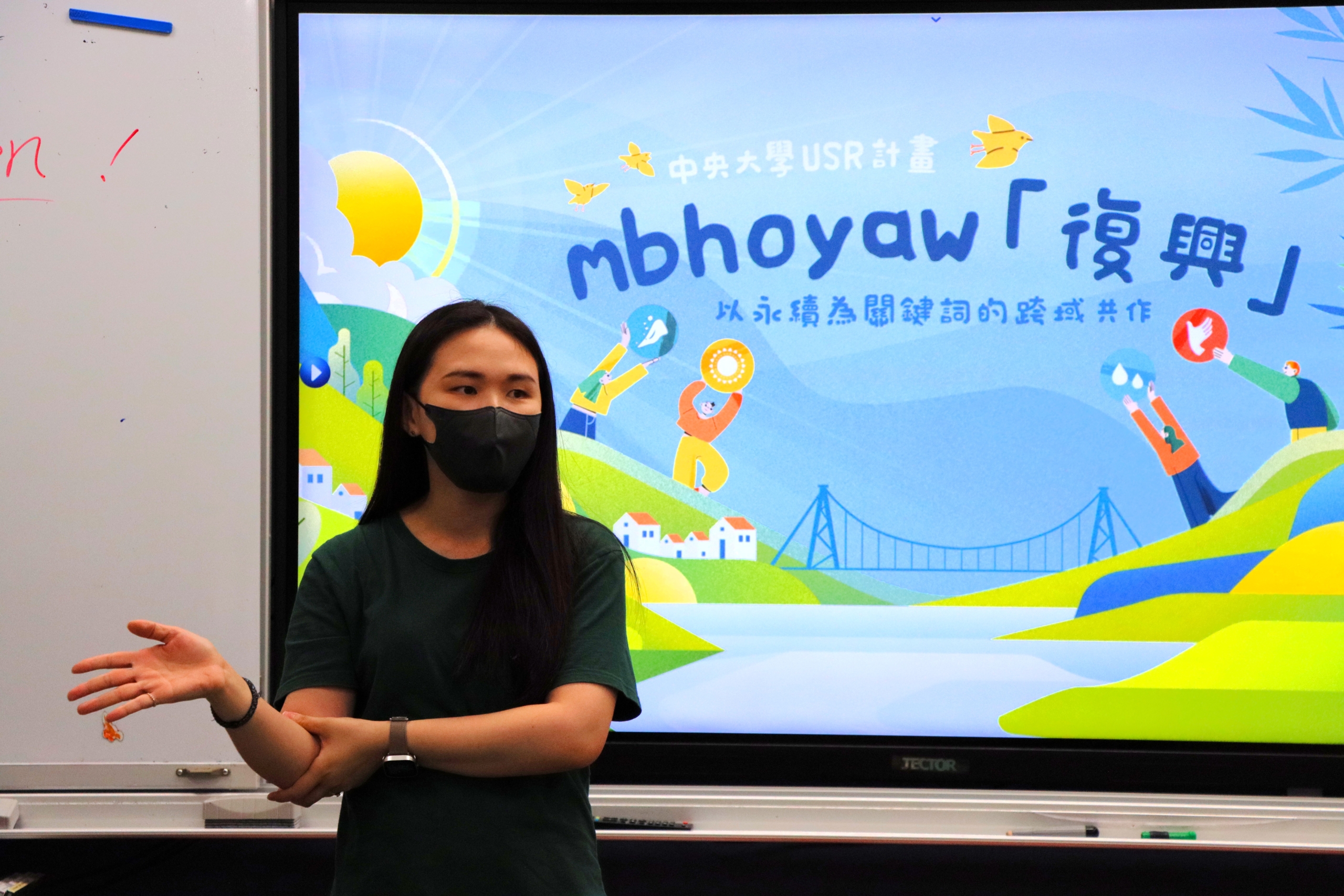
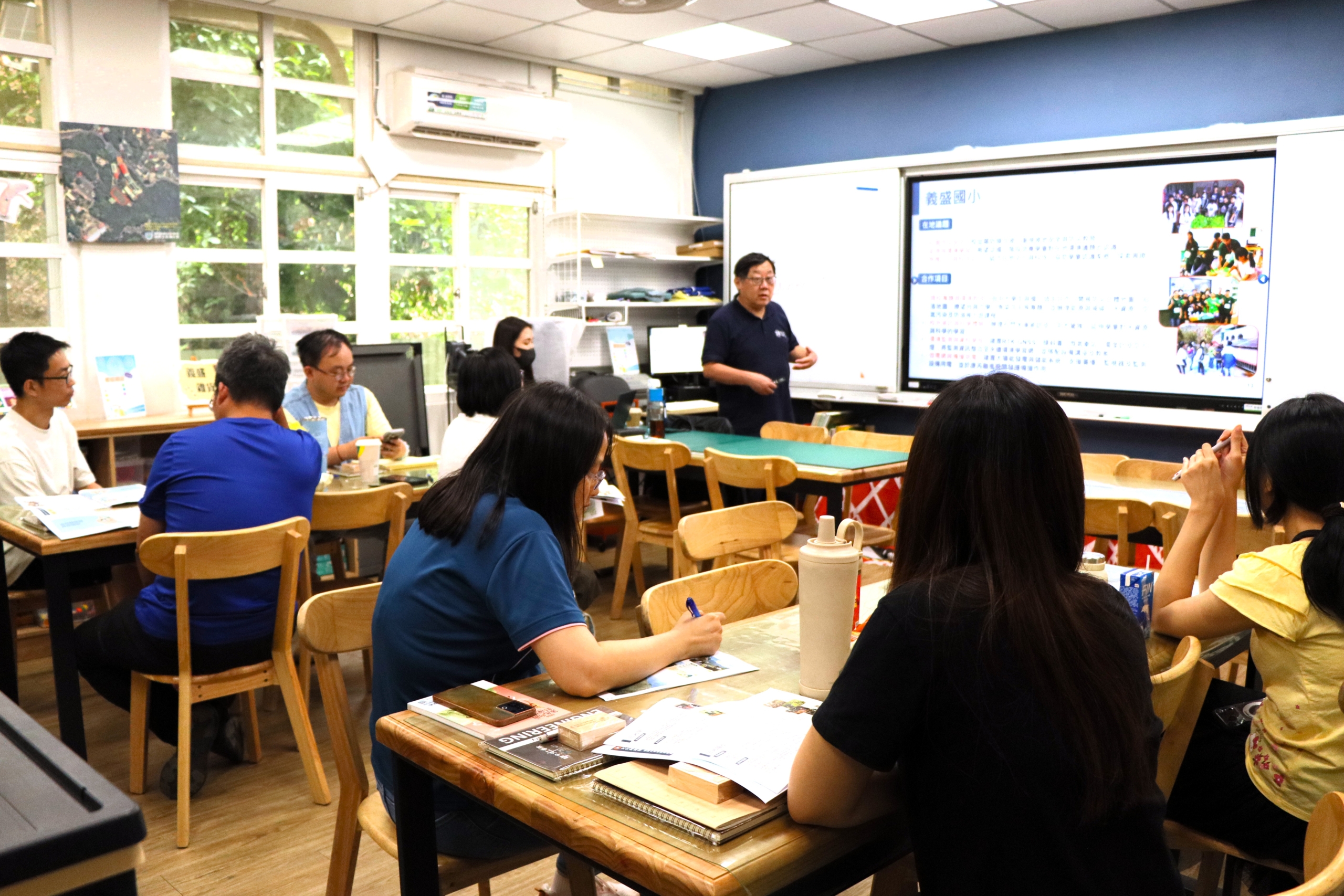
Today’s event was somewhat different from our usual activities. While most previous events involved community elders or children, this session brought us together with the teachers of Yisheng Elementary School. National Central University’s University Social Responsibility (USR) team has worked with the school for many years, providing teaching resources and support. With more new teachers joining the school, the team took this opportunity to introduce the project’s main areas of work, achievements, and future plans. The session helped teachers learn more about the resources available and opened up further opportunities for collaboration.
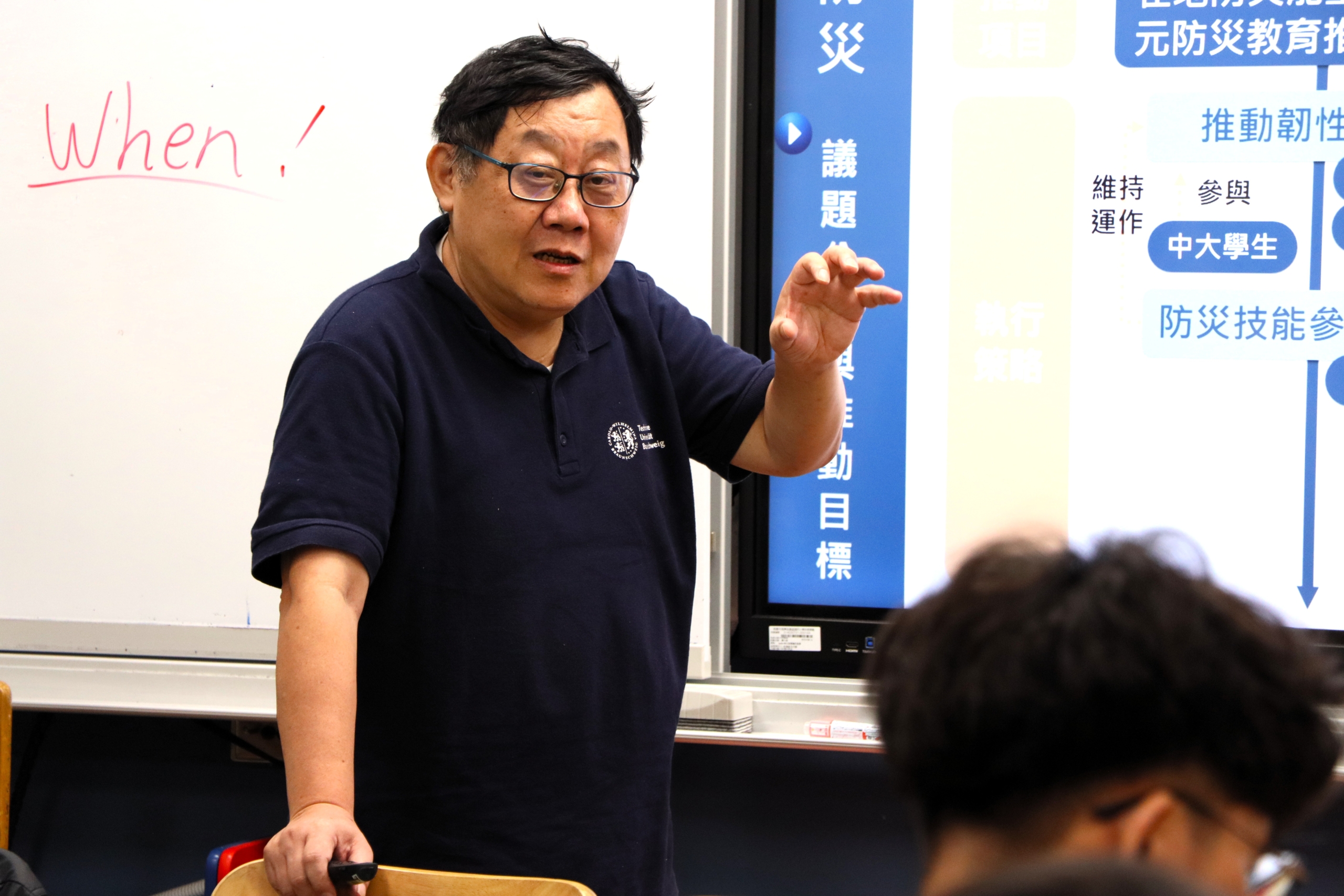
The presentation began with an overview of the NCU USR team’s development and how it applies university expertise to local needs. Since beginning its work in Fuxing District in 2020, the team has expanded from disaster preparedness education into energy, the environment, culture, and local industries. I was particularly impressed by its applications of smart disaster prevention. Monitoring equipment, such as tiltmeters and rain gauges, helps track environmental changes, while solar power and microgrids enable schools to keep essential equipment, including public address systems, operating during power outages. This helped me understand that disaster preparedness involves more than raising awareness. It also requires monitoring technologies, equipment, and energy planning to strengthen schools’ ability to respond to emergencies.
Beyond disaster preparedness and energy, the team also promotes environmental education and local culture. For example, water and air quality monitoring helps students understand changes in their surroundings. The team also explores ways to turn residual bamboo resources into materials such as bamboo charcoal and bamboo powder, putting resource reuse into practice. Cultural initiatives incorporate traditional Atayal weaving, community mapping, and augmented reality (AR) tours, offering students different ways to learn about their hometown. These efforts bring university expertise into the classroom while connecting learning more closely with students’ local environment and culture.
During the final question-and-answer session, one teacher asked how to use the school’s AR equipment. Although the equipment is already available, the school still lacks content that can be imported and used in lessons. Integrating the technology into teaching therefore remains a challenge. This made me realize that digital education requires more than hardware. Teaching materials, content integration, and practical support are also needed for the equipment to serve its educational purpose.
Another teacher shared the difficulties of planning local walking tours. With limited suitable locations near the school, taking students farther into the mountains could mean spending more time traveling and less time exploring and learning. Both sides will therefore need to discuss how to design suitable routes and lessons within these limits. For future collaboration, the team hopes to connect teachers with university students or graduate students whose expertise matches their teaching needs. It also plans to compile examples of tour guiding and interview activities previously developed with upper-grade students at other schools, giving Yisheng Elementary School a useful reference and allowing these experiences to support further learning.
Overall, this event gave me a fuller understanding of the NCU USR team’s work. In the past, I mainly participated in carrying out activities and had fewer opportunities to understand their purposes and accumulated achievements. Through this session, I came to appreciate that the value of the USR project lies in ongoing dialogue, understanding local needs, and working with frontline teachers to find practical solutions. Collaboration should also help schools build their capacity to use resources and develop curricula independently, so that the work can continue into the future. I hope university expertise will become more deeply integrated into local education, supporting teachers in creating more diverse learning opportunities that respond to students’ needs.
Written by Hsu, Chia-Jou
Edited by Li, Ruo-Jia
Photos by Hsu, Chia-Jou