
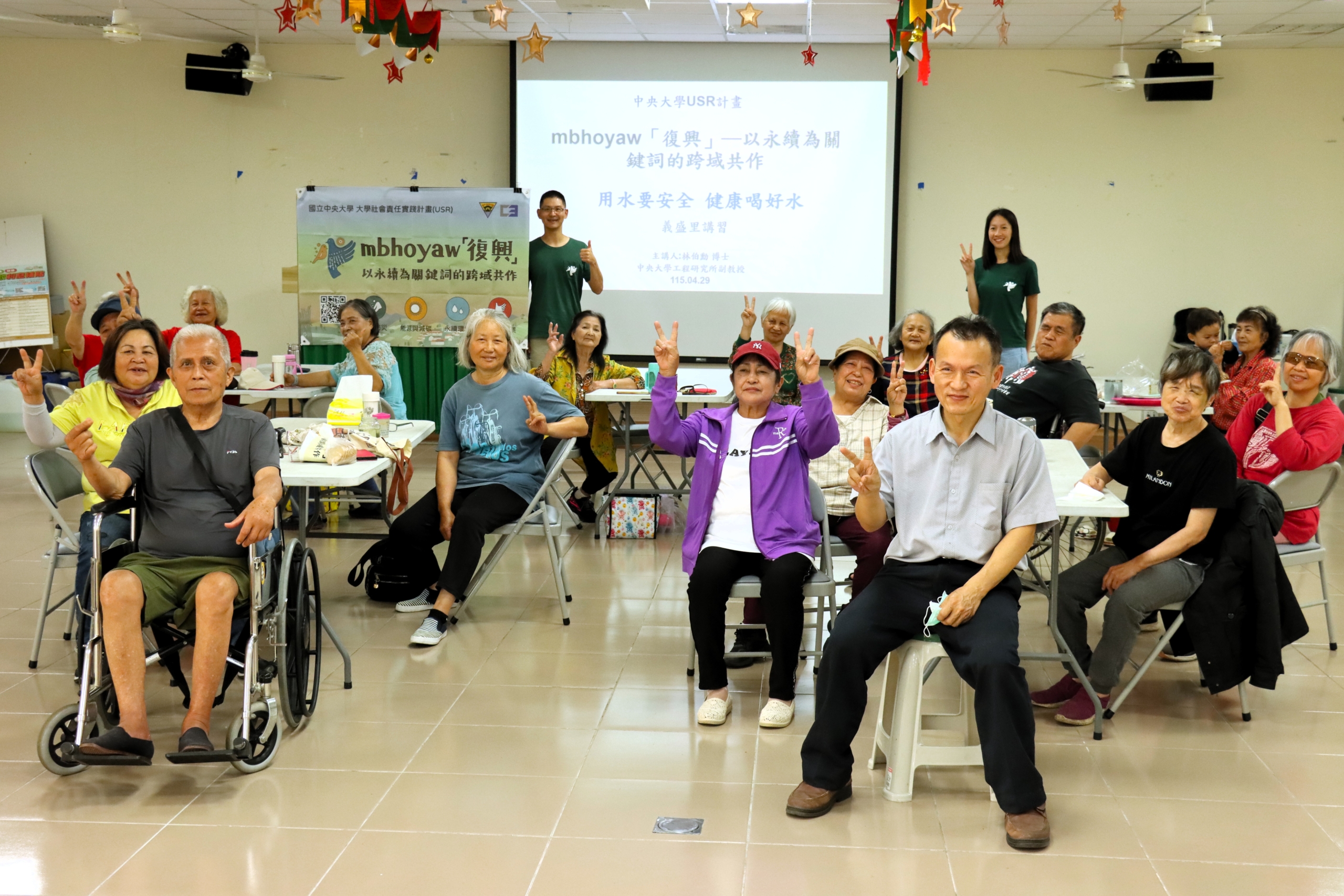
Early this morning, under clear skies and warm sunshine, we enjoyed the beautiful scenery along the way as we smoothly arrived at Yisheng Village. Upon entering the community center, we saw that the residents were already seated in order, quietly waiting for the lecture to begin. After quickly setting up the venue, the event officially commenced.
The theme of today’s program was “Safe Water Use: Drink Healthy, Drink Smart.” At the beginning of the lecture, Professor Lin Bo-Hsun introduced basic knowledge about drinking water, including the best times to drink water and why staying hydrated is important for the human body. Throughout the session, Professor Lin actively interacted with the residents through questions and discussions, gradually learning more about their daily water-use habits and perspectives.
The lecture then shifted toward the importance of water sources and water resource management. Professor Lin emphasized that untreated and unboiled mountain spring water can actually pose serious health risks and should never be consumed directly. He also explained in detail the types of bacteria and harmful substances that may exist in spring water, while teaching the residents methods to transform natural spring water into safe drinking water.
During the lecture, I noticed that the residents listened attentively throughout the session. However, when the professor reminded everyone not to drink untreated spring water, the audience reacted rather calmly. I guessed this might be because most residents already maintain good hygiene habits and usually drink filtered water only. In contrast, I was personally quite shocked, since I am exactly the kind of person who enjoys taking a few sips of spring water whenever I go camping in the mountains. I had always thought spring water tasted especially sweet and refreshing, never realizing it could contain so many hidden bacteria and risks. Thankfully, I do not drink it very often.
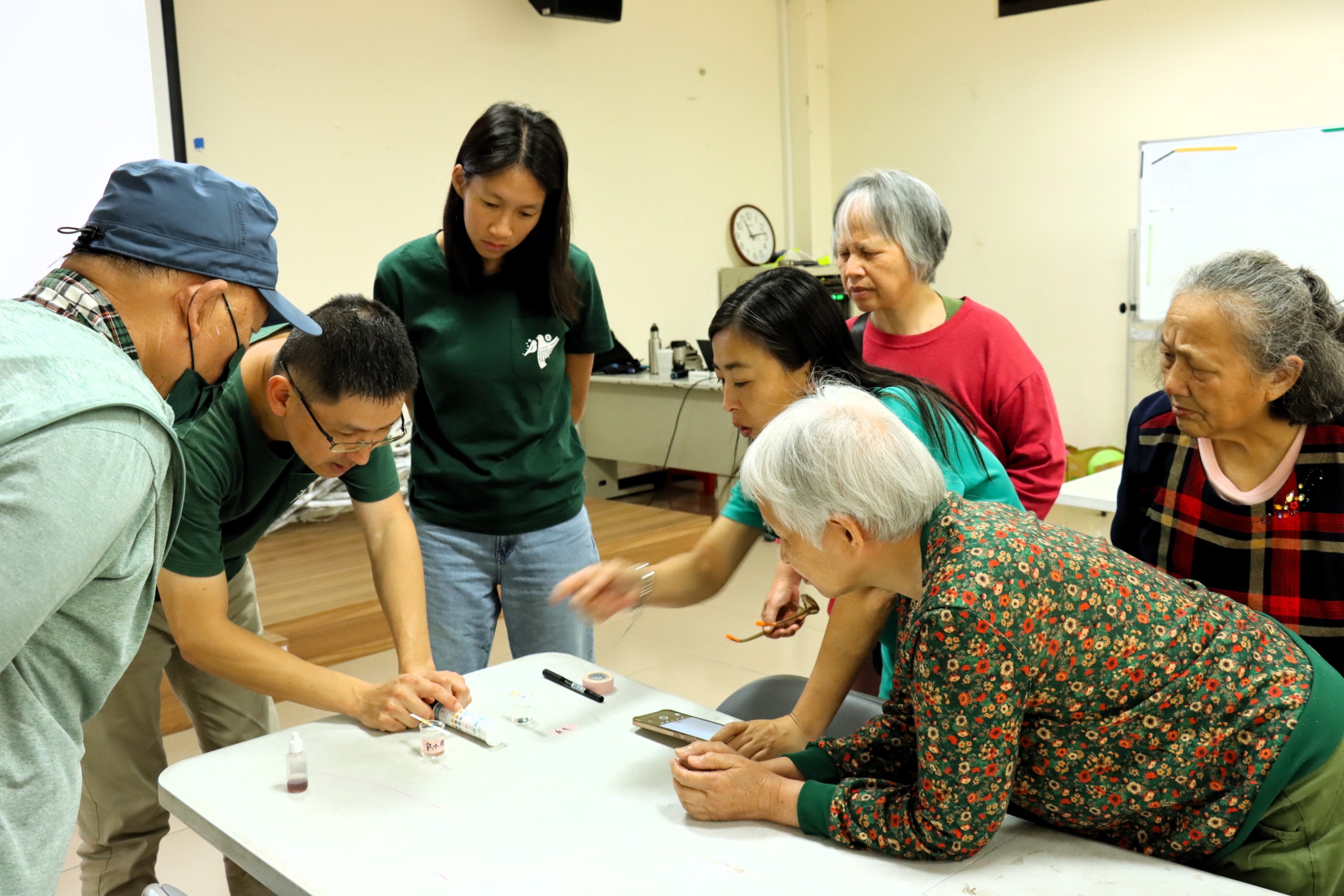
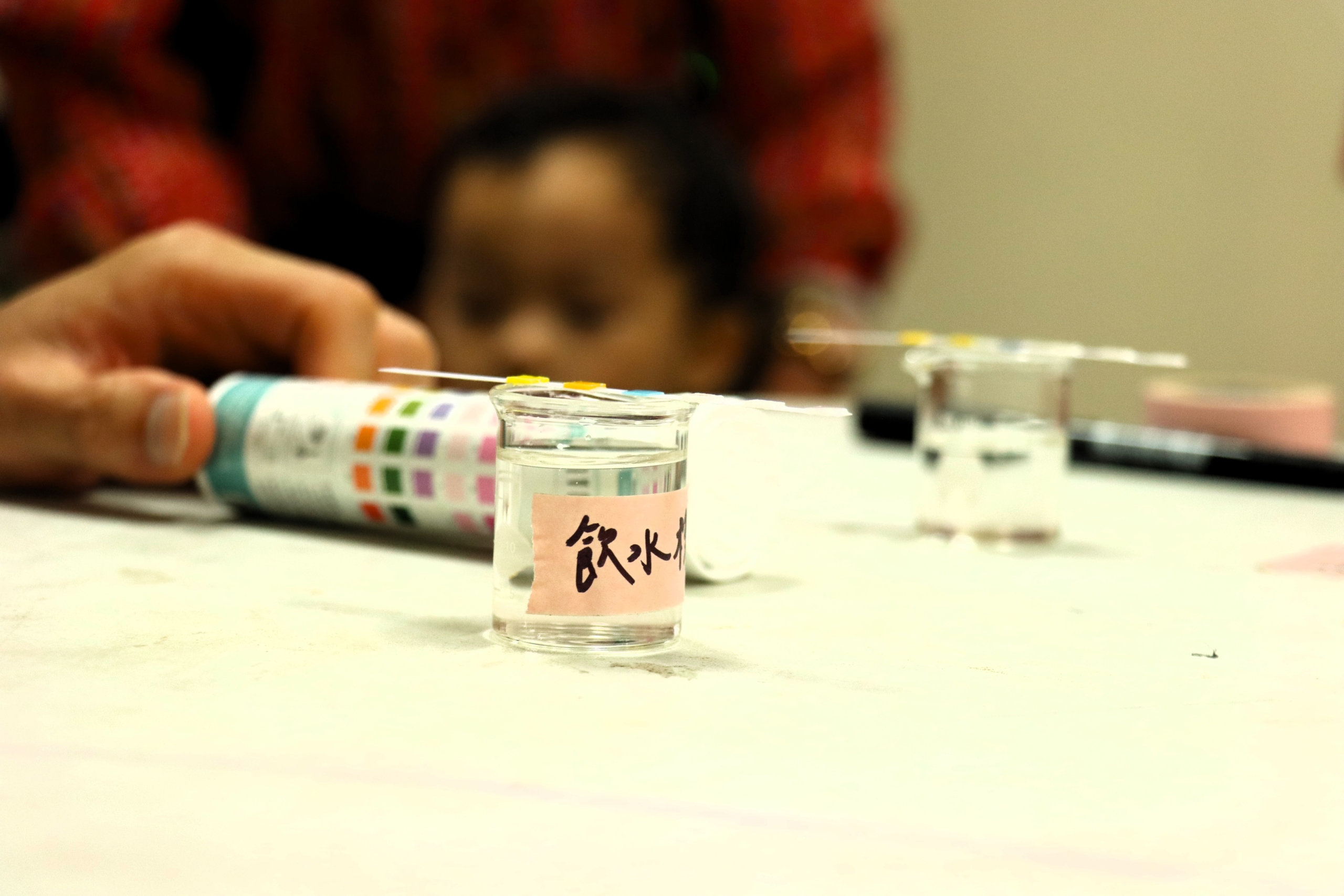
After the lecture, the professor also prepared several simple hands-on experiments for the residents to participate in. First, tap water from the kitchen sink and water from the drinking fountain were each poured into small cups. Testing solutions and pH indicators were then added to observe the color changes. Through these scientific experiments, participants were able to directly understand the differences in water quality and the possible harmful substances that may exist in water sources.
During the experiments, it was clear that every resident was highly engaged. Not only did they listen carefully to the explanations, but they also closely observed each step of the process and frequently raised thoughtful questions. In the final Q&A session, residents enthusiastically continued asking questions one after another, while the professor patiently and thoroughly answered each one. The discussion lasted around fifteen to twenty minutes, demonstrating the residents’ strong curiosity and eagerness to learn. It truly reflected the spirit of “learning throughout life” and brought the event to a perfect conclusion.
After the event, we also had further discussions with Village Chief Wang and learned that the village had already introduced an ultraviolet sterilization system, though the system often experiences clogging issues. In addition, nearby communities have faced problems with contaminated upstream water sources, causing downstream residents to feel unsafe about drinking the water. After hearing about these situations, the teachers expressed their willingness to assist with inspections and investigations. However, since these issues involve many different aspects, they will still require long-term planning and cooperation among multiple parties. I sincerely hope that by the next time we return to this beautiful land, these water-related issues will have been resolved just as successfully as today’s event.
Written by Hsu, Chia-Jou
Edited by Li, Ruo-Chia
Photos by Hsu, Chia-Jou