
As the saying goes, prevention is better than cure—whether we are dealing with illness or natural disasters. This time, as a student reporter, I joined a disaster preparedness education program in Yisheng Village, where we shared disaster prevention knowledge and raised awareness among local senior residents. The timing of the event felt particularly significant to me, as Typhoon Bavi had only recently passed through the area. The powerful winds and heavy rainfall had undoubtedly left their mark on the mountainous landscape.
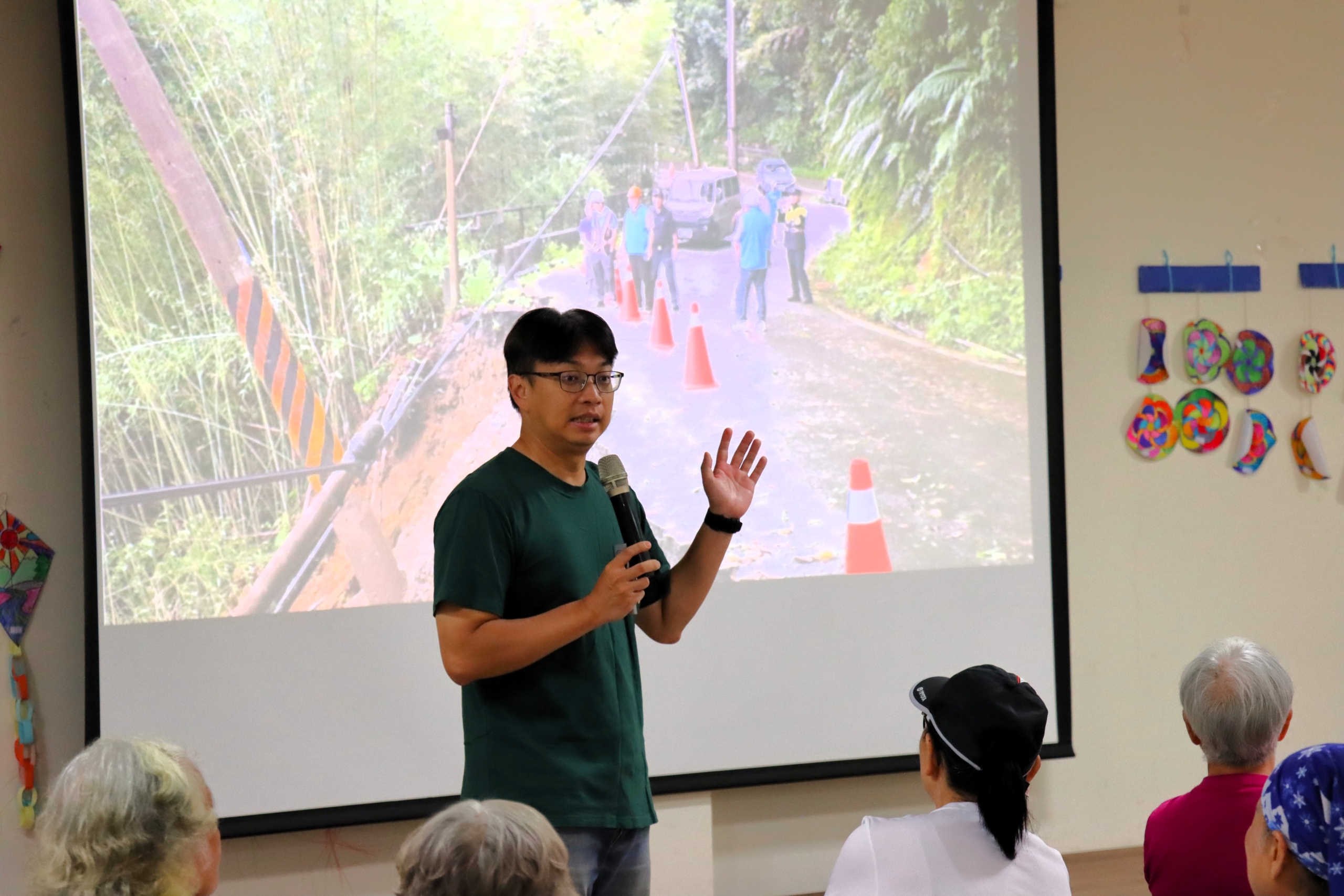
Sure enough, although I had traveled the road to Yisheng Village several times before, this time I encountered signs of a large-scale landslide at a familiar bend. A slope once covered in lush green vegetation had been stripped bare, leaving behind a vast expanse of yellowish-brown earth. The sight was alarming and offered a striking reminder of the destructive power of nature. After a disaster, we are often advised to avoid mountainous areas to reduce the risk of secondary hazards. Yet visiting the community so soon after the typhoon gave me a rare opportunity to witness firsthand both the environment local residents face and the traces left behind by the disaster. It also prompted me to consider an important question: “When facing unpredictable natural disasters, how can we protect residents and minimize potential harm?”
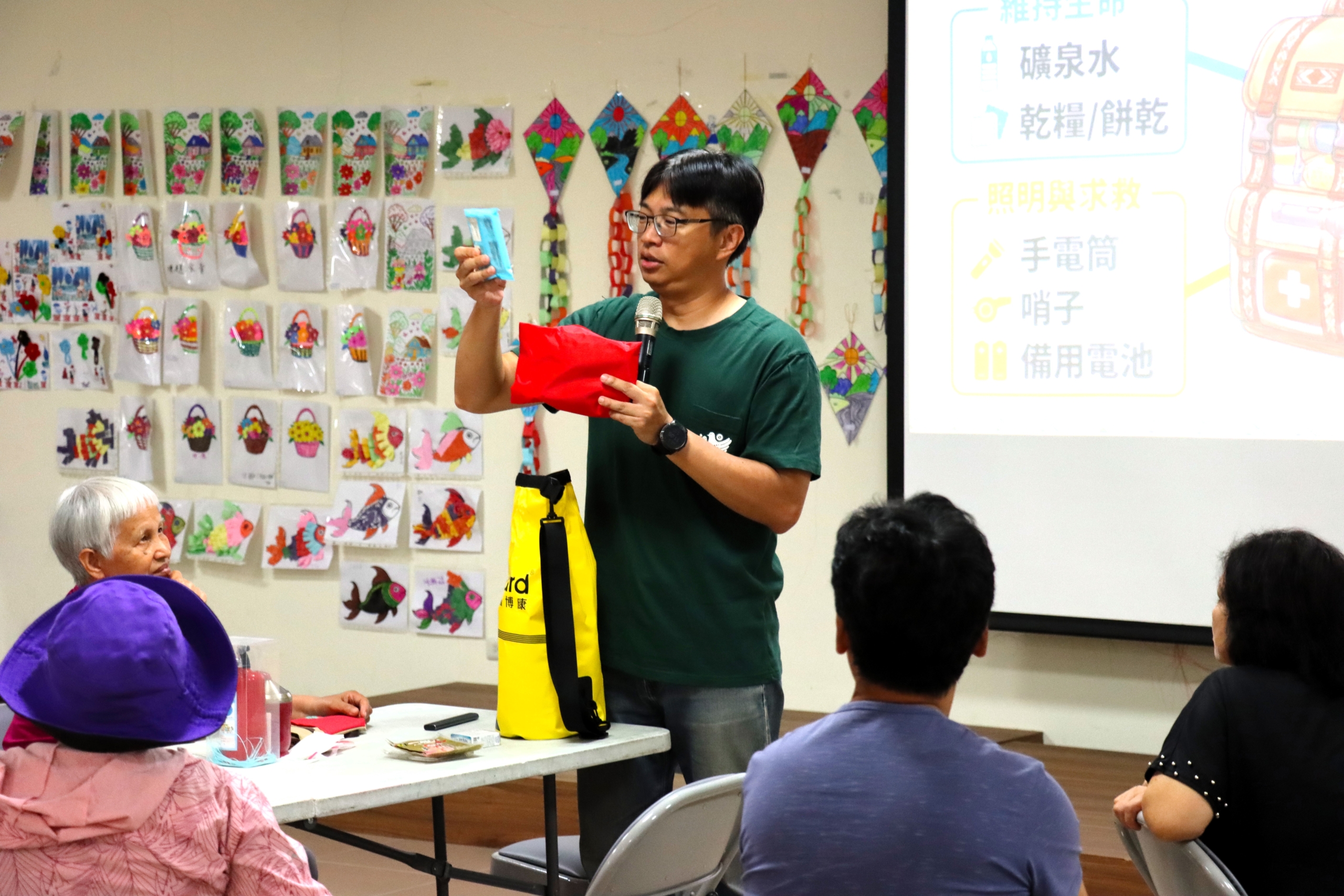
The session was led by Professor Chung from the Department of Civil Engineering, who introduced the senior residents to appropriate responses before, during, and after a disaster. The information was practical and closely connected to everyday life. For example, Professor Chung explained warning signs that may precede landslides or debris flows, such as streams suddenly becoming muddy and carrying large amounts of sediment, or low rumbling sounds coming from the mountains. He also reviewed the earthquake safety procedure “Drop, Cover, and Hold On,” as well as important precautions to take during post-disaster recovery.
For those of us who have received disaster preparedness education since childhood, these concepts and safety procedures may already be familiar. For some senior residents in the community, however, disaster preparedness concepts promoted by the government over the years may not always be easily incorporated into everyday life. When disaster strikes, many people instinctively try to flee the scene as quickly as possible. Yet having the right knowledge beforehand and understanding how to respond appropriately to different types of hazards can significantly improve personal safety. After all, in a stressful emergency, a split-second decision can influence what happens next.
As I listened to the presentation, I began to wonder whether the older members of my own family also had sufficient knowledge of disaster preparedness. Information that seems commonplace to us may not be something everyone has had the opportunity to learn. The next time I return home, I hope to share what I learned with my family so that this knowledge will extend beyond the activity itself and become a practical means of protecting the people we care about.
In addition to Professor Chung’s presentation, the program also provided opportunities for discussion and interaction. During the session, senior residents shared their memories of the devastating 1999 Jiji Earthquake, commonly known in Taiwan as the “921 Earthquake.” As they recalled what had happened, traces of shock and lingering fear could still be heard in their voices. For someone like me, who knows the disaster only through textbooks, news reports, and archival footage, that moment made me realize that even the most detailed written account cannot fully convey the lasting impression left on those who experienced such a disaster firsthand. Although these memories are painful, they also remind us that the lessons of past disasters should not remain confined to history. Instead, they should be transformed into disaster preparedness awareness that is continually renewed and passed down from one generation to the next.
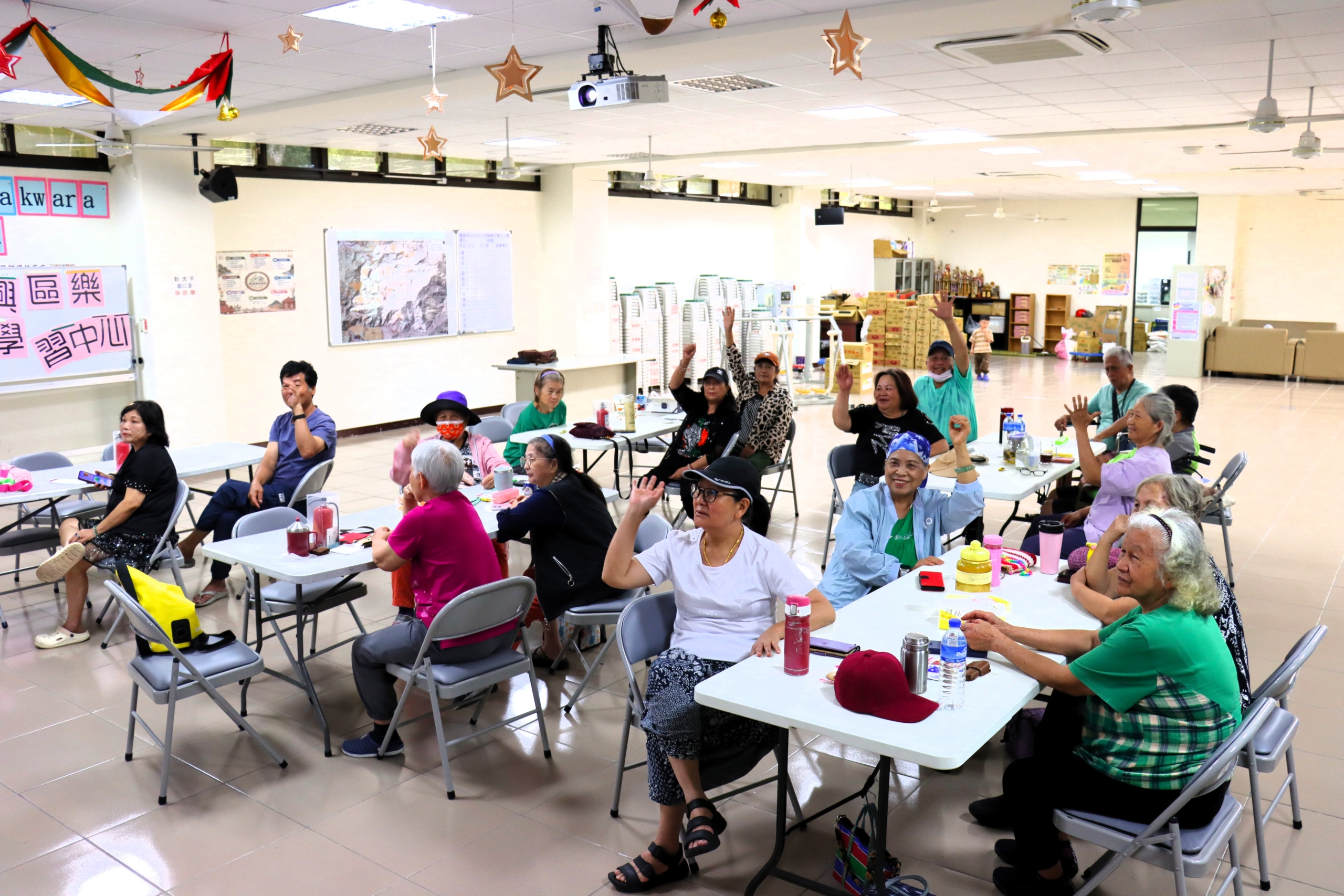
Toward the end of the program, we held a quiz with prizes, and Professor Chung asked me to serve as the judge and ensure that every senior resident had a fair opportunity to participate. Everyone responded enthusiastically. Almost as soon as each question was asked, hands immediately went up, and most of the answers were correct. Seeing how engaged everyone was, I felt confident that the disaster preparedness concepts Professor Chung hoped to convey had gradually taken root through each exchange and interaction.
This experience also made me realize that disaster preparedness education—or indeed any form of education and public outreach—should never be a one-way transfer of information. Through dialogue, sharing, and interaction, abstract knowledge can be transformed into practical skills that people can understand, remember, and apply in their everyday lives.
The village chief’s closing remarks also left a deep impression on me. As she spoke about the typhoon and the evacuation process, the slight tremble in her voice revealed that the fear caused by the disaster had not yet completely faded. She repeatedly emphasized how fortunate they were that everyone had remained safe and expressed her gratitude to the senior residents for cooperating with mandatory evacuation and emergency shelter instructions. It was only after participating in this event that I truly understood just how important mandatory evacuation measures can be for people living in mountainous communities.
Having grown up in a lowland area, I have never had to leave my home because of a natural disaster. For people living in mountainous areas, however, evacuation may become an unavoidable reality whenever a typhoon or torrential rain approaches. Leaving the familiarity of home to seek shelter must bring with it considerable worry and reluctance. This is especially true for residents whose families have lived in the mountains for generations and whose lives are deeply connected to the land. Each evacuation means more than temporarily leaving a house—it means seeking safety while carrying with them a profound concern for the home and land they have left behind.
We may not be able to stop typhoons from arriving, nor can we completely prevent landslides and debris flows caused by torrential rainfall. What we can do, however, is minimize their impact through sustained disaster preparedness education, mutual support among community members, and well-established disaster prevention and emergency response mechanisms.
True disaster preparedness is not only about knowing how to respond when disaster strikes. It is also about continuously building knowledge, preparing in advance, and remaining vigilant in our everyday lives. Creating communities with the capacity for self-directed disaster preparedness and community resilience is far more than a slogan—it is an essential foundation for protecting lives and ensuring the long-term sustainability of the places people call home.
Written by Su, Chi-Hsien
Edited by Li, Ruo-Chia
Photos by Su, Chi-Hsien