
This time, I joined National Central University’s USR team at the Shalunzi Cultural Health Station to share disaster preparedness knowledge with community elders. For many people, Fuxing District may simply mean “a place in the mountains that takes a long time to reach by car.” After visiting, however, I realized that there is a difference between “a long drive” and “an even longer drive.” Just as not every part of Pingtung is close to Kenting, the communities in Fuxing are not all near familiar tourist destinations such as Jiaobanshan and Xiaowulai. Our shuttle traveled deeper into the mountains before finally stopping at a Presbyterian church. Compared with our trip to Yisheng Village, this journey took considerably longer and gave me a clearer sense of the distances between communities. I could not help wondering how much greater the challenges might be for residents living deeper in the mountains if a major disaster occurred. This made the importance of local resilience and emergency preparedness all the more apparent.
We arrived ahead of schedule, giving me some time to look around the station. After chatting with one of the care workers, I gained a better understanding of its daily operations. Besides recording the elders’ health measurements, the staff help with transportation, prepare meals, and organize exercise and recreational activities. What initially appeared to be a gathering place turned out to involve a great deal of thoughtful, ongoing care. Learning how many responsibilities the care workers balance each day deepened my respect for their work.
As the activity’s start time approached, the community elders—the main participants of the day—began arriving. The first to arrive were four grandmothers, and I initially worried that attendance might be low. Fortunately, the number eventually grew to ten, and the room gradually became livelier. Although fewer people attended than at the previous event in Yisheng Village, each person’s stories helped us learn more about life in the community. Glancing at the attendance sheet, I noticed that several absent elders had “farming” written beside their names. At first, I felt it was a pity that they could not join us. Then I thought that still having the energy and strength to tend to familiar farm work was also something to be glad about.
One grandmother arrived a little late. During the break, she shared the reason with the group, sounding both a little shaken and somewhat excited: an unexpected “reptilian visitor” had appeared in her home, and she had needed to wait for the police to help catch the snake. When I was a child, I remembered firefighters being called whenever a snake appeared at school. Hearing that the police had come to help this time surprised me and made me curious about how mountain residents usually seek assistance in such situations. Although I did not know the details of the response, her story reminded me that unexpected situations are often part of everyday life in mountain communities. Alongside earthquakes, typhoons, and debris flows, living safely with the surrounding wildlife is another important aspect of daily life.
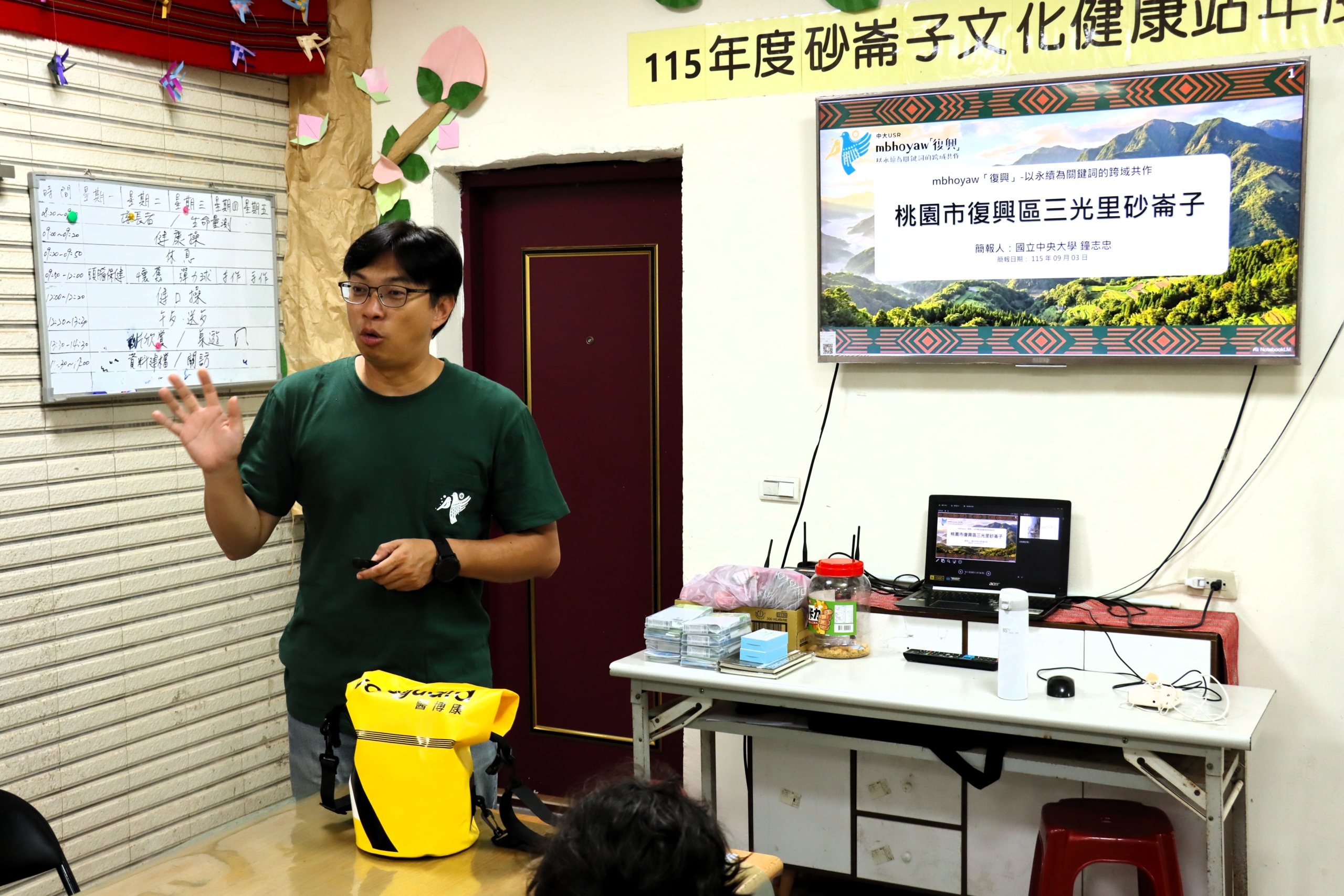
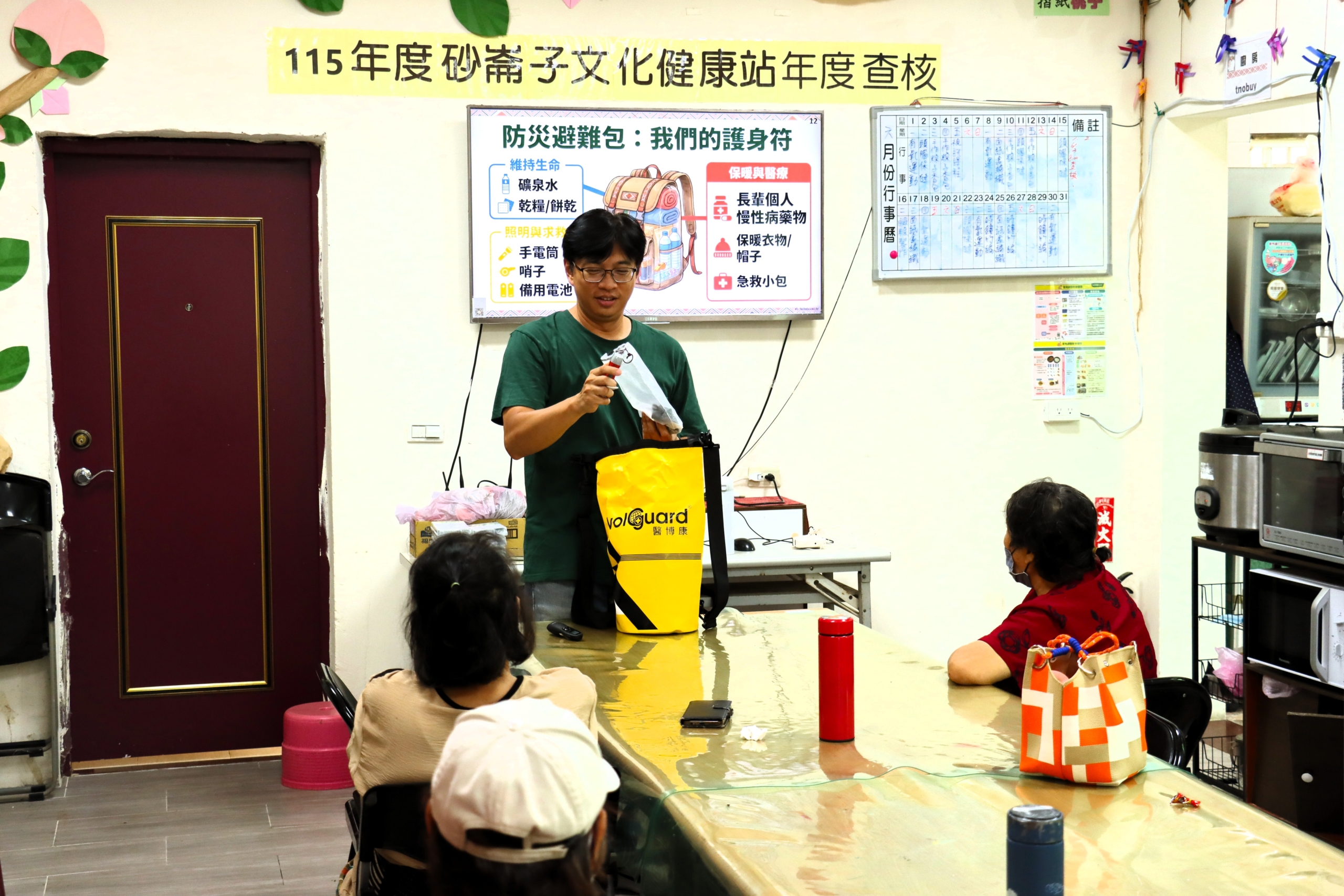
The outreach session covered much the same material as the event in Yisheng Village and was just as informative. Through lively explanations and interaction, the instructor introduced ways to prepare for and respond to earthquakes, debris flows, windstorms, and floods. Even when the course content is similar, the participants’ experiences and stories give each session a different character. For me, it was rewarding to document the exchanges between the elders and NCU faculty and students, watching them learn together and come to understand one another better. I hope that scientific knowledge about disaster preparedness can complement the elders’ lived experience, helping them make timely, informed decisions when disasters occur and better protect their lives and property.
Written by Su, Chi-Hsien
Edited by Li, Ruo-Jia
Photos by Su, Chi-Hsien