
In January this year, National Central University’s mbhoyaw “Fuxing” University Social Responsibility (USR) Project team visited Kimiko Matsutake at Dyeing Studio Nawata on Ishigaki Island. The team learned ramie processing, yarn making, and Japanese treadle loom operation, while her demonstrations introduced natural plant dyeing and the techniques used to create Yaeyama jōfu patterns. To continue this exchange, the team returned during the summer to further explore yarn dyeing and patterned weaving.
The trip also included visits to other weaving regions in Japan, including Miyako jōfu on Miyako Island, Yomitanzan hanaori in Okinawa, and Echigo jōfu, Ojiya chijimi, and Shiozawa silk textiles in Niigata. By observing weaving techniques, cultural preservation, and promotional approaches, the team gathered ideas for future exchanges and activities.
Understanding Yaeyama Jōfu Through Plant Dyeing
Following the visit to Ishigaki Island, the second stop brought the team to Miyako Island and Yomitan Village in Okinawa. Through learning about the intricate production processes of Miyako jōfu and experiencing Yomitanzan hanaori firsthand, the team explored how local weaving traditions connect with everyday life.
Miyako Jōfu: Skill and Dedication in Every Detail
Miyako Island often brings to mind “Miyako Blue,” the brilliant blue of its surrounding waters. The deep blue of Miyako jōfu reveals another captivating aspect of the island’s colors. After arriving, the team visited Irabu Bridge to admire the seascape as it changed with the light and weather, then continued to the Miyako Textile Association to learn about the production of Miyako jōfu.
Known for its handmade ramie yarn, natural plant dyes, and delicate patterns, Miyako jōfu involves fiber extraction, yarn making, pattern design, binding and dyeing, weaving, and finishing. Every stage requires skills developed over many years. Through videos and staff explanations, the team learned how these processes connect and how specialists work together to complete a single textile.
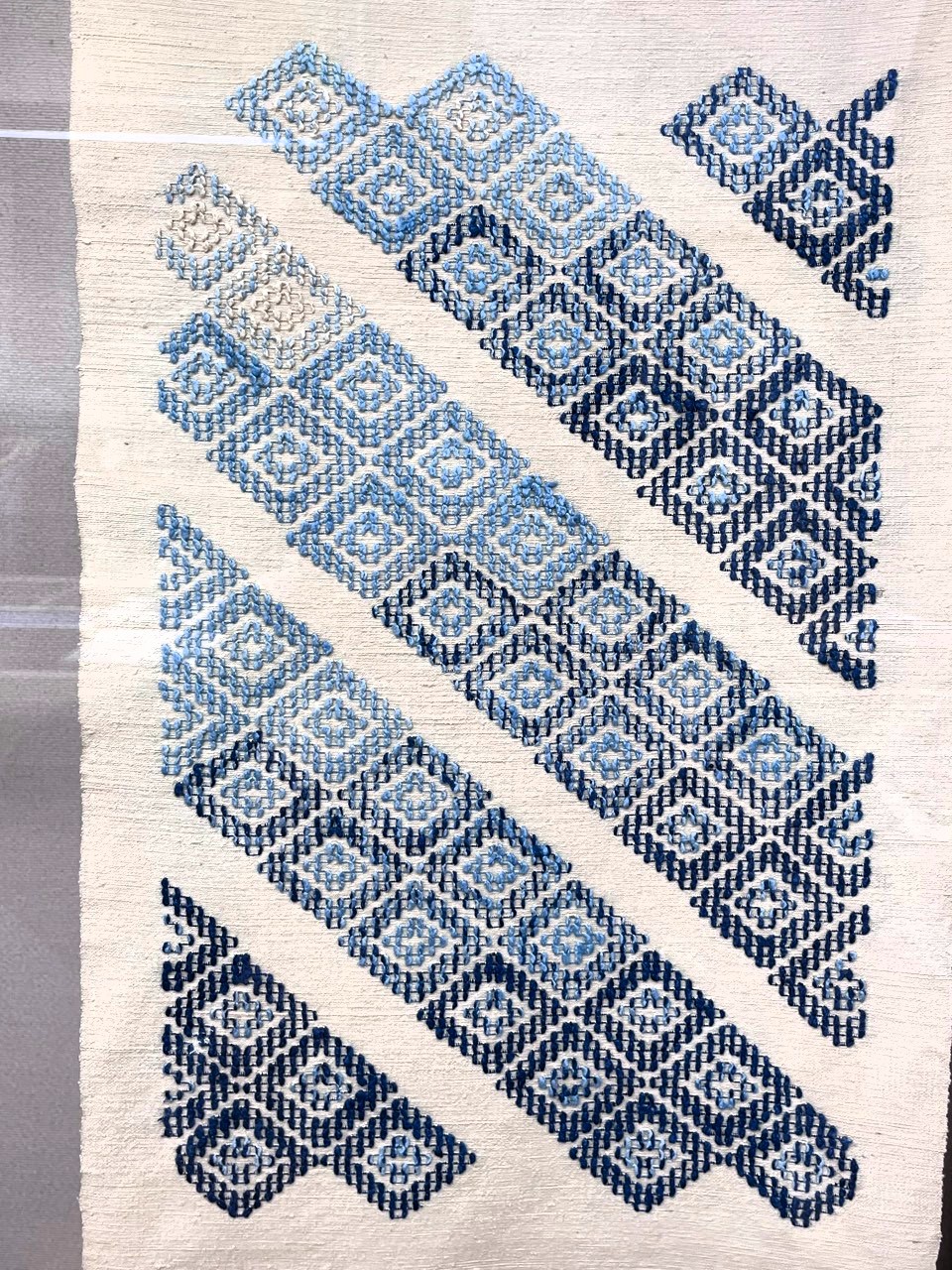
One particularly memorable detail was the continued use of shells to scrape ramie fibers on Miyako Island. This practice reflects the resourcefulness of using locally available materials and the connection between craft and island life. To create patterns, artisans first mark sections of yarn according to the design, then bind them to prevent dye from penetrating, preserving the intended motifs. An artisan also demonstrated another method: using cotton yarn as the warp and ramie yarn as the weft, the tightly interwoven sections create a resist effect, revealing an ingenious application of tools and techniques.
Natural materials also assist in fiber processing. A thin layer of lard is applied before weaving to reduce splitting and fraying in the ramie yarn, while natural starch helps keep the finished fabric smooth and stable. These details reminded the team of an Atayal weaving teacher’s account of using beeswax, highlighting how different cultures respond to fiber characteristics and weaving needs.
Miyako jōfu combines tiny dots into intricate patterns of remarkable precision. The visit deepened the team’s appreciation of the time and effort behind each textile, as well as the dedication of association staff and artisans to preserving their skills amid the challenges of cultural transmission.
Yomitanzan Hanaori: Bringing Culture into Daily Life Through Hands-on Weaving
The following day, the team flew to Okinawa’s main island and traveled to Yomitan Village to experience hanaori weaving. Yomitanzan hanaori once faced a break in transmission but was gradually revived through collective local efforts. Building on the welcoming atmosphere encountered during the January visit, the team hoped to gain a deeper understanding of the craft through practice.
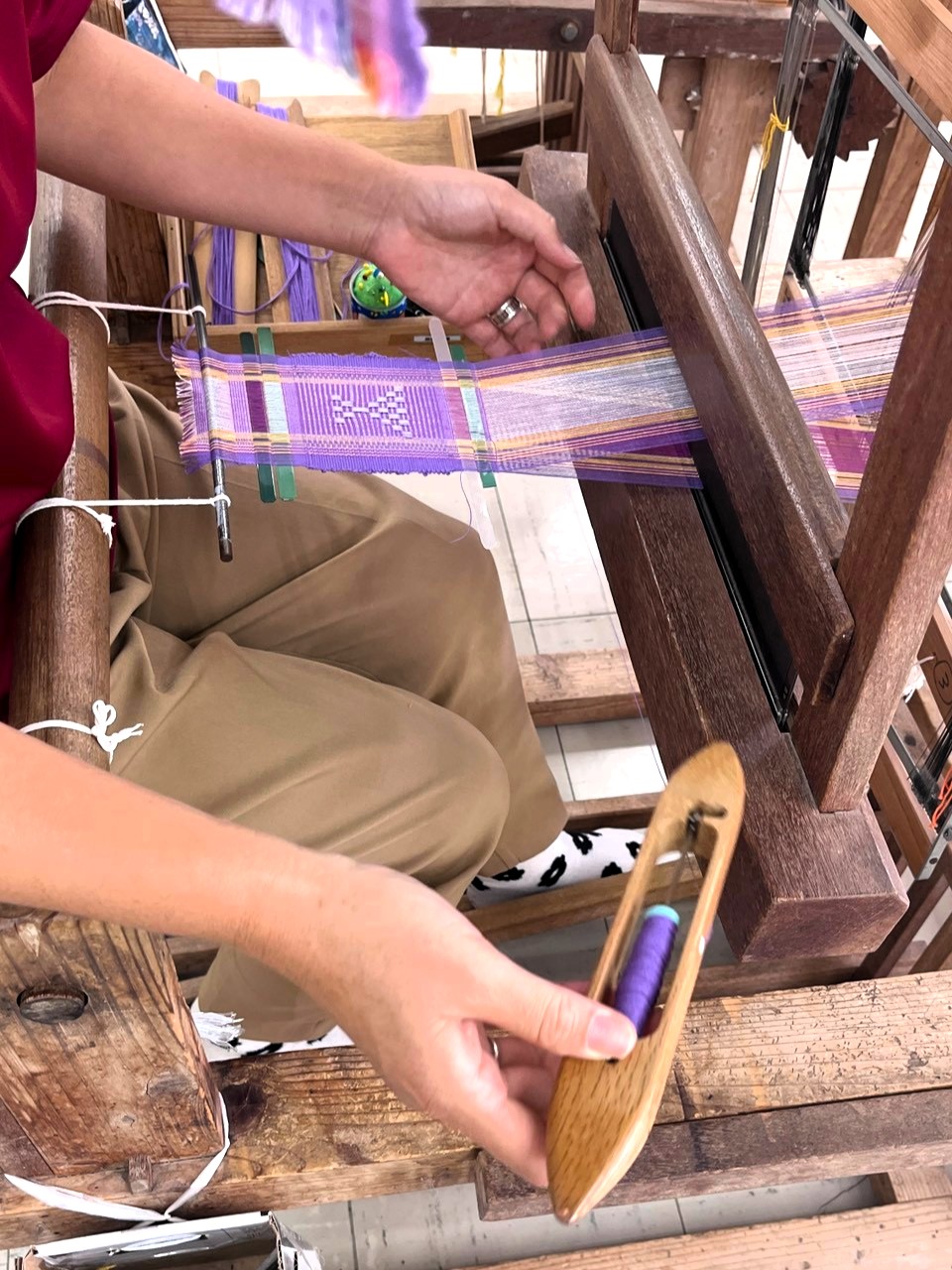
For the weaving experience, purple was chosen as the main color, paired with the “fan flower” motif, which symbolizes welcoming happiness. The instructor demonstrated how to lift selected warp threads with a bamboo pick and pass the weft through to create patterns raised above the fabric’s surface. Two cotton threads were used together as the weft, giving the piece greater texture and making careful control of the edges an important part of the process.
The instructor further explained that, alongside hand-picking, more complex and repeated patterns can be woven using additional small heddles operated by foot pedals to control selected warp threads. From hand movements to the arrangement of tools, every detail reflects the weaver’s experience and judgment. After the weaving was completed, the instructor helped finish and secure the edges so that the piece could be kept and used in everyday life.
Visitors continued to arrive throughout the session, and association staff introduced the craft with warmth and enthusiasm. By connecting exhibitions, teaching, and hands-on practice, hanaori remains a living tradition that people can encounter, learn, and use.
From the specialized production processes of Miyako jōfu to the hands-on experience of Yomitanzan hanaori, this journey revealed different approaches to sustaining cultural traditions. The team looks forward to sharing these experiences with local partners and exploring possibilities for Atayal weaving education and cultural transmission, grounded in respect for the distinct context of each craft.
Written by Hsu, Yu-Chun
Edited by Li, Ruo-Jia
Photos by Hsu, Yu-Chun