
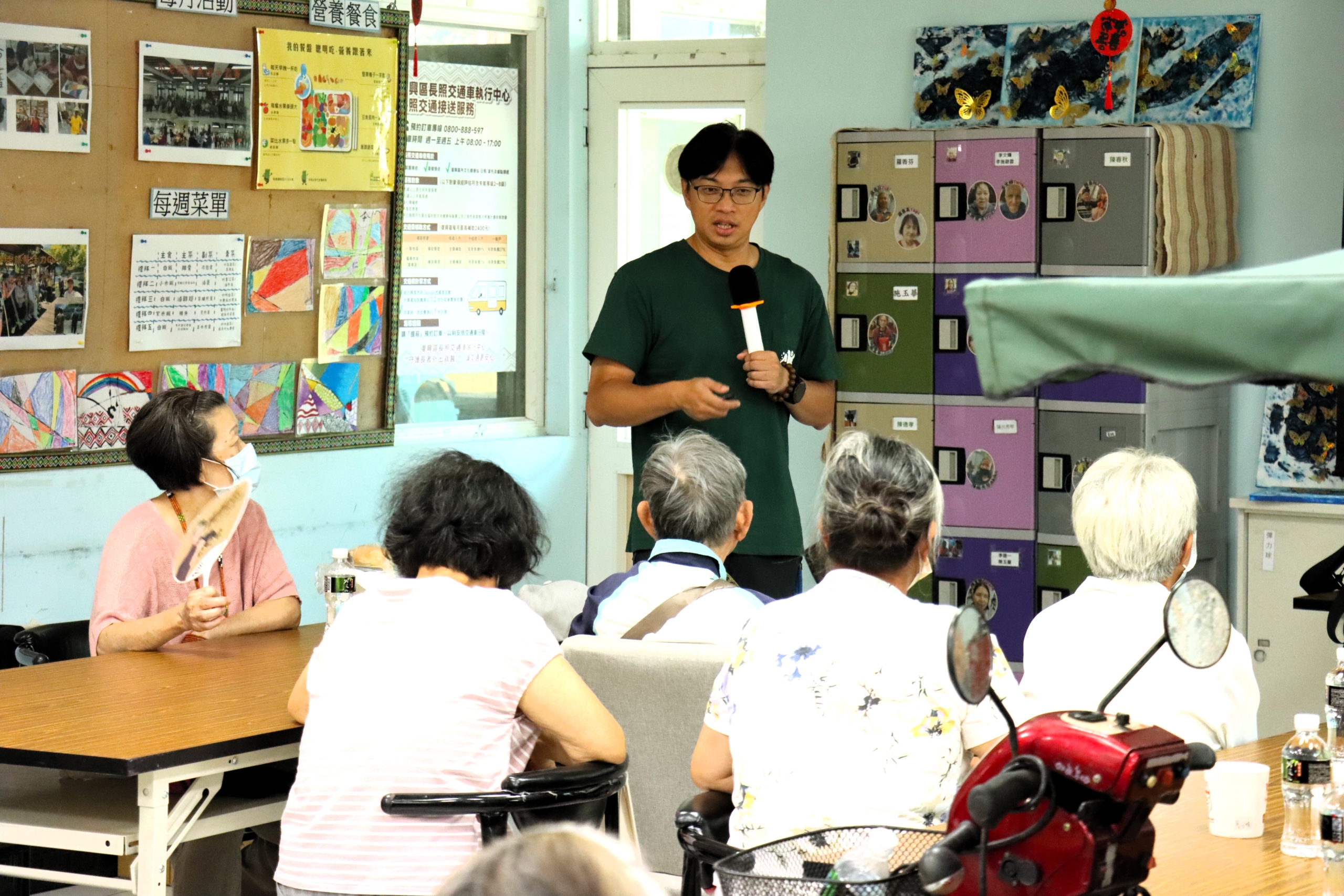
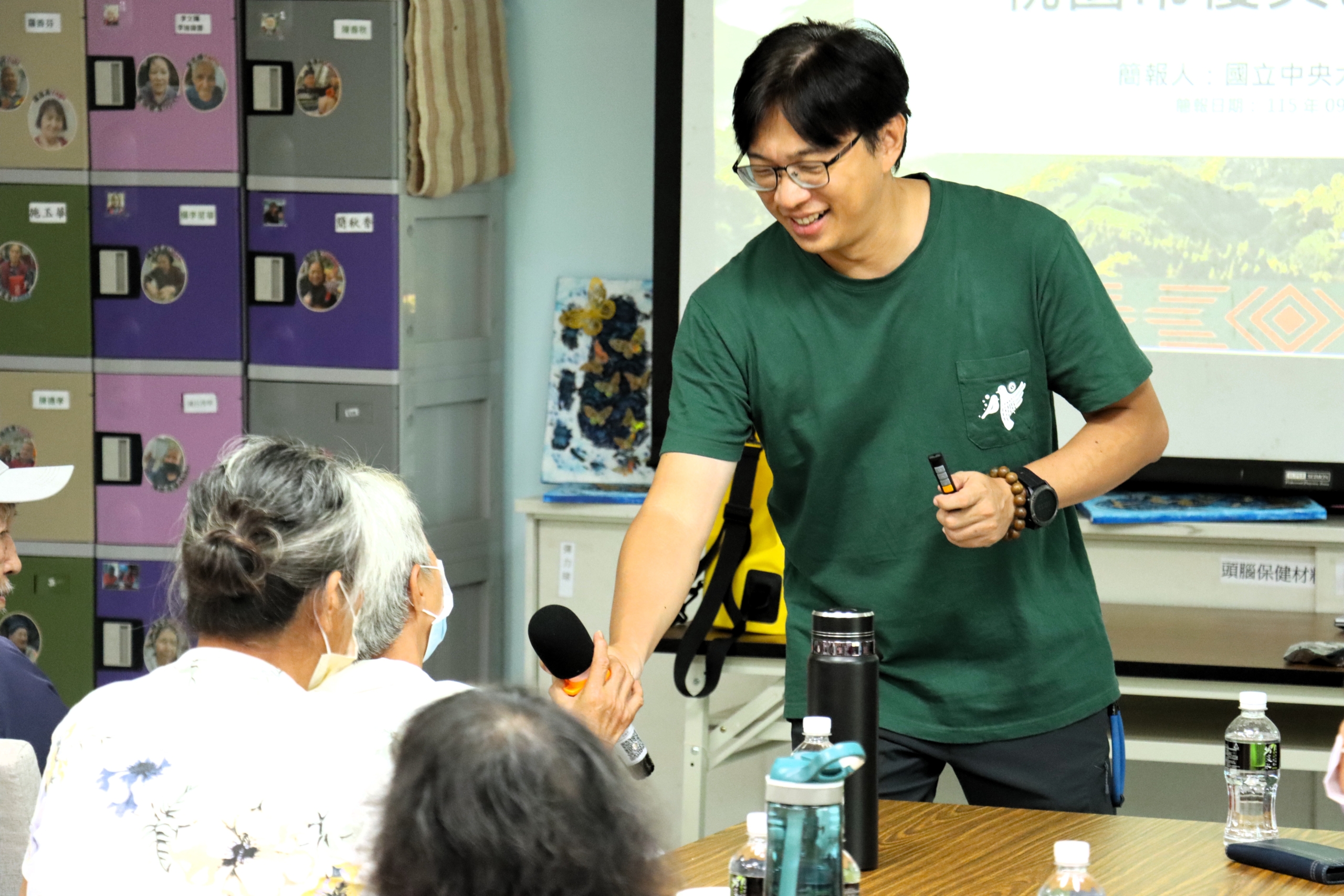
Early in the morning, I joined the faculty members on a trip to Kuihui Village for a disaster preparedness course. Once everyone was seated, the session began, led by Professor Chung Chih-Chung. He opened by asking the elders whether they had ever experienced a natural disaster. Several immediately raised their hands and shared their stories, most of which involved floods and typhoons. Some mentioned typhoons whose names I did not even recognize. Listening to them, I realized that events I knew only from textbooks or news reports were experiences they had personally lived through.
Drawing on the elders’ experiences, the professor introduced the hazards mountain communities may face and how to respond in different situations. The first step in disaster preparedness is understanding the risks: knowing what might happen allows us to prepare in advance. Unlike typhoons and heavy rainfall, which weather forecasts can help us anticipate, earthquakes often strike suddenly, making regular preparation and practice especially important.
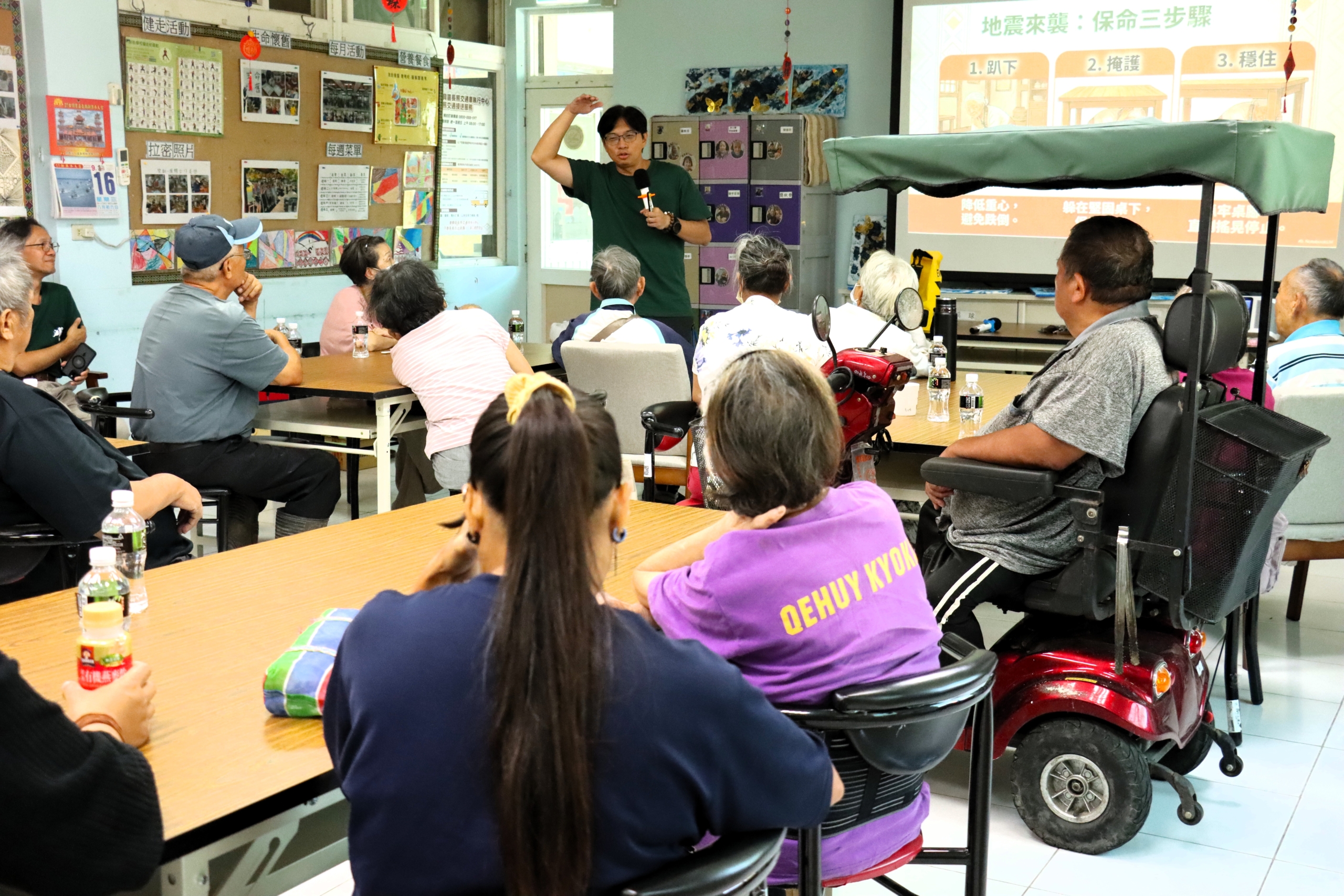
When discussing earthquake response, the professor demonstrated protective actions, immediately reminding me of the disaster drills I had taken part in during junior and senior high school. During an earthquake, the priority is to protect yourself by following the “Drop, Cover, and Hold On” steps, shielding your head and neck rather than rushing to run or retrieve belongings. Once the shaking stops, assess the situation and, if evacuation is necessary, take your emergency kit and leave safely.
When I was younger, I had experienced few major earthquakes and often treated drills rather playfully. Only now have I begun to understand that these familiar steps are essential skills that can save lives. No one knows when an emergency will occur, but being better prepared can help us respond with less panic. So, while taking photographs during this session, I also listened closely and made sure to take in the key lessons.
In the second half of the course, the professor introduced emergency kits and the supplies they should contain. I have to admit that I had never put together a complete kit or purchased all the necessary items myself. After the session, I decided to use some spare time over the weekend to prepare one for my current rental home, just in case.
The activity seemed to pass especially quickly. The elders and care workers were warm and enthusiastic, listening attentively and actively responding to the professor’s questions. Their participation filled the session with conversation and laughter. Seeing everyone so engaged in learning, I wanted to give every participant a big thumbs-up!
Written by Hsu, Chia-Jou
Edited by Li, Ruo-Jia
Photos by Hsu, Chia-Jou