
This was my second time returning to Sanguang Elementary School for the summer camp. Compared to my first visit, I felt much more grounded—both physically and mentally—which made the entire experience smoother and more fulfilling. Honestly, what I worried about the most before arriving was: Would they still remember me? To my surprise, the moment I stepped off the bus, the kids I had taught last time excitedly shouted my nickname in unison. At that moment, I breathed a deep sigh of relief and instantly knew this journey was going to be worthwhile.
There aren’t many students at Sanguang, so they’re all very close to one another, which meant there was no need for any typical “ice-breaking” activities. They were full of energy, unlike some children who tend to be shy around new faces. Because of this, both we and the activity team found it easier to teach and connect with them. Although only half a year had passed since our last meeting, I could clearly see how much they had grown—more focused in class, more confident and articulate when answering questions, and even eager to share their thoughts. In those moments, I felt like a proud parent watching their children blossom.
And yet, they could switch gears in the blink of an eye. The second class ended, they burst into “full-energy mode,” dragging us onto the playground for what they called the “Sanguang Sports Festival”—baseball, badminton, basketball, running, hula hoop contests—you name it. Honestly, I no longer have the stamina to play under the blazing sun, but when I was with them, it was like being transported back to my own childhood: carefree, fearless, and laughing alongside friends without a care in the world. That’s why I truly believe these camps aren’t just about us teaching them—they’re also teaching us. They help us rediscover a simple joy and provide a much-needed recharge for the spirit.
What impressed—and even made me a little envious—this time was their boundless imagination. Calling it “wildly creative” wouldn’t be an exaggeration. They didn’t just dream—they created. This year’s craft sessions were particularly rich, especially during the bridge-building and green energy house workshops. Each child displayed remarkable creativity. Some even used natural materials like fallen leaves, twigs, and snail shells to decorate their projects—making their work not only visually appealing but also infused with a local, artistic charm. They weren’t aiming for a polished, textbook-perfect result; instead, they poured their own thoughts and ideas into each piece. As someone majoring in the arts, I found this especially moving.
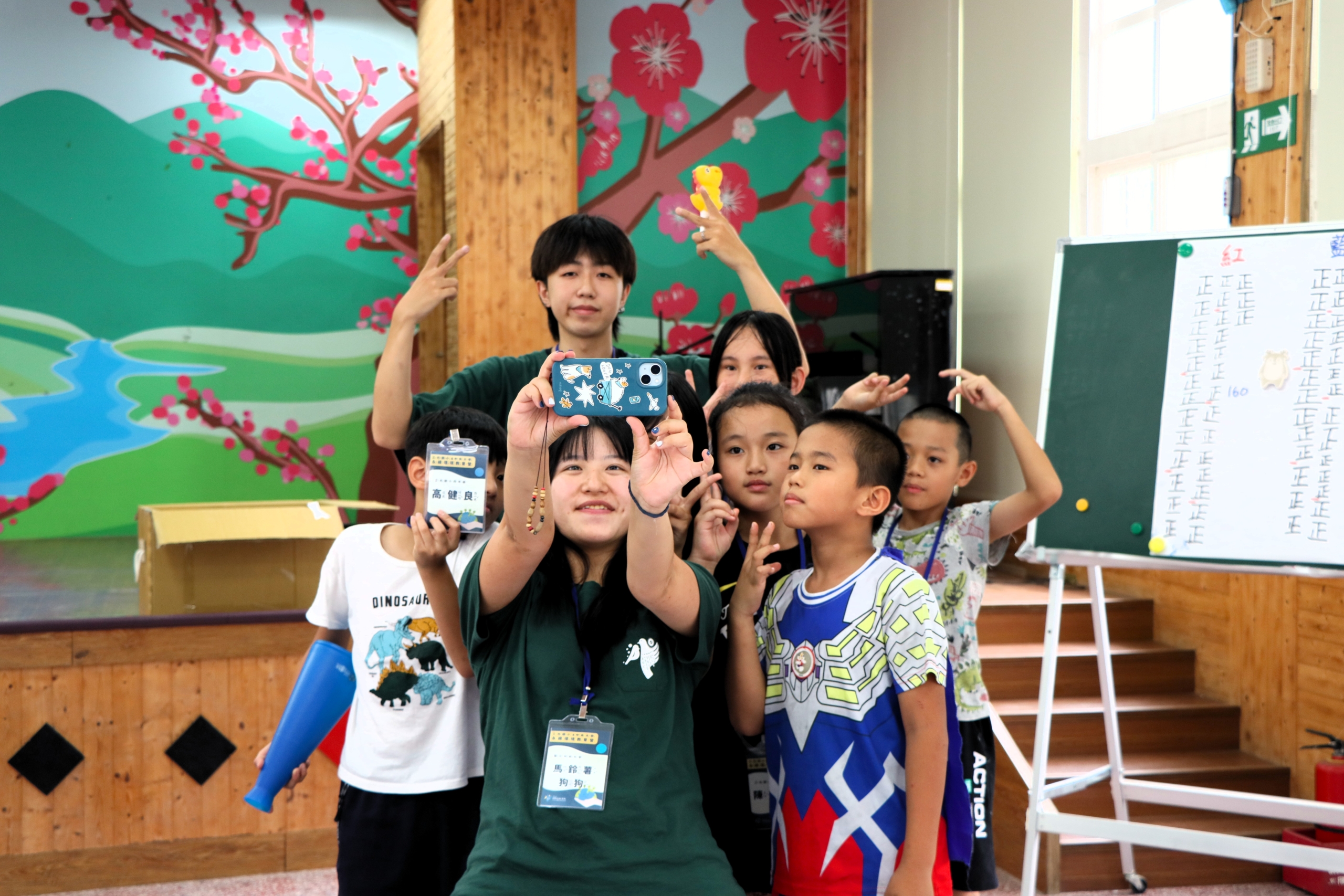
Returning to Sanguang confirmed one thing for me: if I ever get the chance again, I will definitely come back. Because this isn’t just another event—it’s a memory that will live in my heart for a long time. One moment that left a lasting impression was near the end of camp, when a little girl came bouncing toward me with a dinosaur-shaped mini fan she wanted to give me. “Because your nickname is Dinosaur,” she said, “I thought of you as soon as I saw this.” I kept a calm face, but inside I was deeply touched. It was a small gift, but the sincerity behind it was immense. In that instant, I realized that we had truly left something meaningful in their hearts.
That dinosaur fan now sits in the most prominent spot in my rented room. Every time I look at it, I think of those sun-drenched days, the playground, the children’s laughter, and the way they called me “Dinosaur Brother.” These memories may seem ordinary, but to me, they are treasures. My words may fall short of capturing the full depth of what I feel for the children at Sanguang, but I can say this with all my heart: I love Sanguang Elementary School.


Written by Xu, Shao-qian
Edited by Li, Ruo-Chia
Photos by Li, Ruo-Chia and Su, Qi-xian
Unlike my past experiences as a group leader, this time our mission was clearly defined—our main role was to accompany the children and help create a warm, engaging atmosphere. Thankfully, the students were already genuinely enthusiastic about the camp, which made the environment lively and easy to maintain. As leaders, we didn’t need to intervene constantly; simply offering encouragement and quiet support from the sidelines was more than enough.
The “Sustainable Environment Education Camp” featured courses collaboratively designed and taught by professors and students from various departments at National Central University. The content covered areas that I don’t usually come across, which gave me the chance to absorb new knowledge and broaden my perspective. The curriculum placed special emphasis on hands-on learning, using practical activities to help children grasp abstract concepts more concretely. Whenever it came time for these hands-on sessions, the kids lit up with excitement and poured their energy into the tasks.
One activity that left a particularly deep impression on me was the bridge-building workshop led by the civil engineering team. The students took on two challenges: one focused on structural strength—whose bridge could hold the most sandbags—and the other emphasized visual design, encouraging integration with the local landscape and alignment with their original blueprints. Two children in our group stood out early during the design phase. Their thoughtful planning drew praise from both the professors and older student mentors. Perhaps fueled by this recognition, they became even more committed and attentive during construction. Although there were occasional disagreements, they learned to negotiate, delegate tasks, and support each other. In the end, they completed their bridge successfully—and even won a prize.
What struck me most was the boundless creativity I saw in these children—imagination unrestrained by formulas, rubrics, or the idea of a single “right” answer. In contrast, I realized how my own creativity had gradually been shaped and narrowed by years of schooling and societal expectations. I often find myself trapped in the mindset of “looking for the correct answer,” forgetting that there are other ways of thinking that once came naturally to me. Watching the children reminded me of how important it is to protect and reconnect with our own perspectives.
This experience as a group leader wasn’t simply a return to a familiar role—it felt more like an unexpected lesson. Throughout the camp, I found myself quietly transformed by the children. Their active participation in class, their concentration during projects, and their ability to cooperate and adapt in a group all left a strong impression on me. Perhaps we believed we were there to guide them, but in truth, they were also teaching us—in their own way—how to look at learning and creativity with fresh eyes.
At a time when academic pressure and responsibilities are steadily increasing—and my thinking grows more confined—it felt rare and refreshing to interact with children in such a sincere and joyful way. This experience allowed me not only to reflect deeply on myself, but also to reconnect with that original spark of curiosity and wonder. I believe this is what makes education so beautiful—it’s never a one-way transfer of knowledge, but a mutual exchange, a shared journey of growth. Everyone involved walks away with something meaningful. I’m deeply grateful for this chance to rediscover myself, and to reconnect with the passion and purpose that first led me to learn.


Written by Lai, De-yun
Edited by Li, Ruo-Chia
Photos by Li, Ruo-Chia and Su, Qi-xian
Participating in the Sanguang Elementary School Sustainable Environment Summer Camp gave me an experience that words can barely contain. It was more than a four-day program—it was a journey of the soul, where nature, childhood innocence, and education converged. In those days interwoven with mountains and laughter, I witnessed a different kind of radiance in what education can be.
The first day was spent commuting and setting up. It had been a long time since I had ventured into the mountains, and the winding roads quickly brought back the familiar discomfort of motion sickness. The temperature difference from the lowlands was striking—the air thinner, colder—but also fresher, quieter. Upon arriving at Sanguang Elementary, I was instantly drawn to the school tucked away in the forest. Small in size yet rich in warmth, the campus was clean, well-equipped, and cradled by mountains—a secluded corner that felt almost storybook-like. On the playground, children dashed about in joy, their laughter marking the beginning of the camp and igniting a quiet spark of anticipation in me.
The second day marked the start of the official program. I had expected some initial shyness from the children, but the moment we stepped into the classroom, we were greeted with wide smiles and spontaneous conversation. There was no sense of formality—just genuine friendliness. I didn’t feel like a “volunteer,” but rather like someone they had known all along. Curiously, many of the children shared the surname “Gao,” and we jokingly called ourselves part of the “Gao Clan.” During every recess, they would rush to pull us outside to play. Whether it was baseball, basketball, or badminton, they played with ease and astonishing energy. Beneath the blazing summer sun, I found myself out of breath and soaked in sweat—but also filled with a kind of long-lost joy. And yet, when the bell rang, they instantly returned to the classroom, calm and organized. Their discipline and time awareness made me rethink the impact of environment on education. So we ran, laughed, and played during every break—ten minutes at a time—wrapping up the day physically tired but emotionally full.
One of the camp’s most memorable experiences came on day three: bridge building. That afternoon, we learned about structural design and worked with the children to build two bridges using LEGO blocks—one focused on aesthetics, the other on strength. Their creativity surpassed anything we imagined. Designs ranged from whimsical to technically impressive. One group even engineered a “super bridge” that held 20 sandbags without collapsing—leaving us in awe. Beyond their craftsmanship, the children displayed teamwork, critical thinking, and growing confidence. They also began sharing more of their lives—stories of beetles they’d caught at home, insects observed in the woods, and dreams they’d had the night before. Their intimate connection with nature revealed a purity and freedom hard to find in city life. Their world moved in harmony with the land, and that left a deep impression on me.
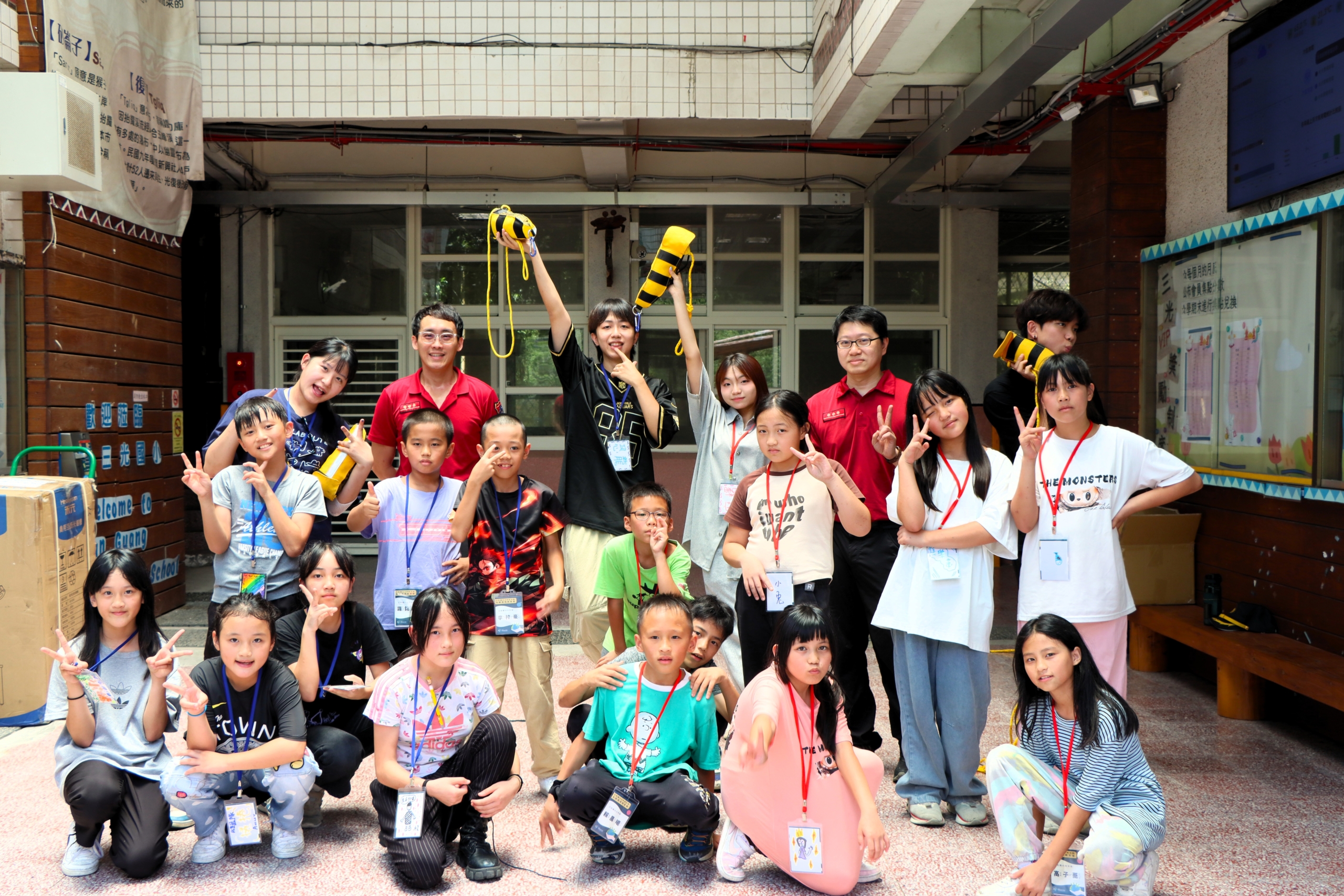
Then came day four—farewell. That morning, we prepared a small performance to thank and bless the children. As we sang and danced, the delight in their eyes told me these moments had found a place in their hearts. Our final activity was a green energy architecture project. Using recycled materials found on campus, we helped the children build model structures with solar panels. Cardboard turned into walls, bottle caps into windows, and imagination took flight. One by one, their eco-buildings rose from their desks—vibrant with creativity and hope. In our final group photo, everyone wore wide smiles, though a quiet reluctance lingered in the air. When one child asked, “Will you come back next year?” I paused, then replied honestly, “If I can, I will.”
Though only four days, it felt like a deep and transformative journey. I never imagined I would find such sincerity and connection in a small school nestled in the hills. The children’s openness and boundless energy brought me back to something I had long forgotten—reminding me that education is not a one-way transmission, but a shared path of growth. Even after the camp ended, I often found myself thinking of the playground ringed by mountains and filled with laughter—of children who carried the scent of soil and sunshine.
This camp was more than a volunteer experience. It was a journey that moved something within me. I learned to listen—to children, to the quiet lessons of nature—and to find warmth in the act of learning itself. Most of all, I came to understand that sustainability is not merely a concept rooted in technology or theory. It is a way of being—of living gently with the environment, with others, and with ourselves. This journey will stay with me, quietly, until the day we meet again.


Written by Li, Yu-Chen
Edited by Li, Ruo-Chia
Photos by Li, Ruo-Chia and Su, Qi-xian
The moment I stepped into Fuxing District, I sensed that this would be more than just a typical volunteer experience—it would be a journey that transcended both geography and the boundaries of the heart. Over the course of four days, I served as a student mentor with National Central University’s USR (University Social Responsibility) program, joining the summer camp at Sanguang Elementary School to promote environmental education. From the anticipation and nervousness of arrival to the heartfelt emotions of farewell, I underwent a quiet but powerful transformation.
Throughout the experience, I wasn’t merely guiding the children through lessons—I found myself learning alongside them in unexpected ways. Before this, I had little knowledge of topics like hydrogen energy. I knew it was a clean energy source, but I had never fully understood how it worked or the potential it holds for the future. Through thoughtfully designed lessons and hands-on activities, I was challenged to translate complex concepts into language a child could understand. And in that process, I realized something profound: to teach is to learn twice. Each time I paused to rethink an explanation or adjust my approach so the children could grasp it more easily, I found my own understanding deepening in return.
But what moved me most was not what I managed to teach—it was what the children gave back. Though they may lack the educational resources found in urban areas, they possess something even more valuable: pure-hearted enthusiasm, bright, attentive eyes, and the most sincere laughter. When I stood before them to explain energy conversion or led them through a simple experiment, their curiosity sparkled. Each joyful “I get it!” was a moment I will never forget.
One afternoon, a student quietly came up to me and asked, “Will you come back again? I want to keep learning.” That simple question touched me deeply. For me, these four days might be just a brief chapter—but for them, it could be a window to a much wider world. It was then I understood: what we’re doing isn’t merely knowledge-sharing—it’s the act of planting seeds for the future.
As a student at National Central University, I often ask myself what role our knowledge can play in society. We are privileged to access abundant learning resources and cutting-edge research. But if that knowledge remains confined to ourselves, its impact is limited. True knowledge must be shared, applied, and brought into the world—it must help bridge the gap between cities and rural communities and shine light into places where opportunities are still growing.
Even after returning to campus, I find myself replaying scenes from those few days at Sanguang: the children’s smiles, their eagerness to understand, and the way they reignited my own passion for learning and sharing. That little classroom nestled among the mountains will forever remain, in my heart, a place where dreams and education intersected—where I saw clearly how knowledge can take root and flourish.


Written by Sun, Yi-Hsin
Edited by Li, Ruo-Chia
Photos by Su, Qi-xian
What makes a science class truly enjoyable? While the primary goal of science education is to convey knowledge, the way that knowledge is delivered makes all the difference. Should it be taught through rigorous reasoning and structured proofs, or can it be brought to life in colorful, imaginative ways? During this year’s Sustainable Environment Summer Camp, I witnessed how—through the creativity and dedication of university students—dry, rigid concepts leapt off the pages of textbooks and into the eager hands of young learners.
Yes, scientific rigor and logical thinking are essential. But this time, our audience was a group of elementary school children—lively, curious, and wonderfully spontaneous. It’s hard to imagine them sitting still in a classroom, listening to adults drone on about topics that feel distant and abstract. What made this camp’s teaching team special was their ability to transform complex ideas into interactive lessons, games, and hands-on activities that made learning not just accessible, but genuinely fun.
The day began with an energy-themed board game, starting with a simple Q&A session that introduced the concept of carbon. Instead of delivering a traditional lecture, the facilitators encouraged open dialogue, instantly warming up the atmosphere. Through this easy exchange, the children naturally understood key ideas—what carbon is, where it comes from, and why it matters. This was followed by a “carbon treasure hunt,” where cards representing different carbon-reduction actions were hidden around the campus. With carbon emission task cards in hand, students searched for matching solutions. The activity blended physical movement with critical thinking, leaving them with a vivid and lasting impression of concepts like carbon neutrality and net-zero emissions.
The next segment focused on carbon emissions related to energy production, culminating in an engaging strategy game. Each student formed energy combinations based on mission cards, moved game pieces, earned “carbon coins,” and used them to trade for energy policy cards. This wasn’t just a game of rules—it transformed abstract terms like “carbon credits” and “energy transition” into tangible experiences. Behind each card was a piece of information and an opportunity to think. As they played, the children quietly learned how to make decisions and weigh choices.
In the afternoon, the focus shifted to bridge construction, led by faculty and students from the Department of Civil Engineering. Sanguang Elementary School is located in a mountainous region where bridges are essential connectors. But had the children ever stopped to consider the design and complexity behind these everyday structures? The instructors began with a concise, engaging explanation of different bridge types, followed by thoughtful questions that encouraged students to consider their own surroundings. Then came the hands-on portion: in teams, the students designed two types of bridges. The “aesthetic bridge” emphasized color and visual appeal, with inspiration drawn from Indigenous cultural elements. The “load-bearing bridge” tested engineering design and strength, with teams competing to build the sturdiest structure. Throughout the process, students learned through experimentation, collaboration, and real-world problem-solving.
This was a science class with no heavy textbooks, no monotonous paragraphs, no cold formulas. Instead, there were university students brimming with enthusiasm for science education, and young learners with hearts wide open, ready to explore. In their laughter and discovery, the children not only gained new knowledge, but also developed a genuine curiosity for science and a budding awareness of environmental sustainability.


Written by Su, Qi-xian
Edited by Li, Ruo-Chia
Photos by Su, Qi-xian