
On the drive to Yisheng Elementary School, the winding mountain road left me a little carsick and foggy-headed. But the moment we arrived, the children’s warm, cheerful greetings swept the discomfort away. Their unguarded smiles carried a quiet energy that made me smile back—and reminded me that education is not only about teaching and learning, but also about a meeting of hearts.
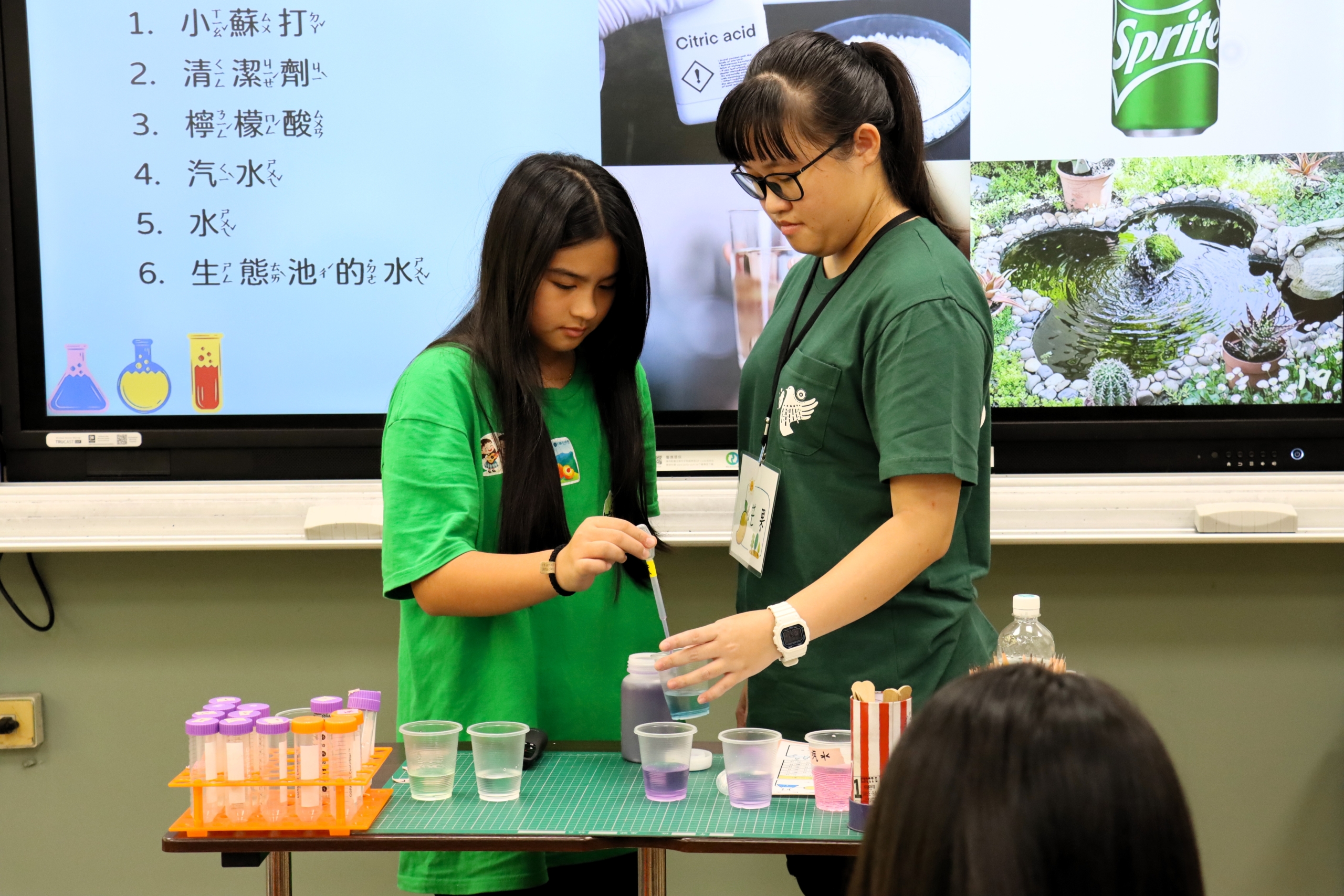
The day’s lesson, themed “Environmental Education,” was led by graduate students from National Central University’s Institute of Environmental Engineering and designed for sixth graders. Titled “Becoming an Everyday Acid–Base Expert,” it began with familiar household items—soap, cola, lemon juice, and baking soda—to introduce acidity and alkalinity, then extended to the link between pH and water quality. The instructor explained vividly how an imbalance in water pH can harm aquatic life and even lead to eutrophication. Issues that once felt distant suddenly came into focus: from the drinks in our hands to the clarity of our rivers, daily life is bound up with science and responsibility.
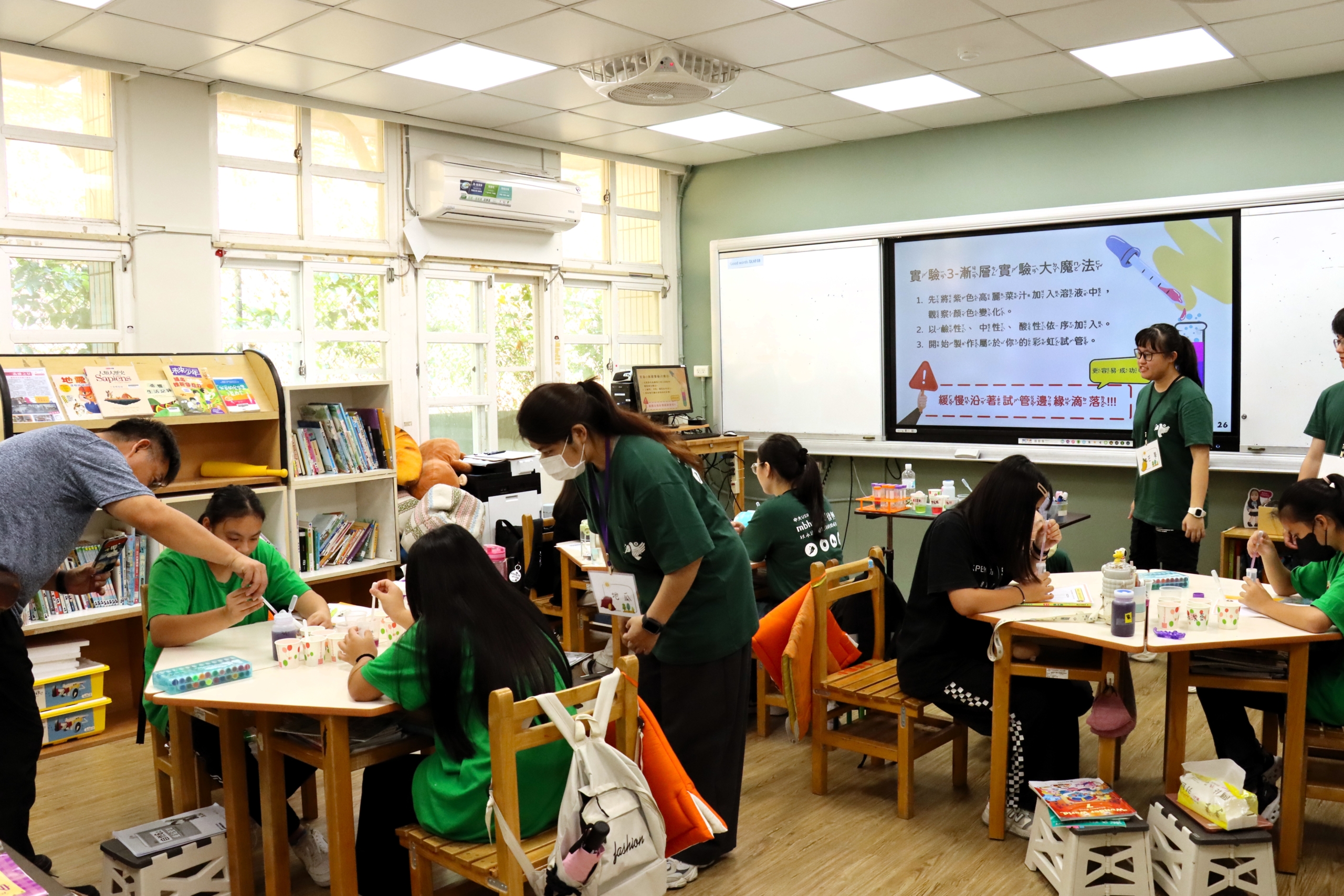
Three lively, highly interactive experiments structured the class: “pH Investigation,” “Color-Changing Pearls,” and the “Gradient Experiment.”
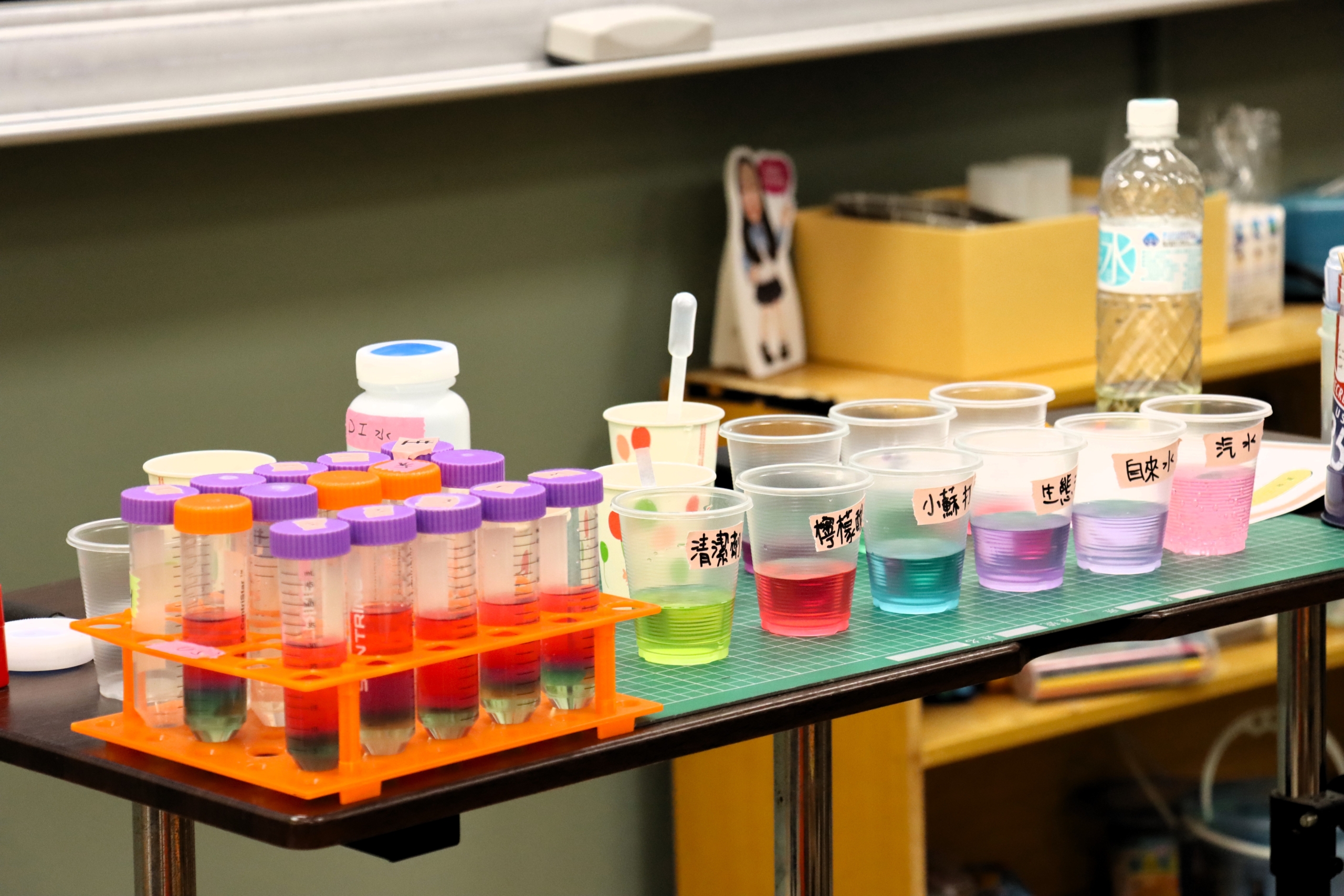
In the pH Investigation, the graduate student mentors used purple cabbage juice as a natural indicator and guided students to test different liquids—tap water, lemon water, detergent, and more. As colors shifted from purple to pink or blue to green, gasps filled the room. Through those changes, students learned to identify acids and bases while experiencing the simple wonder of chemistry.
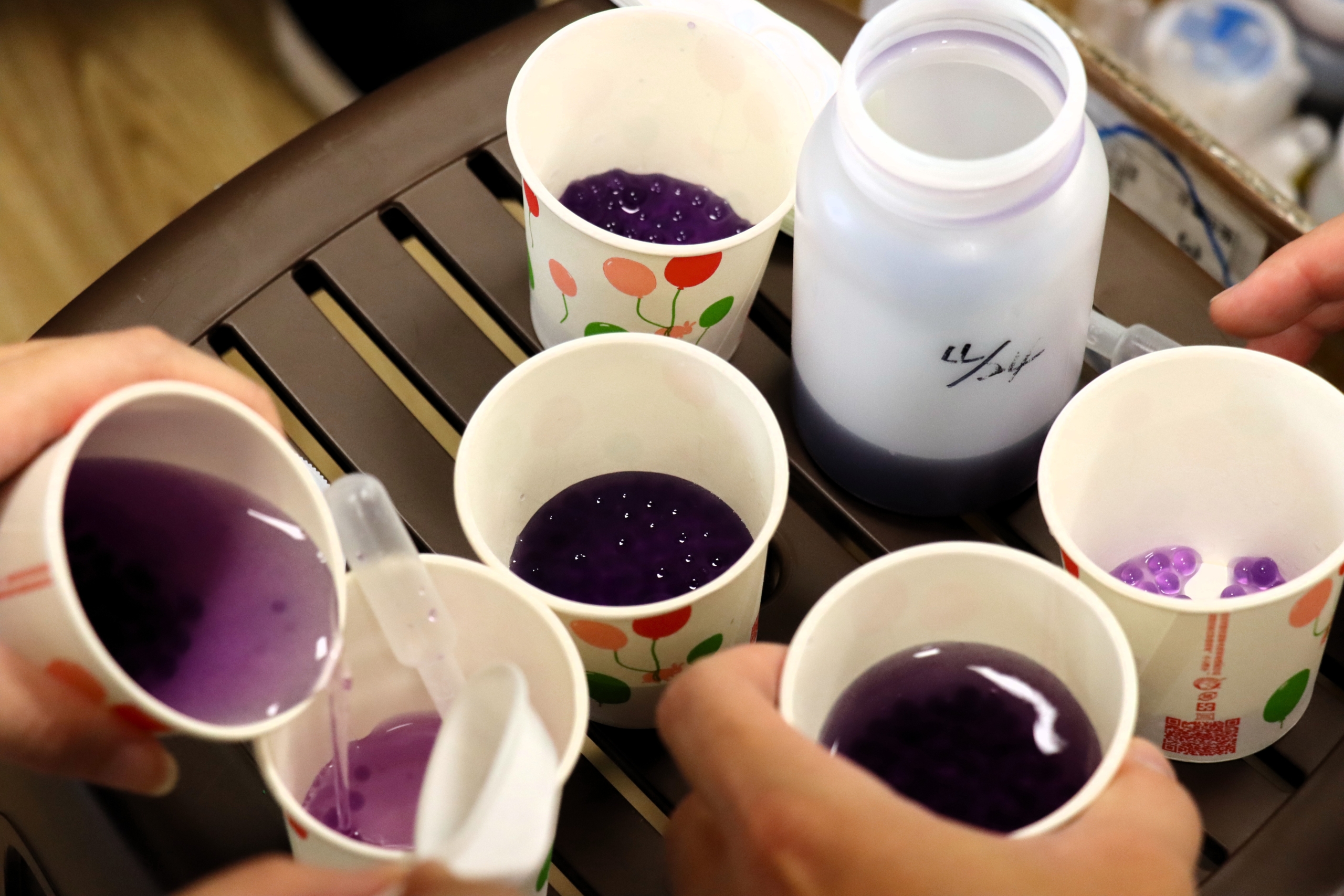
Next came the visually captivating Color-Changing Pearls. The mentors mixed sodium alginate with purple cabbage juice and dropped the mixture into a calcium chloride solution to form delicate purple “pearls.” Students placed the pearls into baking soda, detergent, citric acid, and soda solutions, then watched the hues transform. As the pearls slowly changed color, the classroom buzzed with discussion—curiosity and excitement in their most genuine form.
Finally, the Gradient Experiment pulled everything together. Using purple cabbage juice as a base, students layered acidic, neutral, and alkaline liquids to create a “rainbow test tube.” It was more than an experiment; it was a meeting of science and aesthetics. Watching the colors stack in translucent bands, the children’s eyes shone with wonder and accomplishment.
The atmosphere throughout was warm and energetic. Though the students were shy at first, they grew increasingly engaged as the activities unfolded. Their focused expressions made their eagerness to learn unmistakable—an authenticity that stayed with me.
Afterward, I kept reflecting. Environmental education is not merely the transmission of facts about nature or pollution; it cultivates observation, critical thinking, and a sense of responsibility. When children understand that water quality affects living organisms and that pH imbalances can damage ecosystems, empathy and stewardship begin to take root. This kind of education, grounded in hands-on experience, is far more powerful than one-way instruction. It reminds us that every choice and action can touch some corner of the planet.
I also felt anew that teaching is a two-way process. While the graduate students led the class, the children’s questions and observations pushed us to consider how to make knowledge more relatable and learning more meaningful. Education is not passive reception; it is interaction and experience that allow knowledge to be truly understood and internalized. The value of environmental education lies in planting seeds early: when children turn environmental protection into tangible practice, respect and care for nature quietly take root.
Watching their concentration during the experiments and their lively collaboration in discussion, I believe this day will become a warm and important memory for them—and for us, a lasting reminder to keep connecting science, education, and everyday life.
Written by Tu, Wen-Hsing
Edited by Li, Ruo-Jia
Photos by Tu, Wen-Hsing