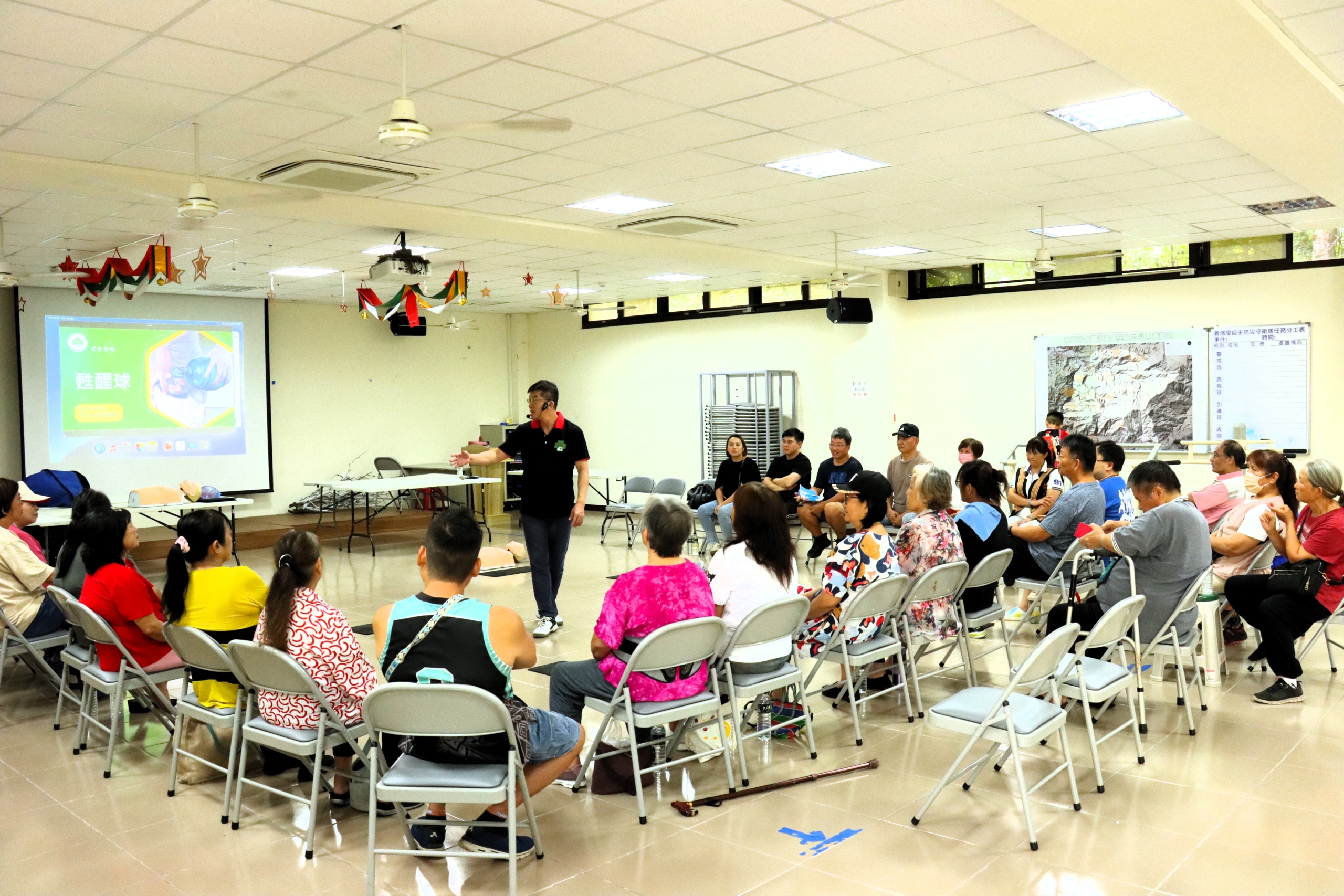
While modern medical technology continues to advance, and public awareness of first aid has grown far beyond what it once was, theory alone is not enough. Without hands-on experience, many people may still find themselves at a loss when an emergency strikes. To ensure that residents are truly prepared to step in and help when it matters most, National Central University hosted a “CPR + AED First Aid Certification Class” in Yisheng Village—an initiative designed not only to inspire action but also to equip people with the right skills. Leading the training was Mr. Hong-Yu Chang, an experienced instructor known for his solid, practical approach to teaching.
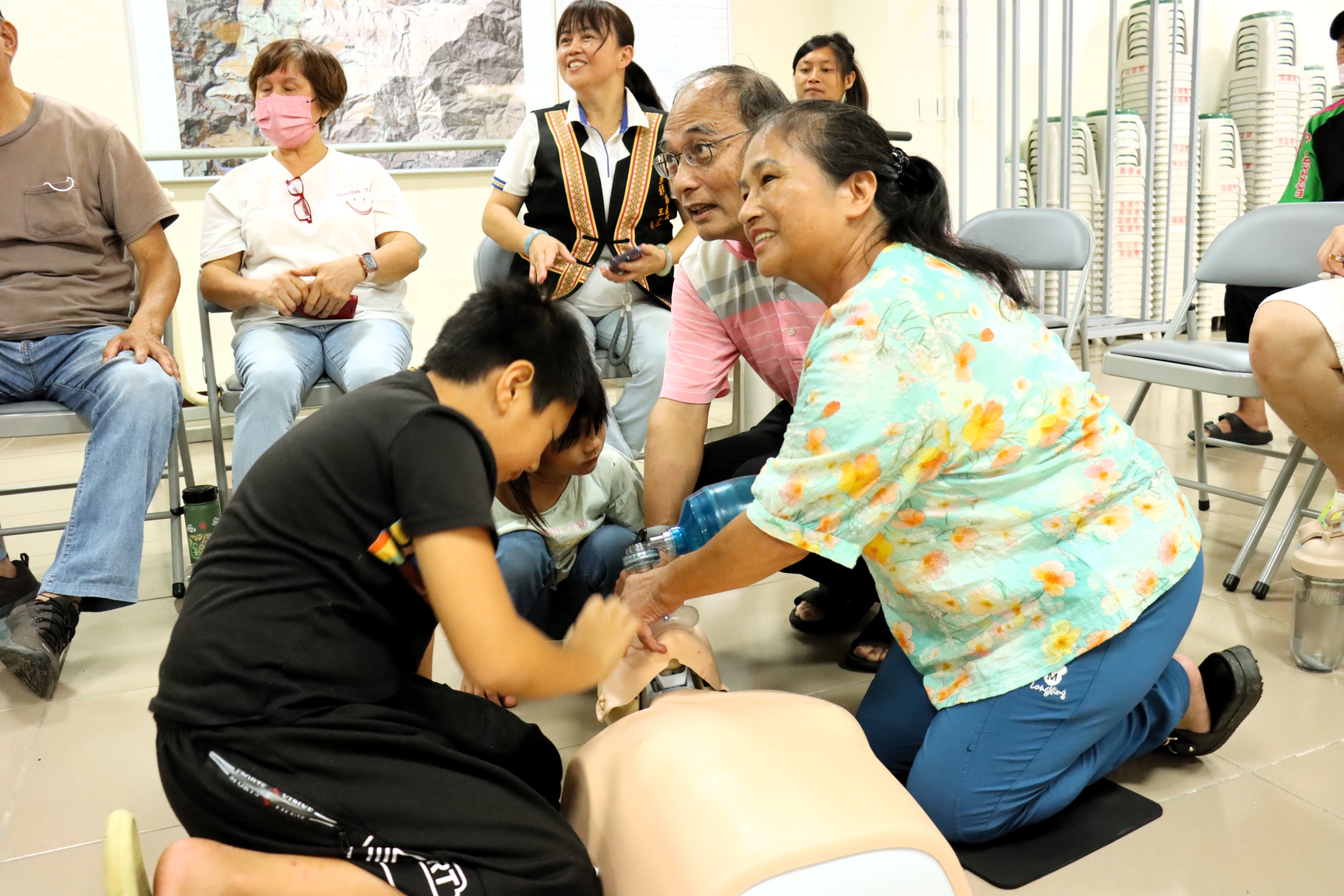
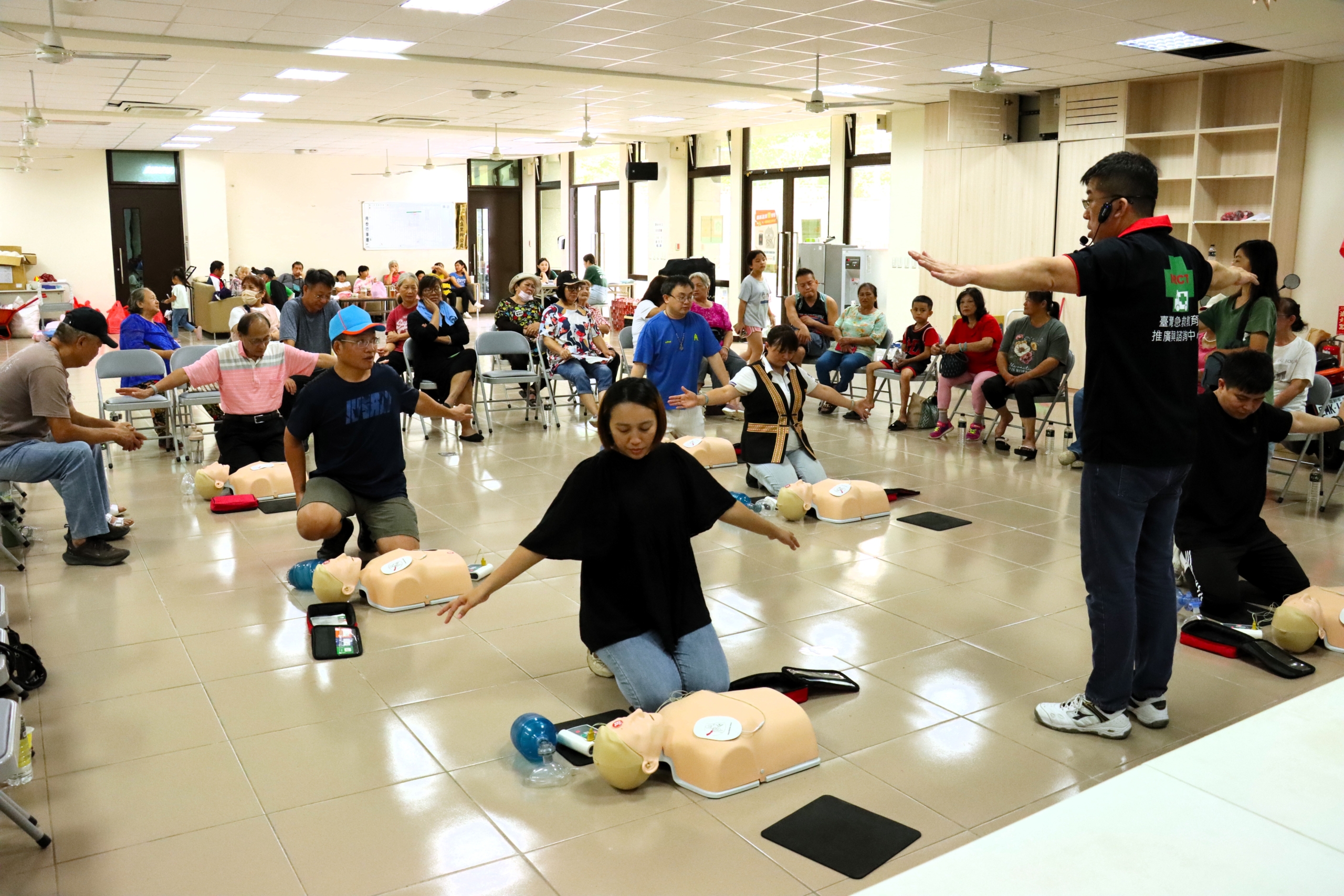
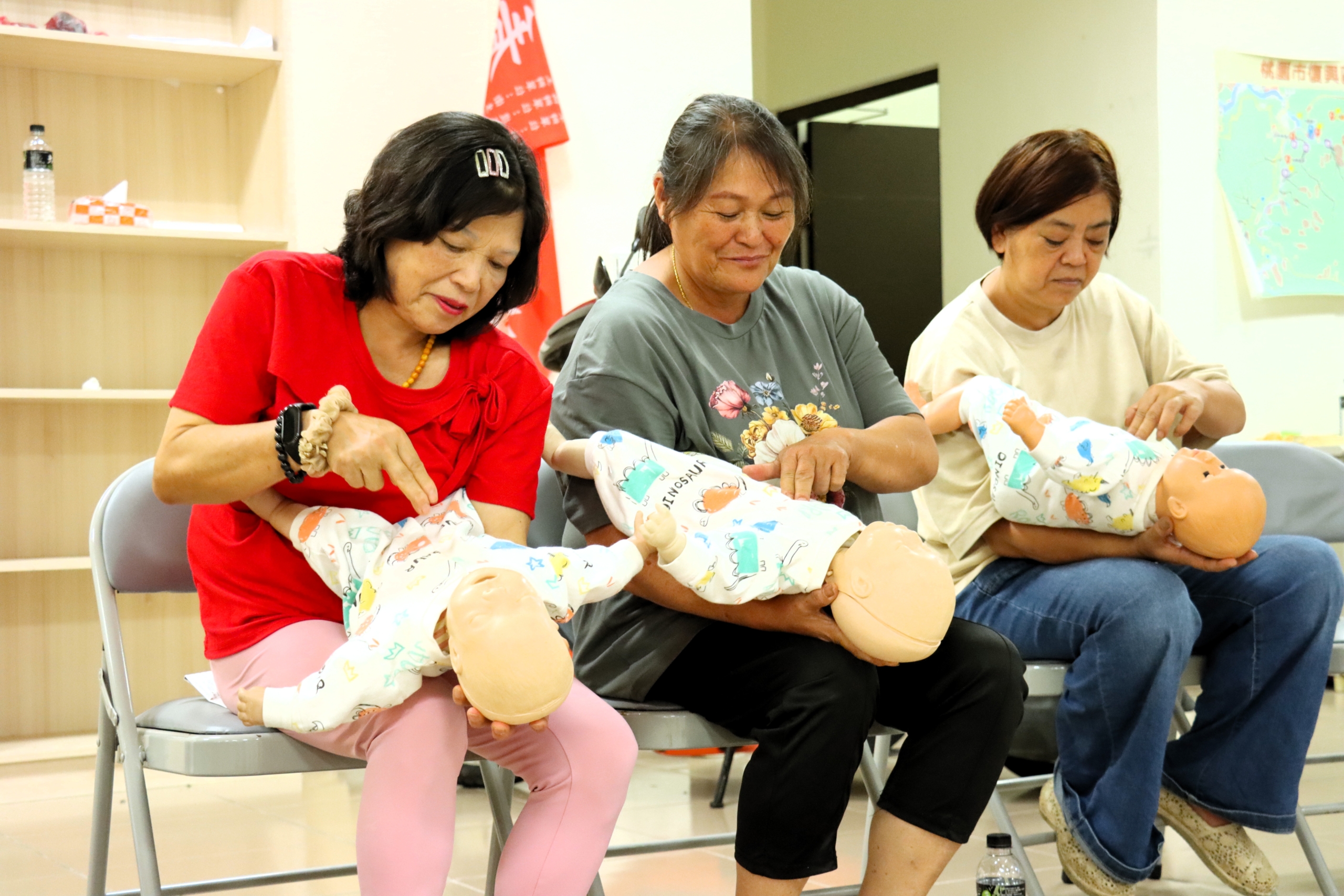
Mr. Chang’s training covered a full range of life-saving techniques, including CPR, AED operation, the use of a resuscitation bag, the Heimlich maneuver for choking, and the application of a tactical tourniquet. Each step was explained in detail, with demonstrations to show not only how to perform each action but also why it matters. During practice sessions, he moved from person to person, observing posture, checking the direction and strength of compressions, and making gentle corrections to ensure every participant could perform the techniques correctly and confidently.
Most participants were older residents, yet their focus and determination in practicing CPR and AED were every bit as strong as that of younger learners. They encouraged each other, offered tips on posture, and worked together—especially during the three-person CPR rotation exercise, which simulated the delay of an ambulance’s arrival. This rotation method helps prevent fatigue in a single rescuer and ensures the quality of chest compressions, with real-world data showing clear benefits to survival rates.
In class, Mr. Chang shared a striking statistic: years ago, even in resource-rich Taipei, only 2 out of every 100 people who needed first aid ultimately survived. But thanks to the government’s active promotion of CPR education and the widespread installation of AEDs, the survival rate has now risen to 35%. This leap, he explained, is the direct result of ordinary people choosing to learn and take action. When I asked whether someone with only basic first aid knowledge might unintentionally delay professional treatment, Mr. Chang’s answer was firm: “No.” Every minute before the ambulance arrives is a golden minute—one more pair of hands could mean one more life saved. He also highlighted Article 14-2 of Taiwan’s Emergency Medical Services Act, which protects citizens from legal liability when performing legitimate rescue efforts, giving everyone more confidence to “act bravely and save lives.”
As a junior reporter, I captured every focused gaze and determined movement through my camera lens. Watching the elderly participants kneel on the floor, practicing diligently and cheering each other on, I realized this was more than a training session—it was a moment of community building. Learning together in the same space brought people closer and strengthened bonds. Although I had learned CPR and AED in school, today’s training was still eye-opening. I refreshed my knowledge, picked up advanced techniques, and gained a deeper understanding of the meaning behind these actions. First aid is not simply about “knowing” or “not knowing”—it’s about respect for life and the courage to act in moments of crisis.
On the way down the mountain, with the lush green scenery unfolding outside the window, I thought about what I had learned. It was more than a set of skills—it was an attitude: to be the one who extends a hand when it is needed most. That hand may not be perfect, but it might change the course of a life. We all hope never to face a situation where these skills are required. But if that day comes, we will be ready—without hesitation, without fear. Your action can restart a still heart, but even more, it can spark a rebirth from within—awakening the deepest warmth and hope of life itself.


Written by Tu, Wen-Hsing
Edited by Li, Ruo-Jia
Photos by Tu, Wen-Hsing