
We continued the map-making lesson we hadn’t finished last week and headed once again to Lofu High School. This time, three new students from National Central University joined us, ready to guide the junior high students through a session on Indigenous community mapping. Partway through the drive, a few beams of crepuscular light broke through the clouds outside the window. Perhaps only in the moisture-filled mountains can such pure white rays be seen. The sight brought back memories of the children we met the week before, and I felt a quiet sense of anticipation about seeing them again.
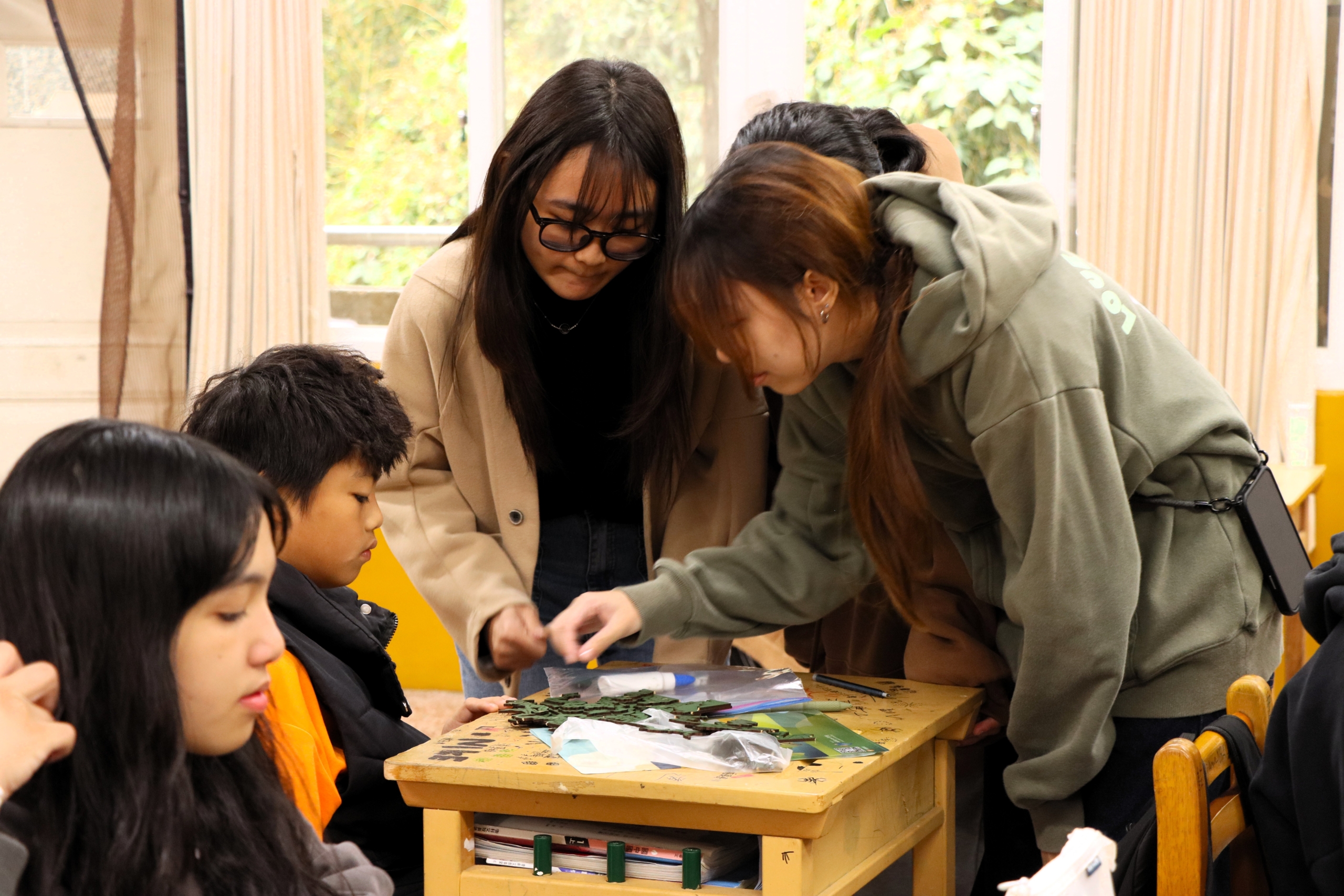
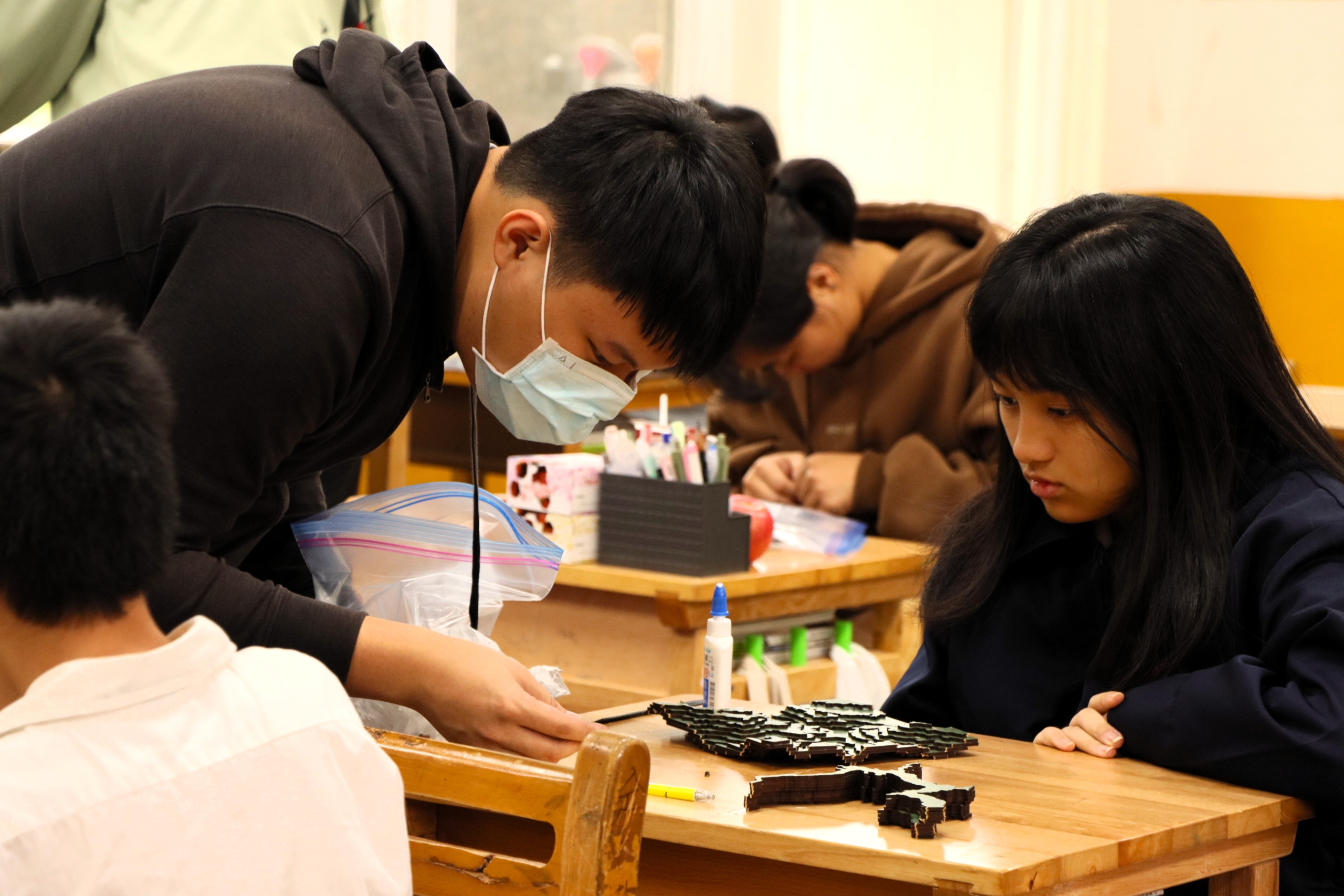
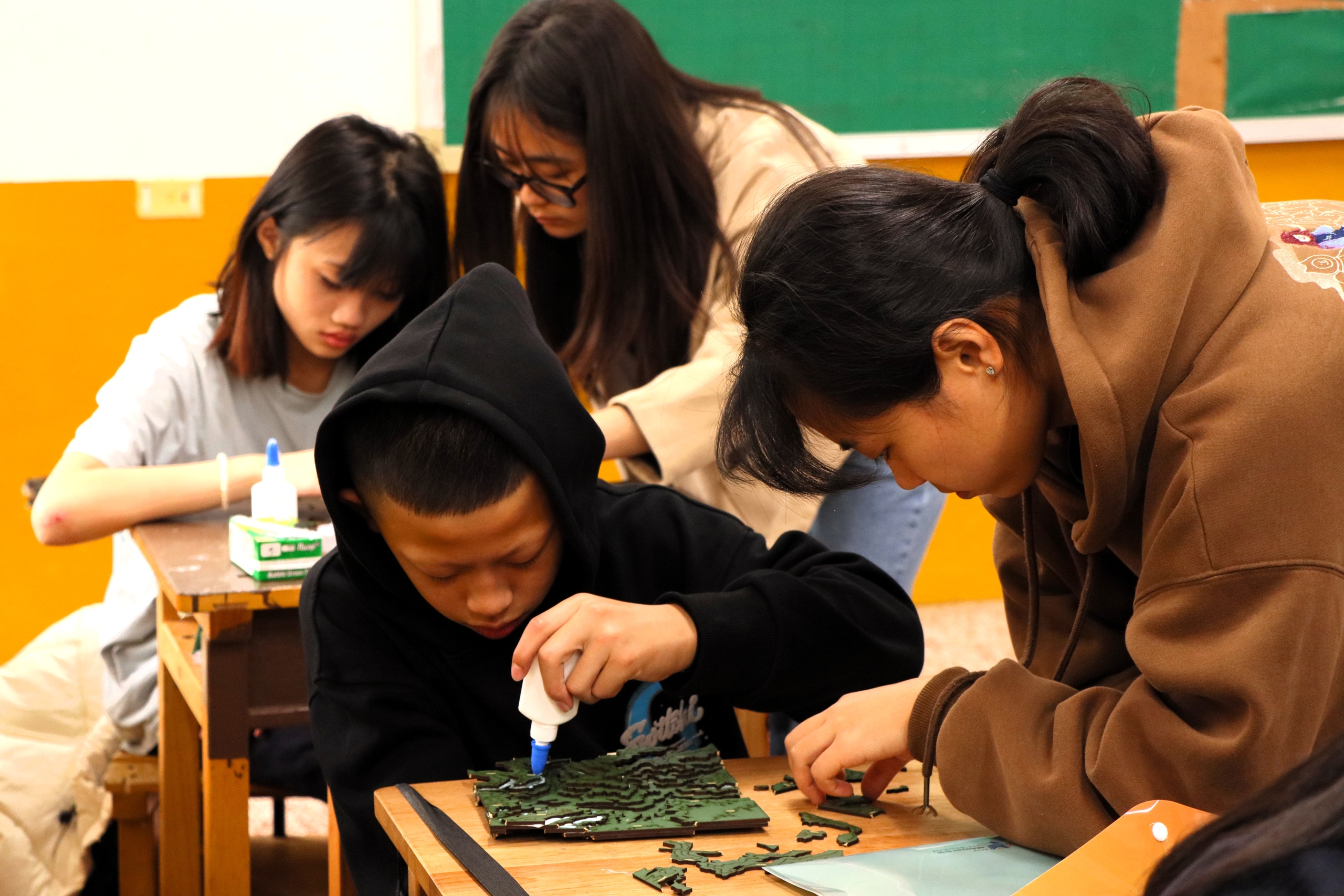
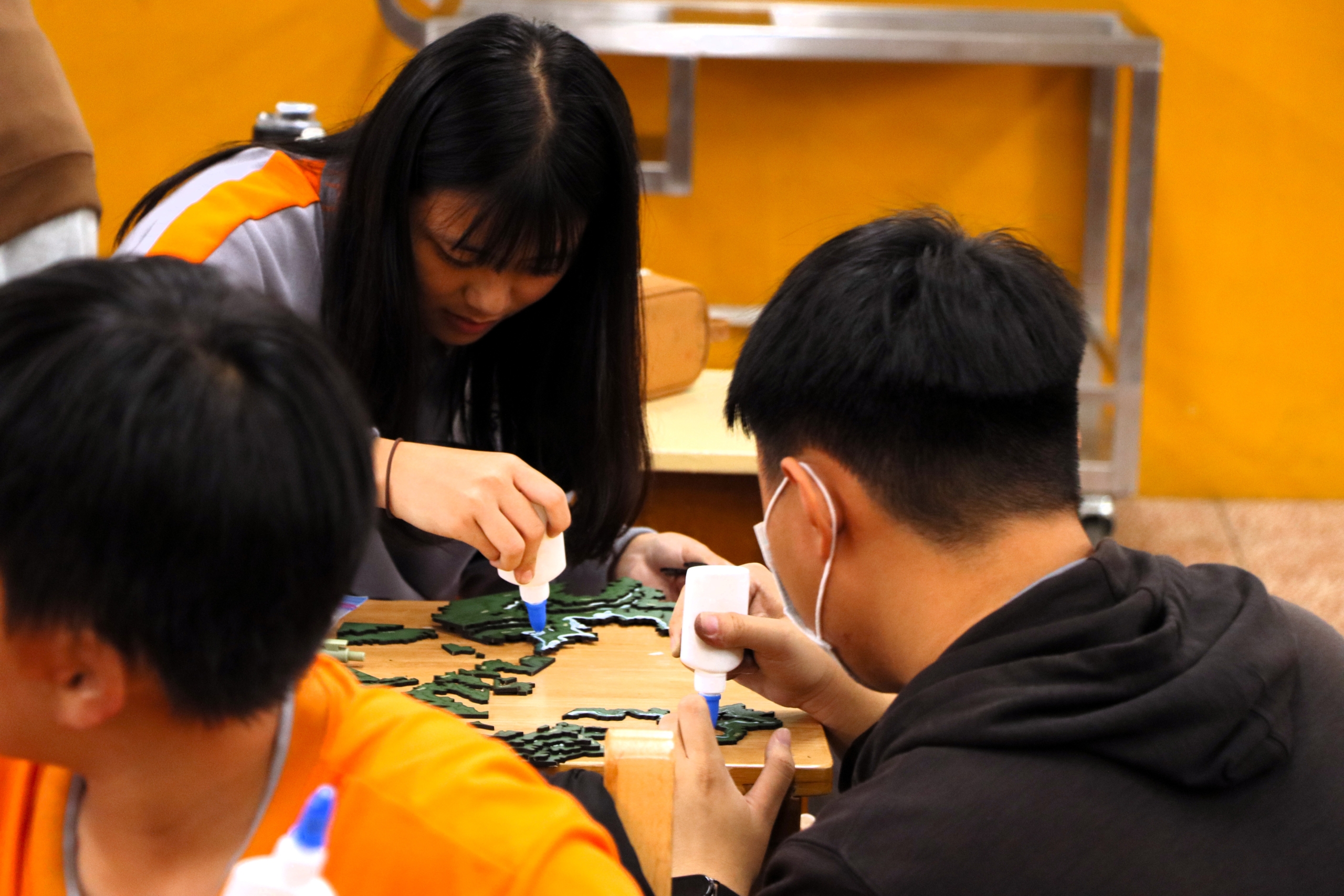
Once the new NCU students began teaching, the class remained as lively and warm as ever. Today’s task was to continue building the 3D terrain map. Students worked in pairs, helping each other assemble the models. Laughter drifted through the classroom; those simple, innocent jokes reminded me of a kind of joy that feels both pure and familiar. Watching them find delight in the process—while rediscovering the features of their homeland—I realized that at this age, exploring the world, understanding oneself, and feeling happiness should never be separated. So we didn’t restrict the atmosphere; we simply hoped they would hold on to that freedom and joy.
At one point, a few students grew so absorbed in their work that they glued pieces together before separating the boards. The teachers patiently helped them take the models apart and guided them through reassembling everything. Even though it took extra time, the children continued smiling, supporting one another until each map was completed.
Midway through the lesson, several Lofu teachers stopped by to check in on the students participating in the Atayal culture course. They built the models alongside the students while chatting about their recent lives. It was clear that the three classes of the same grade were closely connected, and the teachers knew each student’s siblings by heart. The atmosphere felt like a large, extended family—the kind of natural closeness that words can hardly capture.
Through the viewfinder, I suddenly realized that this feeling—this quiet tenderness—was exactly what I hoped to record. If the shutter could linger just a moment longer, perhaps the light could preserve a trace of it in the photograph.
Cultural heritage is not passed on only through lessons; it takes shape in the small, everyday interactions between people. As the children pieced together the landscape of their hometown, they were also reconnecting with the mountains—rediscovering memories and bonds rooted deeply in the land. These subtle moments of connection felt like the morning beams of light: rays that belonged only to this mountain. And the way the children shone belonged only to them. Their glow wasn’t dazzling like the sun, but it was the kind that makes you pause and look a little longer.
We hope that NCU can continue offering programs like this, allowing that light to carry on.
Written by Tseng, Ling-Li
Edited by Li, Ruo-Jia
Photos by Tseng, Ling-Li