
I joined the USR project as a student docent with a simple “why not?” mindset. As my understanding deepened, a quiet seed of care for society and the environment began to take root.
I grew up in Taoyuan, yet I’m not very familiar with the city as a whole. Fuxing District—the most mountainous area—had long been, in my mind, just a place for weekend hikes and holiday camping. Beyond tourism, I hadn’t imagined much else. With NCU’s USR field site based in Fuxing, I began to see a lesser-known, richly textured side of this land.
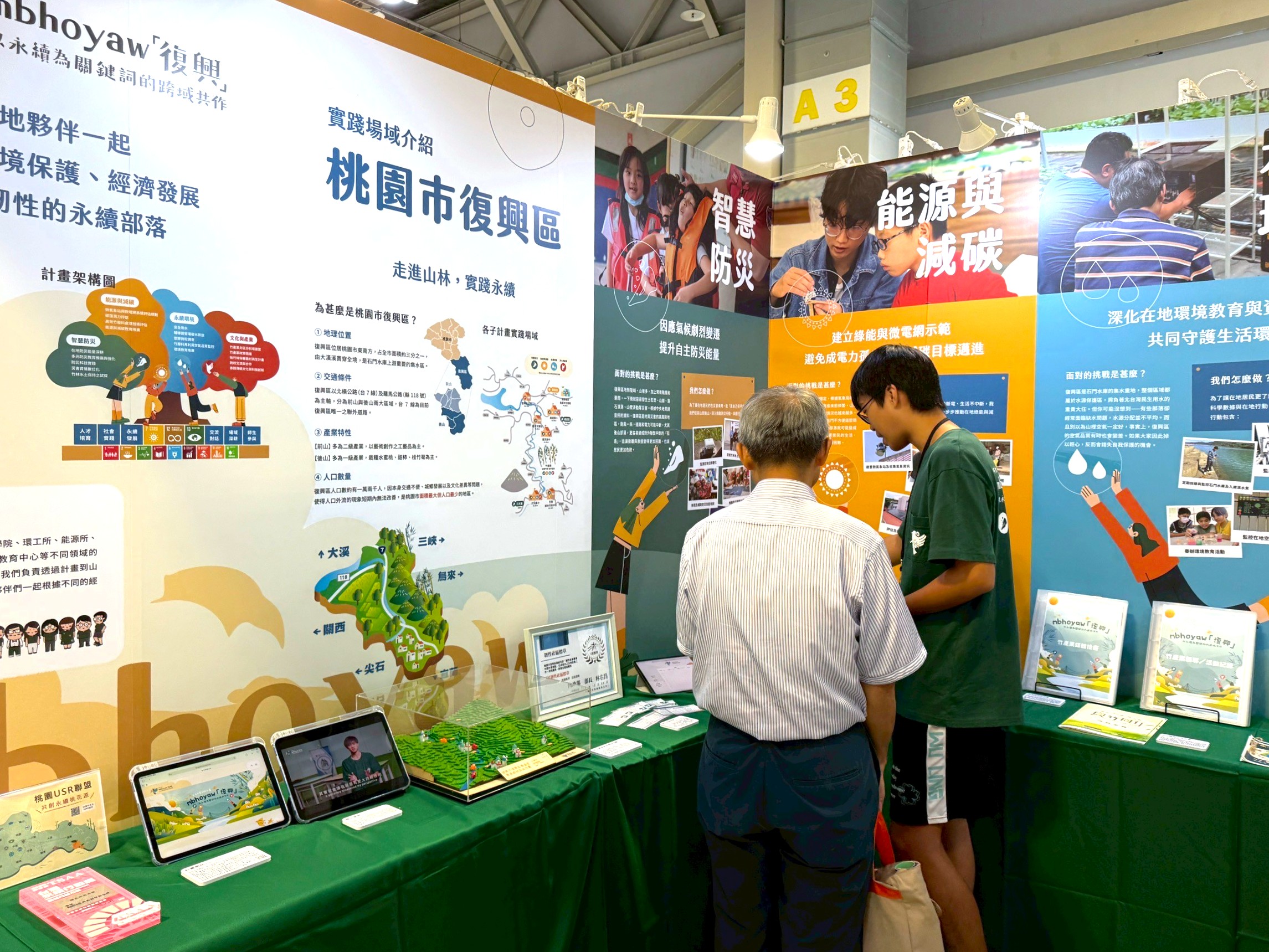
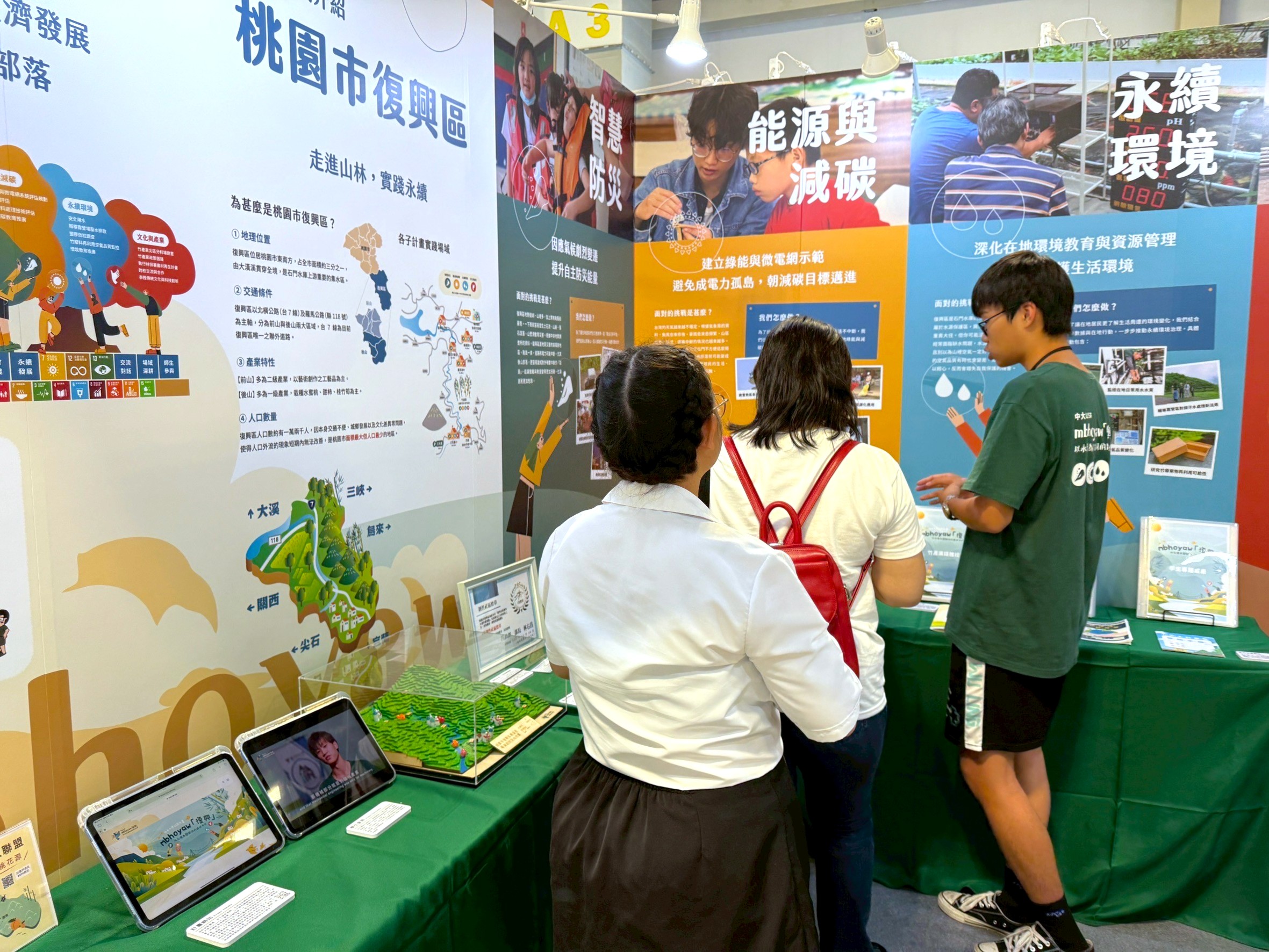
Shaped by mountain ranges, Fuxing enjoys stunning landscapes and abundant natural resources, but this also leaves it vulnerable to natural disasters. NCU’s USR team collaborates with local residents to install disaster-prevention and relief infrastructure, strengthening community resilience. Take Yisheng Village, for example: our partnership helped it earn the Ministry of the Interior’s “One-Star Resilient Community” designation. This not only affirms residents’ capacity for autonomous disaster preparedness and response; it also addresses concerns that, behind tourism development, disasters may degrade the environment of their hometown. Watching the project and residents join hands to protect their home moved me deeply.
Disasters often mean power outages. The solar panels and microgrid we installed at Yisheng Elementary School provide emergency electricity during typhoons. For a remote area like Fuxing, being able to generate and store power independently when the external grid fails can buy precious time for relief. Hearing how this system tangibly supports the school made me feel the value of cross-disciplinary collaboration: when a university leverages its resources to empower a community, it is both an honor and a responsibility.
Beyond Lalashan peaches and Jiaobanshan shiitake mushrooms, Fuxing also has a sizeable bamboo industry. Our USR team is assessing ways to repurpose bamboo-industry by-products, aiming to create new value while advancing decarbonization and environmental protection. On the education front, we continue bringing science outreach to mountain schools, helping students explore energy and the environment. Culturally, we work with the weaving club teacher at Luofu High School to promote Atayal weaving; through student projects, we have also co-created 3D tribal maps with Sanguang Elementary School and Luofu High School. Seeing people from different backgrounds rally around a shared issue—contributing their strengths, collaborating to produce new outcomes, and passing on local knowledge—both echoes the spirit of cross-disciplinary work and advances our sustainability goals.
mbhoyaw Fuxing—Cross-Disciplinary Collaboration with Sustainability at Its Core. This is my first time participating in a large-scale project. Although I have mostly observed, I’ve learned a great deal. In Atayal, mbhoyaw means “abundance and thriving.” To me, it symbolizes gathering strength across sectors and applying our respective expertise to overcome challenges, so that everyone has the opportunity to live abundantly and grow robustly. What does mbhoyaw mean to you?
Written by Su, Qi-Xian
Edited by Li, Ruo-Chia
Photos by Gu, Jia-Yuan and Deng, Jia-Yang
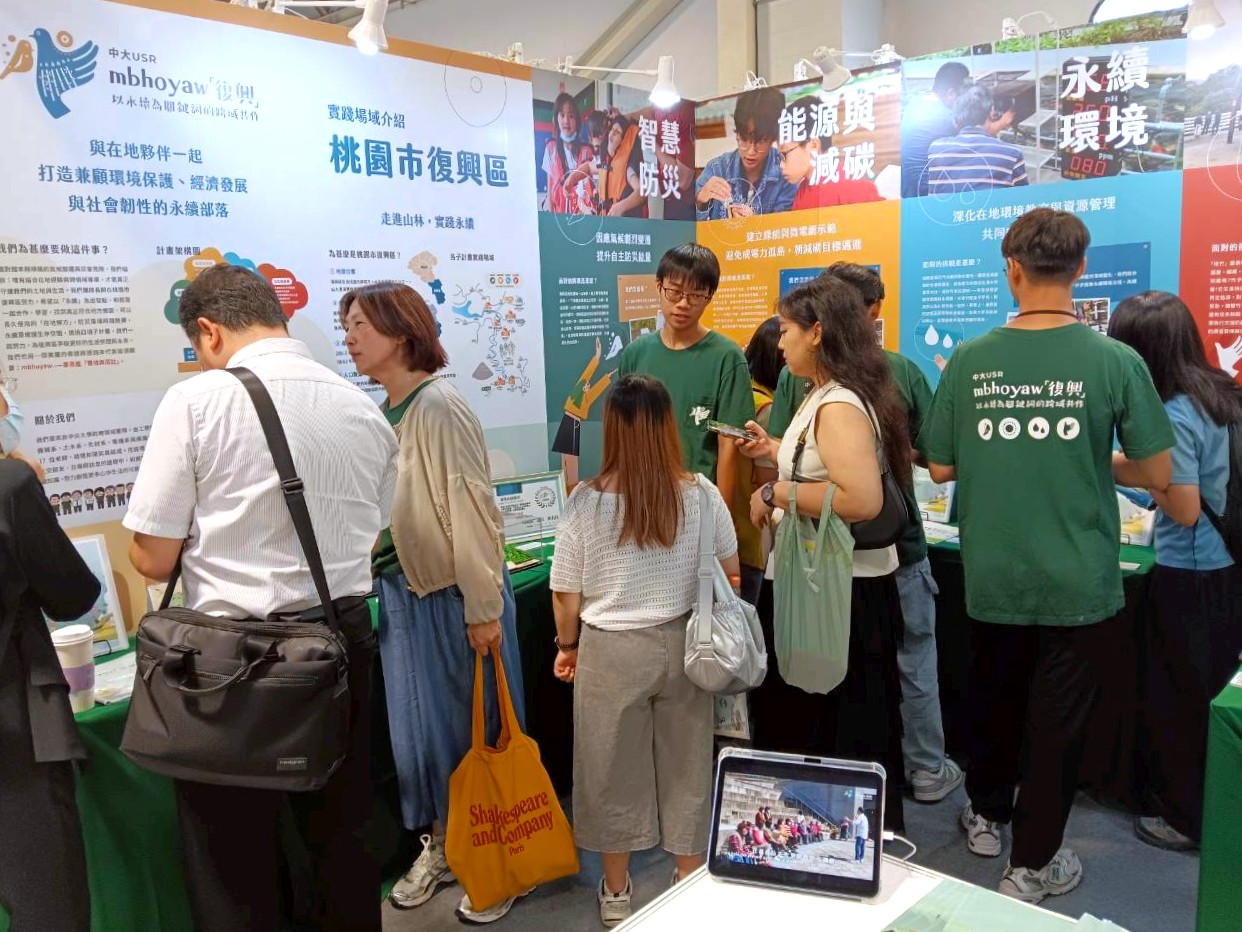
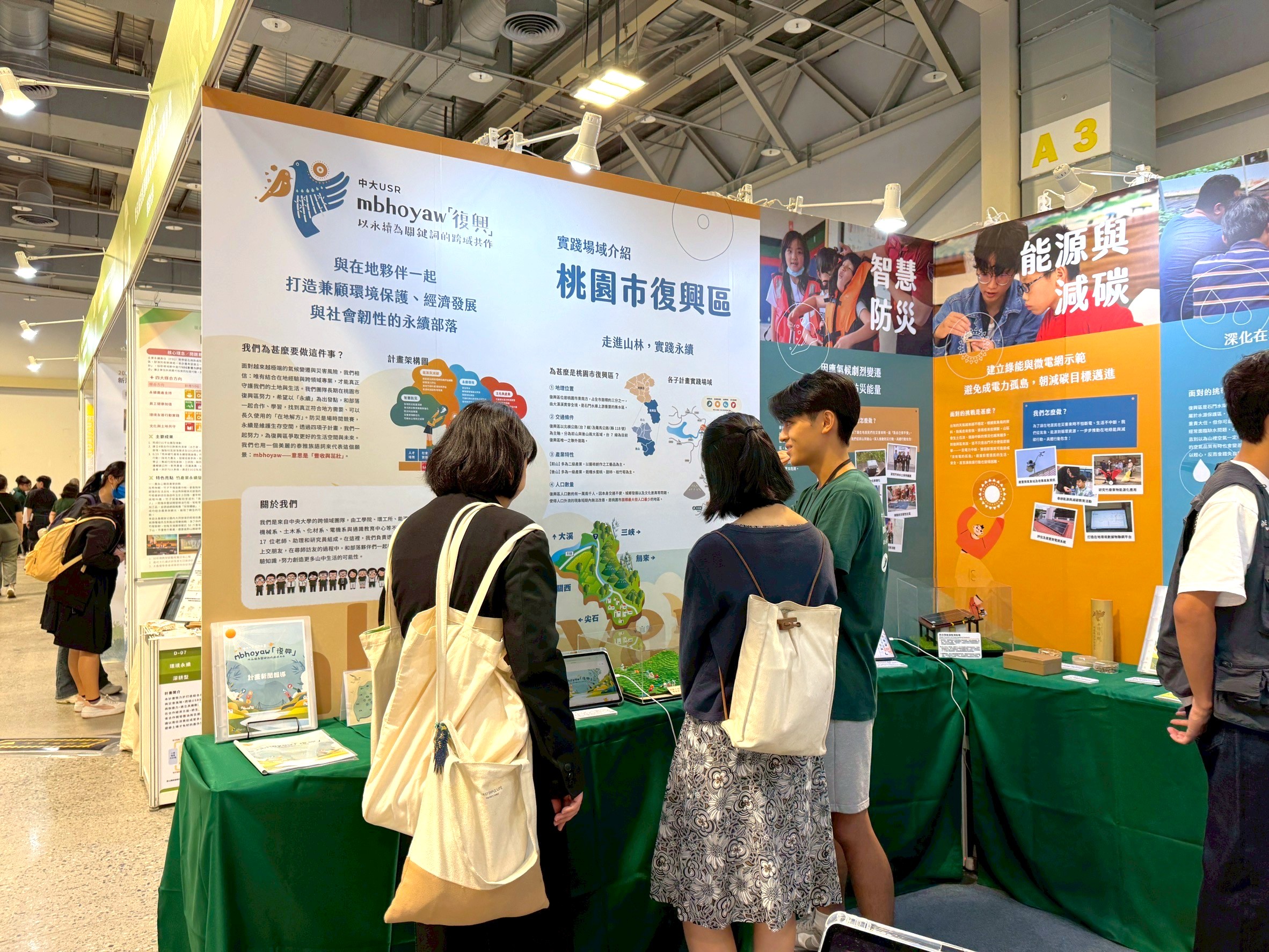
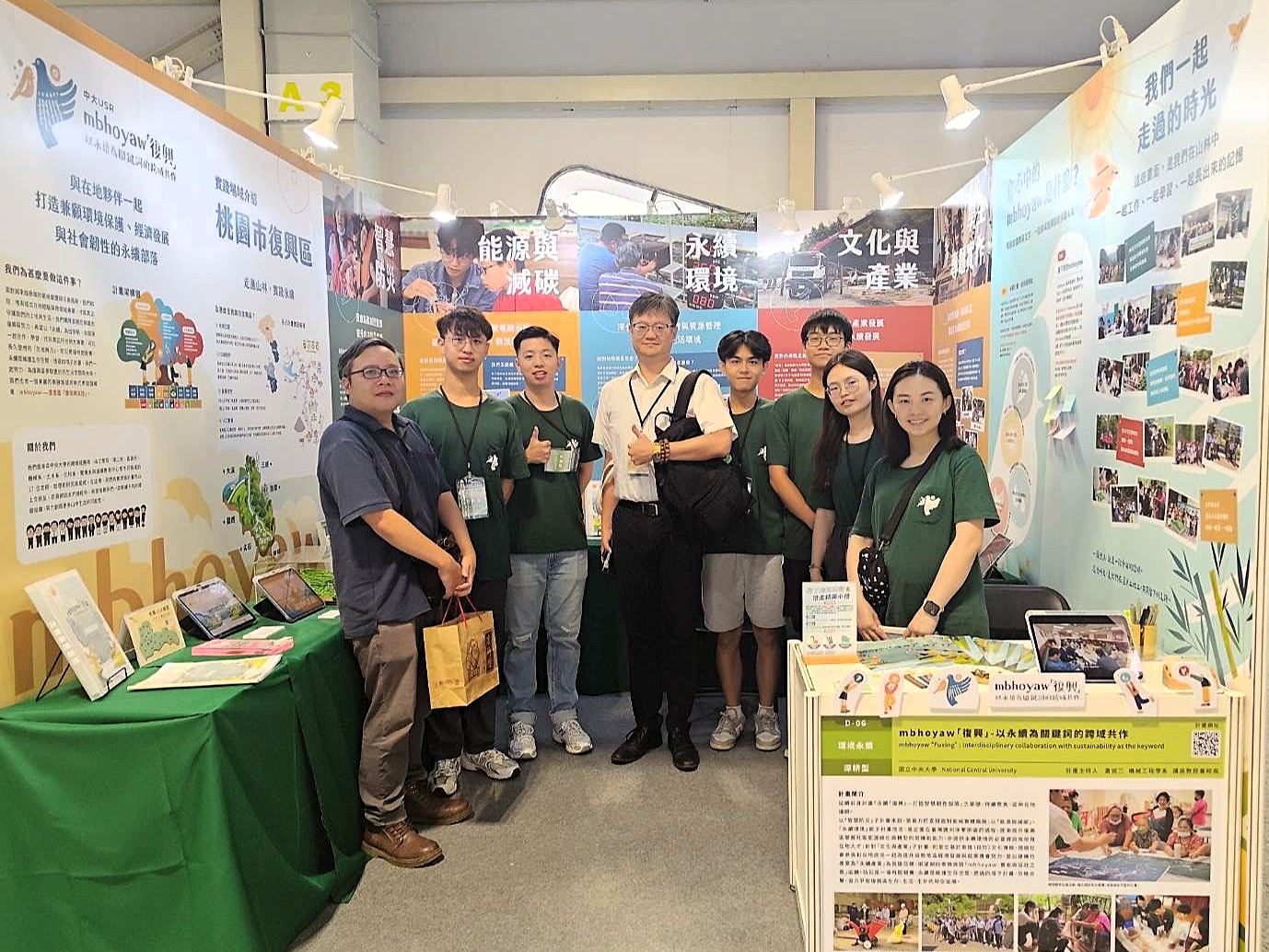
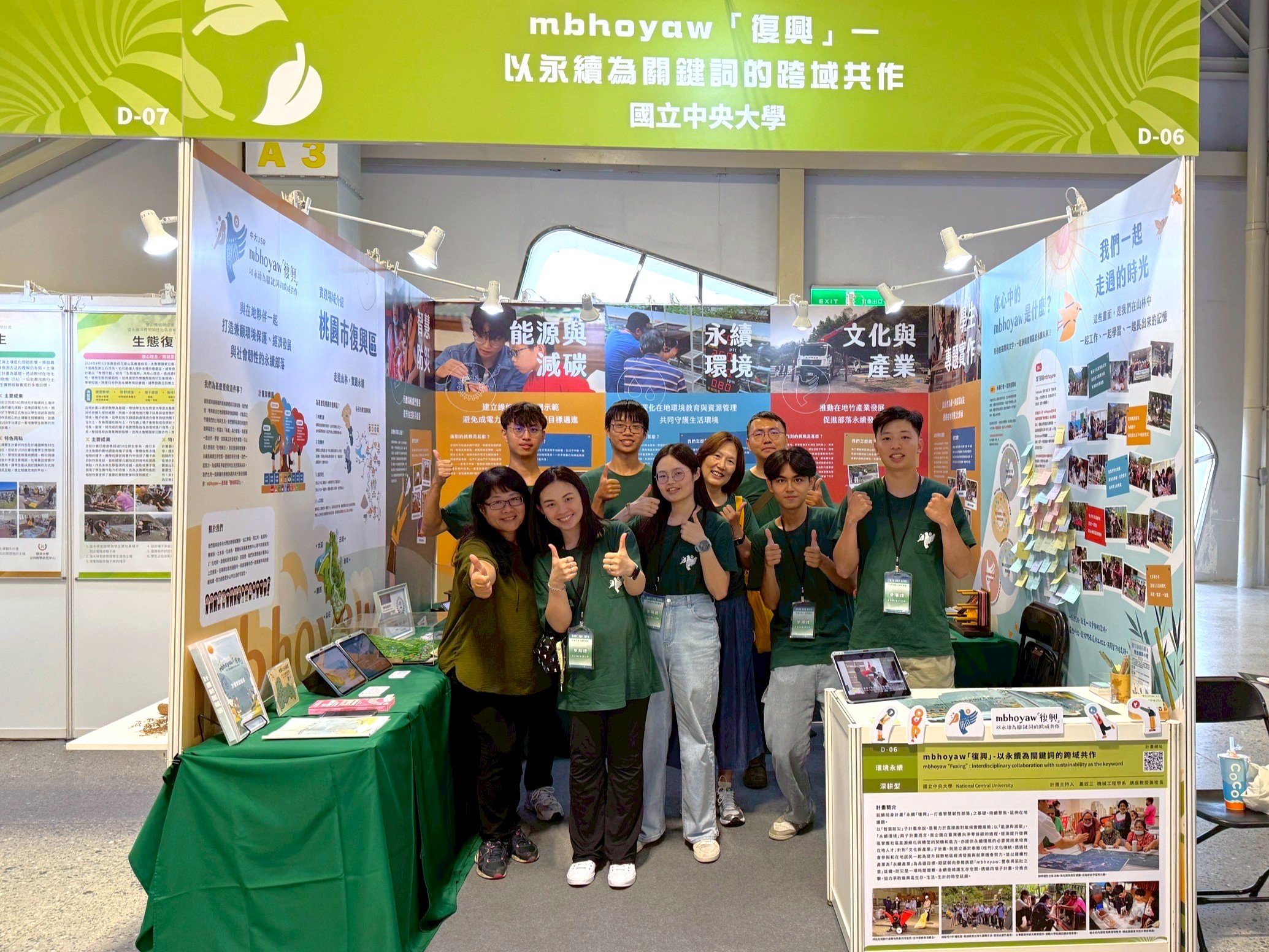
Hosted by the Ministry of Education, the 2025 USR EXPO opened with fanfare in Taipei, bringing together University Social Responsibility (USR) teams from across the nation to showcase the fruits of their long-term efforts. The National Central University (NCU) USR team was honored to take part, presenting display panels, models, and interactive installations that shared years of work in Taoyuan’s Fuxing District—and embodied the spirit of mbhoyaw.
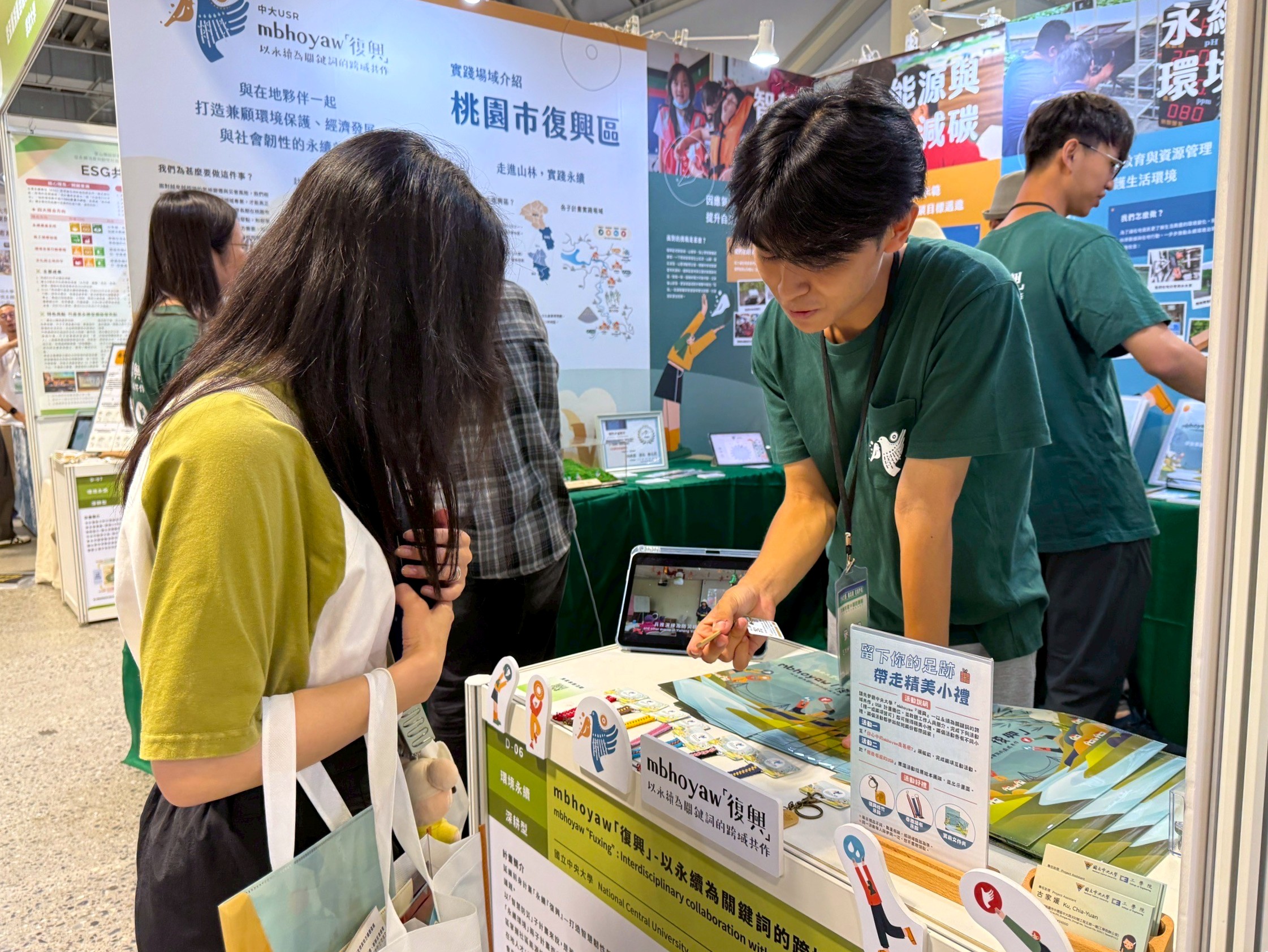
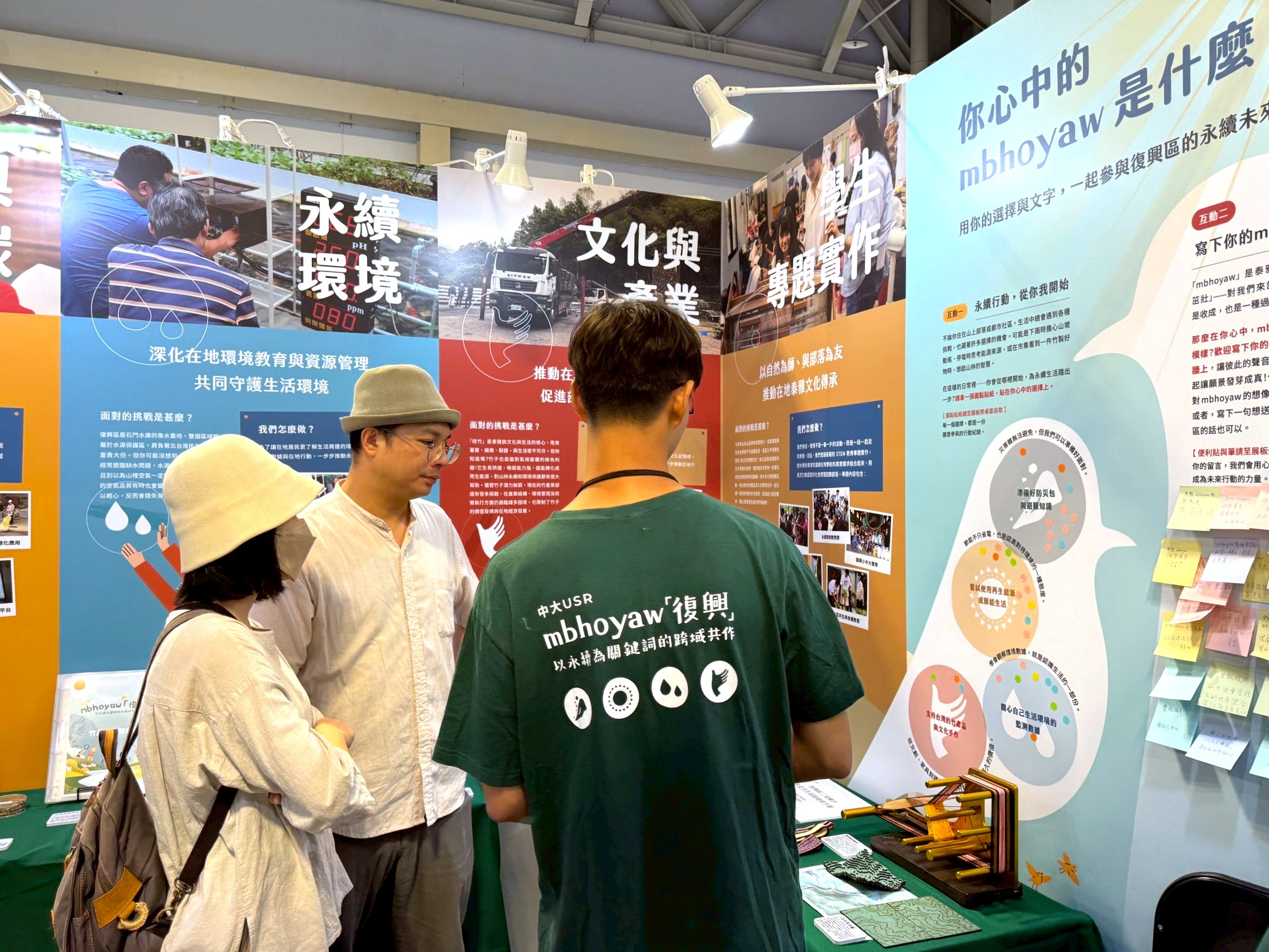
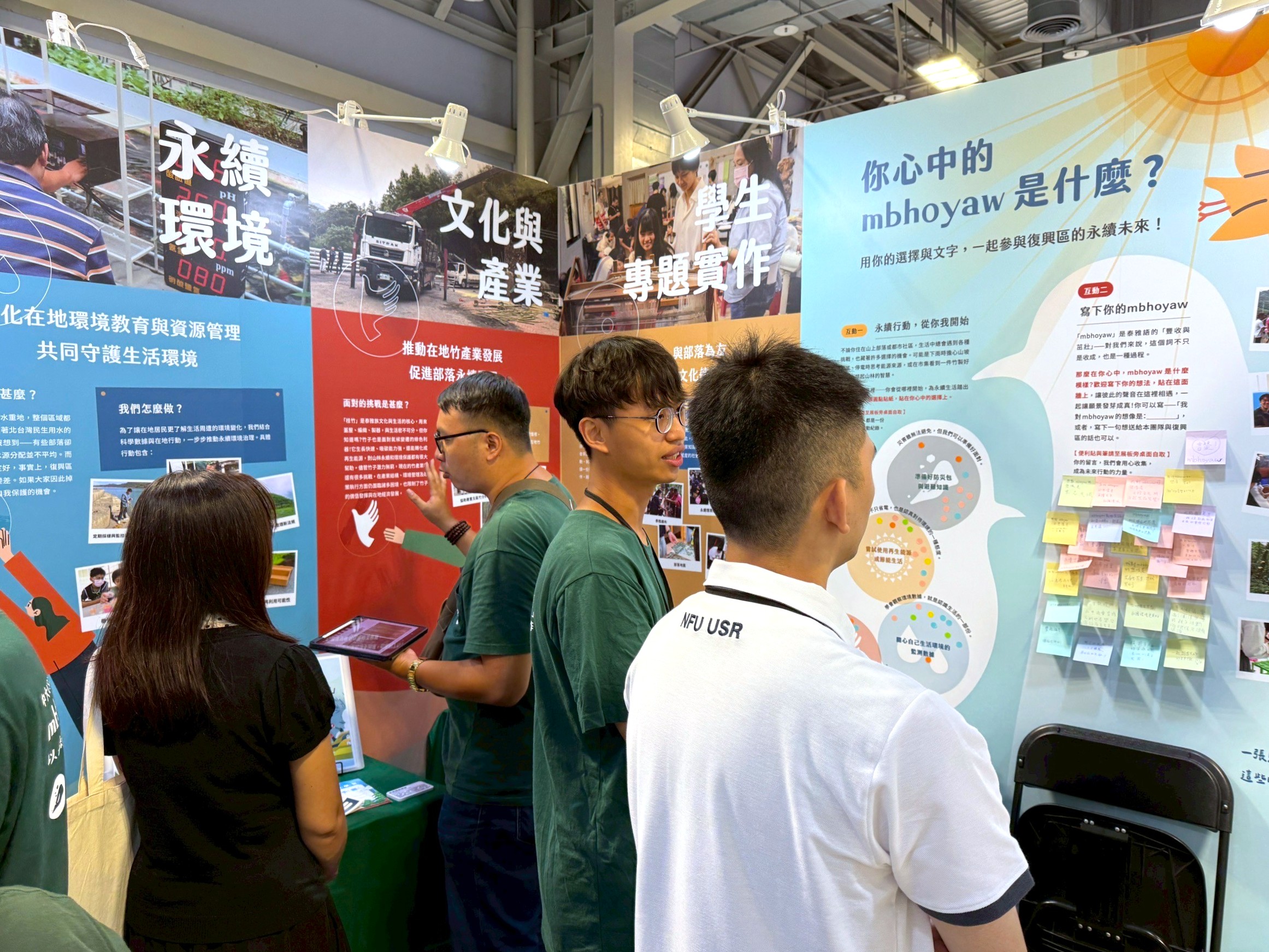
The atmosphere on site was vibrant. Many visitors were drawn to our carefully designed panels and models, stopping to ask questions. Our guides offered in-depth explanations—covering the project’s vision, challenges in implementation, and tangible outcomes—to illuminate the team’s direction and values. These conversations often sparked thoughtful reflections from visitors that heartened us. One moment stood out: an elderly grandmother, despite limited hearing, patiently listened to the entire tour, asked questions, and shared her feelings. In the final interactive segment, she even dictated her own vision of “mbhoyaw” for our staff to write down. Knowing that our ideas truly resonated filled the team with joy. The public’s support and encouragement remain our strongest motivation to keep pushing forward.
This year we also prepared English-language tours to connect with international visitors. During the exhibition, an invited speaker from Japan visited our booth for a full briefing; at the end, she left a sticky note reading, “mbhoyaw equals resilience.” Simple yet profound, it affirmed that the message we hoped to convey had been genuinely received. Even across differences of language and culture, we are eager to bridge gaps so the work behind mbhoyaw can be seen.
Throughout the two-day event, the NCU team actively visited other universities’ booths as well—such as Shih Chien University’s promotion of Neimen’s Songjiang Battle Array culture; National Taipei University of Business’s support for En Chu Kong Hospital and local enterprises in ESG assessment and implementation; and National Taipei University of Technology’s efforts to protect Yingge’s ceramic culture. These projects showcased mature, place-based practices and reminded us that we are not alone on the USR journey.
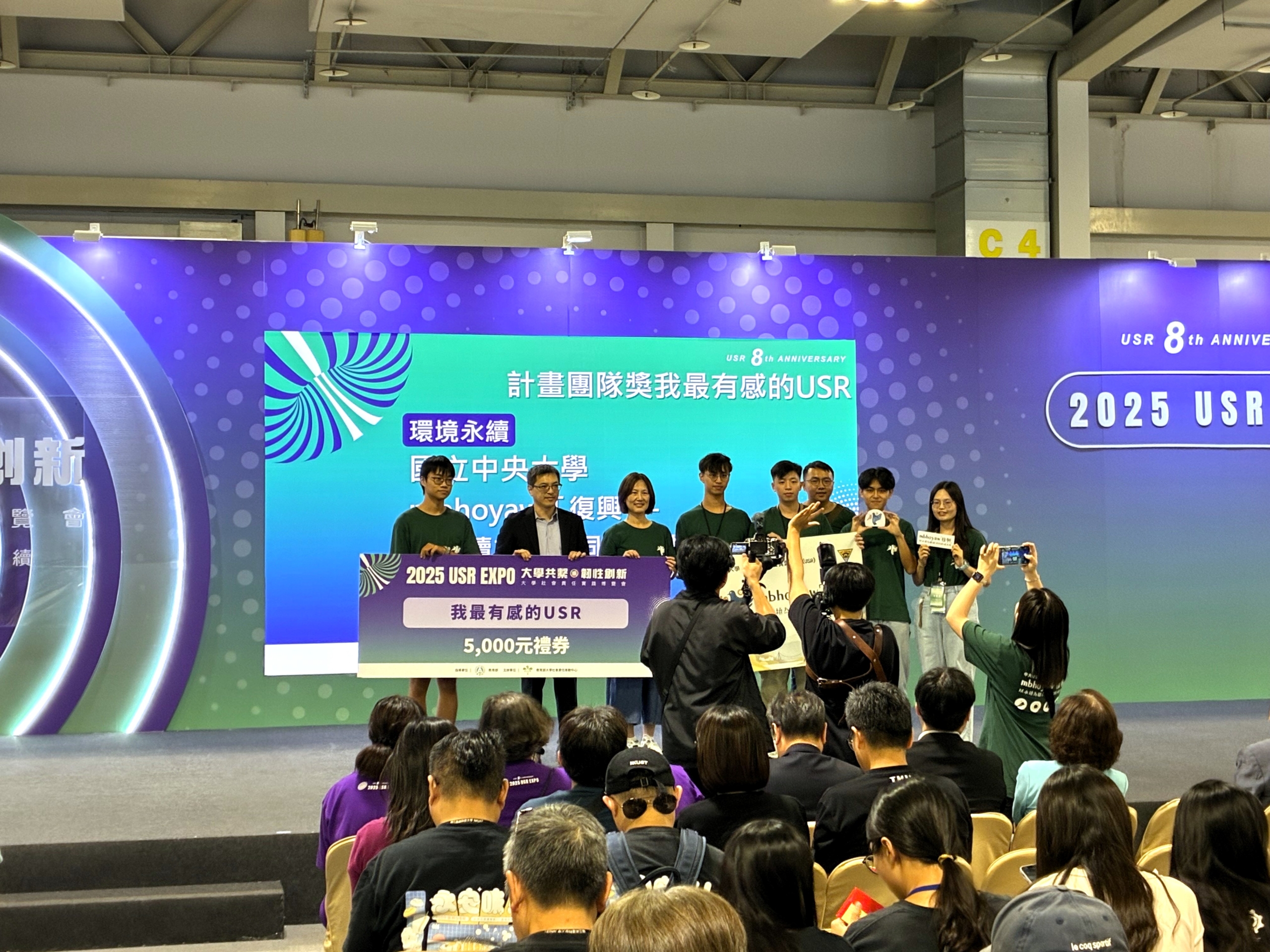
Beyond rich exchanges and learning, our team also stood out in the Environmental Sustainability zone, earning the “Most Resonant USR” distinction. This honor reflects the sustained dedication of professors, teachers, staff, and the residents of Fuxing District. Without each and every one of them, the project could not have come together so fully.
mbhoyaw is more than a word—it is the power of collective will. Individual efforts, like trickling streams, converge into a great river that flows unceasingly through Fuxing. This exhibition was not only a presentation of results; it was a vital moment for our ideals to be seen—and to keep traveling outward.
Written by Shu, Cheng-Jui
Edited by Li, Ruo-Chia
Photos by Gu, Jia-Yuan and Deng, Jia-Yang
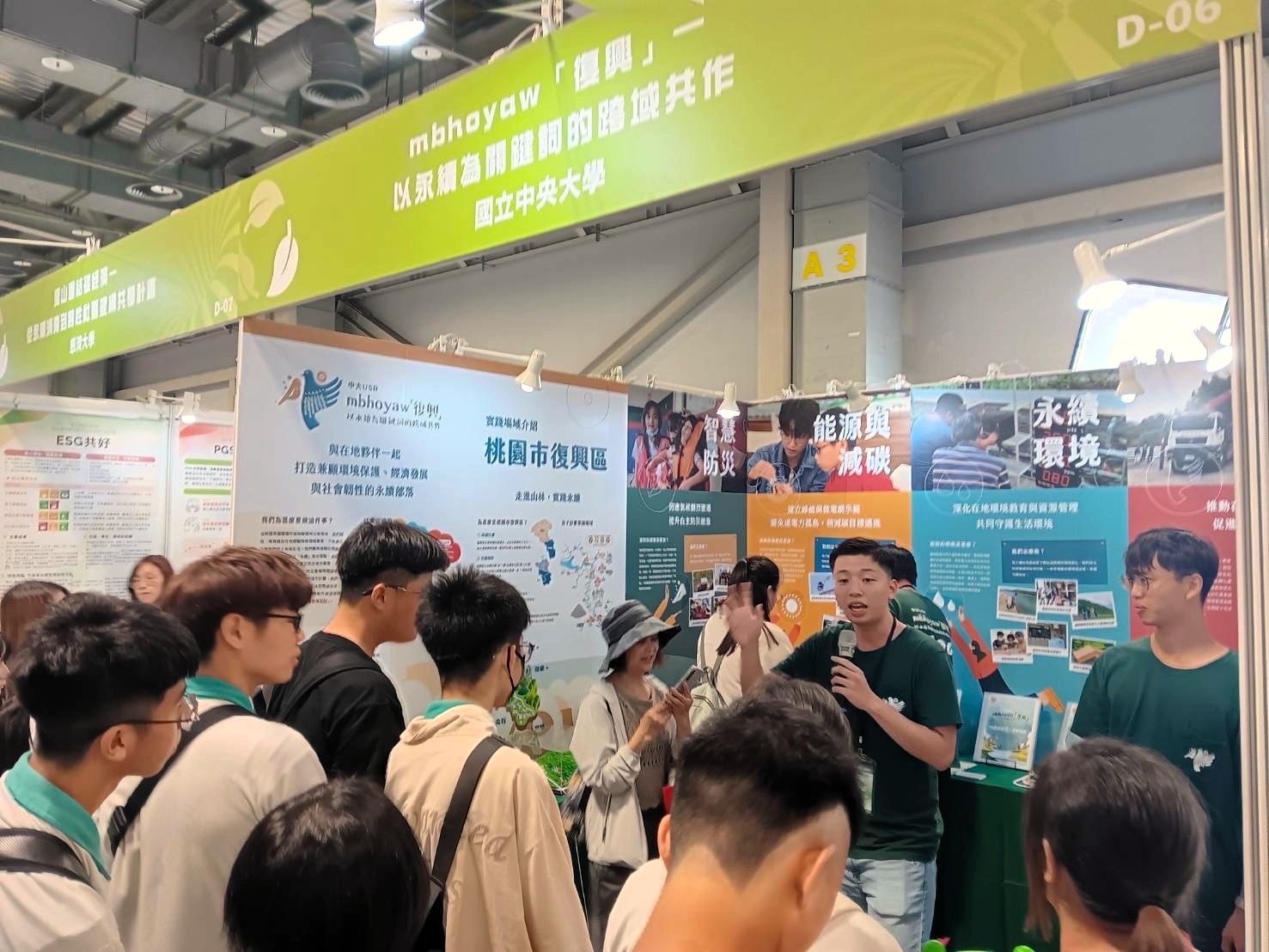
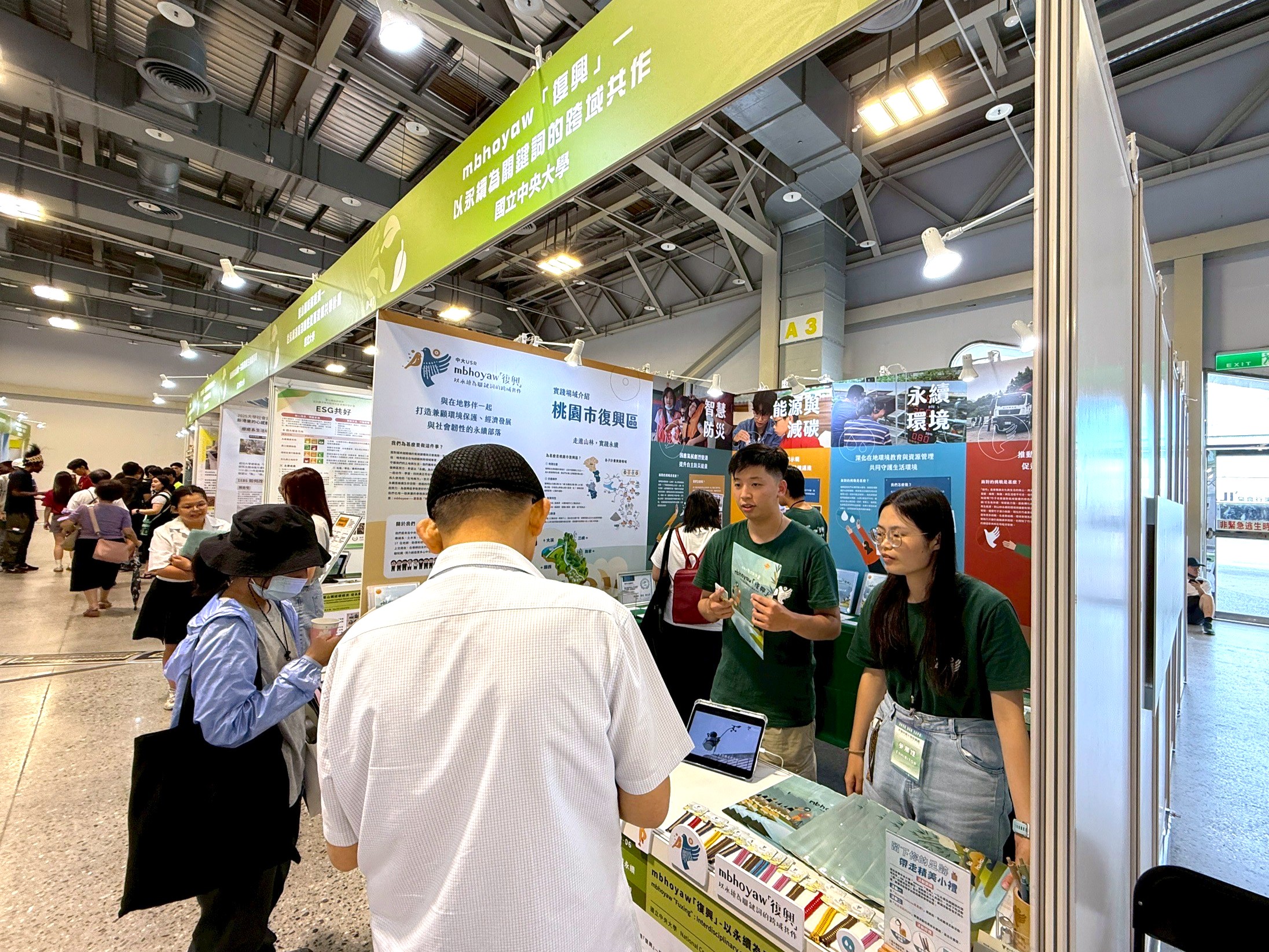
The two-day USR Results Expo was a rare and meaningful experience—and my first time serving as a docent, introducing our project face-to-face. The preparation began two weeks earlier with a pre-event briefing and practice runs. Through scenario drills, I sharpened my grasp of the project’s essentials, learned to steer conversations, frame dialogues around Fuxing District, and quickly catch the eye of passersby to invite them into our booth. Those rehearsals laid a solid foundation for everything that followed.
On site, I noticed that most visitors associated Fuxing with “Lalashan peaches.” I used that familiar touchpoint to lead into the ties between peaches and the local environment. The approach sparked empathy and drew people deeper into our story. My hope is that when they next visit Fuxing, they’ll remember not only its specialties but also the rich natural and cultural context that surrounds them.
Breaks between shifts let us visit other universities’ USR booths. Seeing the range of local practices and presentation techniques pushed me to reflect on my own communication. Back at our station, I applied what I’d observed, borrowing others’ strengths to clarify our message and help visitors grasp our project’s core values more readily.
In the expo’s popularity poll, our team stood out in the Environmental Sustainability category, earning the “Most Resonant USR Project Team” award. The recognition affirms visitors’ support for our work and belongs equally to every colleague whose effort and teamwork made our values visible to more people.
Written by Hsieh, Chi-Yang
Edited by Li, Ruo-Chia
Photos by Gu, Jia-Yuan and Deng, Jia-Yang
As a student who has participated in the USR initiative for three years, I felt especially grateful for the chance to share my observations, experiences, and reflections at this expo. Although I wasn’t involved in every sub-project, preparing for the tours helped me clarify the implementation logic and core principles behind each line of work, deepening my overall understanding of the program.
Beyond presenting our outcomes to visitors, I also visited the exhibition areas of many universities to observe their innovative practices across different locales and issues. Through these exchanges, I saw directions we could extend in the future. One attendee suggested that our “physical disaster-preparedness relief map built on a digital elevation model (DEM)” could evolve toward the United Nations’ Hunger Map model: integrating more datasets, digitizing the information, and putting it online so users can query and update it in real time. This would not only enhance interactivity and timeliness, but also make disaster information more accessible for the public, local governments, and even international organizations—thereby expanding its value in practice. To me, this captures the true meaning of an expo: not merely displaying results, but sparking new ideas through exchange.
Looking back, USR started out as just a course project. Through hands-on involvement, I learned to align what I’ve studied with real community needs—shifting from passively absorbing knowledge to transforming my expertise into concrete actions and outcomes. With our “mbhoyaw Fuxing” team receiving an award this time, I hope more students on campus will learn about USR and that like-minded peers will be inspired to join.
Participating in this expo convinced me that applying what we learn to real-world practice is a path worth pursuing. Whether in future research, the workplace, or other areas of life, I hope to carry forward the spirit of USR—combining professional skills with social needs to keep creating positive impact.
Written by Wang, Yi-Hong
Edited by Li, Ruo-Chia
Photos by Gu, Jia-Yuan and Deng, Jia-Yang