
Just after daybreak, we set out in the early morning light. We drove from Zhongli through Daxi and onto the winding mountain roads of Fuxing. As we climbed, the bustle of the city gave way to layers of green hillsides. Our destination was Yeheng, an Indigenous community nestled in a mountain valley, where we had invited an ecology expert known as “Teacher Monster” to share practical advice on staying safe around hornets and honeybees.
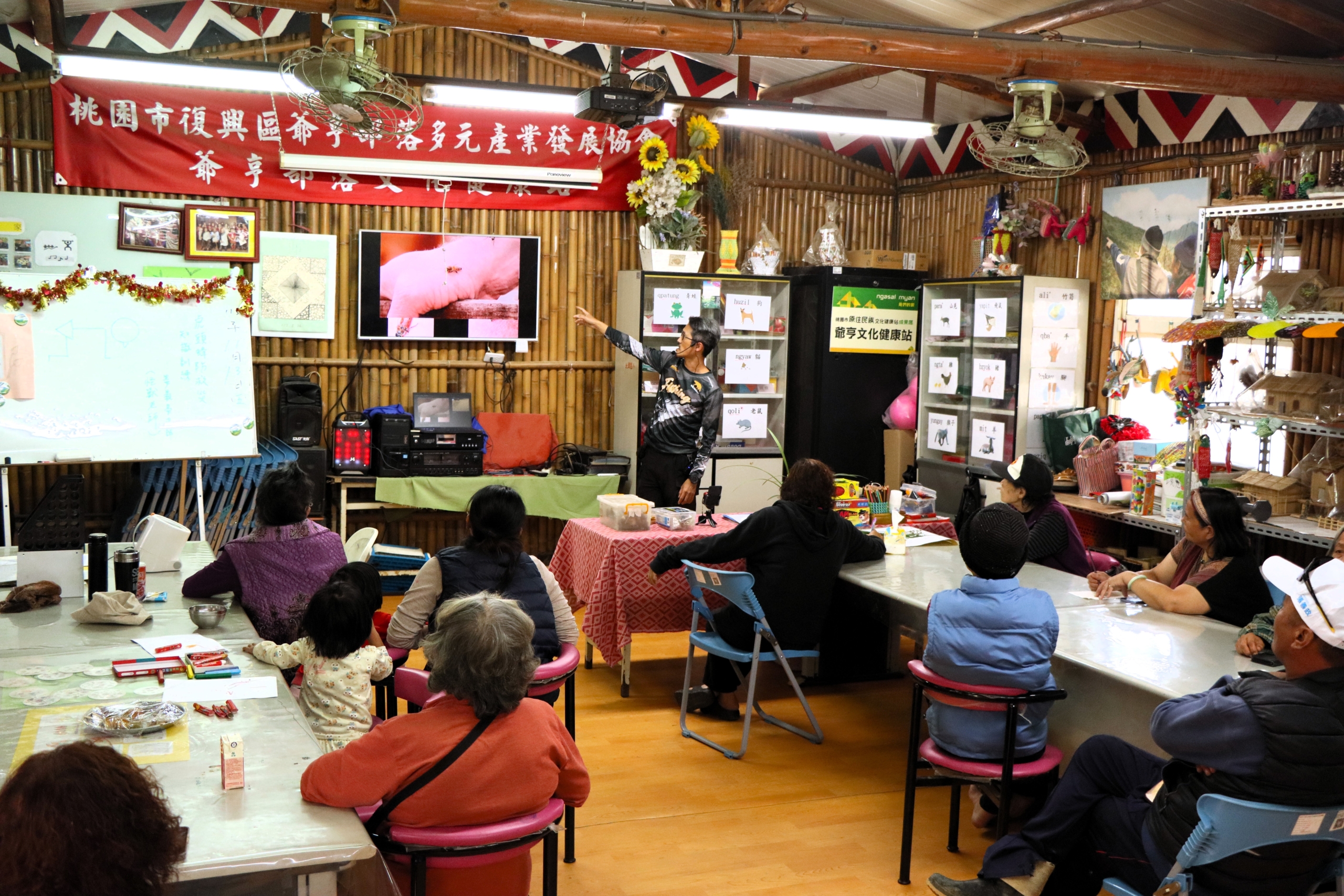
When it was time to begin, residents called out to one another as they made their way into the community center. The session opened with a seemingly simple question: “How can you tell a honeybee from a hornet?” Our instructor started with their nests and stingers. Honeybees build their nests with wax, while hornets use wood fibers to make paper-like nests. A worker honeybee’s barbed stinger often stays lodged in the skin after a sting, while a hornet can sting repeatedly. He also explained that hornets may swarm to defend a disturbed nest, so it’s best to keep your distance if you spot one in the woods.
The instructor then brought up a couple of common reactions to encountering hornets: lying down and playing dead, or waving clothing to drive them away. He acted out what to do so everyone could remember it more easily. If hornets are flying nearby, crouch slightly and move away quietly. If they start attacking, use a piece of clothing to protect your head and neck, stay low, and get away quickly without swatting at them. For outdoor work in the mountains, he suggested wearing light-colored, long-sleeved clothing made of smooth fabric.
When we turned to first aid, the instructor mentioned a folk remedy that involves putting urine on a sting. He explained that it does nothing to neutralize the venom. Once you’re safely away from the hornets, remove any stinger still lodged in the skin as soon as possible and watch for symptoms. If the person has trouble breathing, feels very dizzy, or shows a change in alertness, call 119 immediately. If you find a nest near a home or somewhere people regularly pass through, keep clear and have a professional assess it. Avoid spraying or removing it yourself.
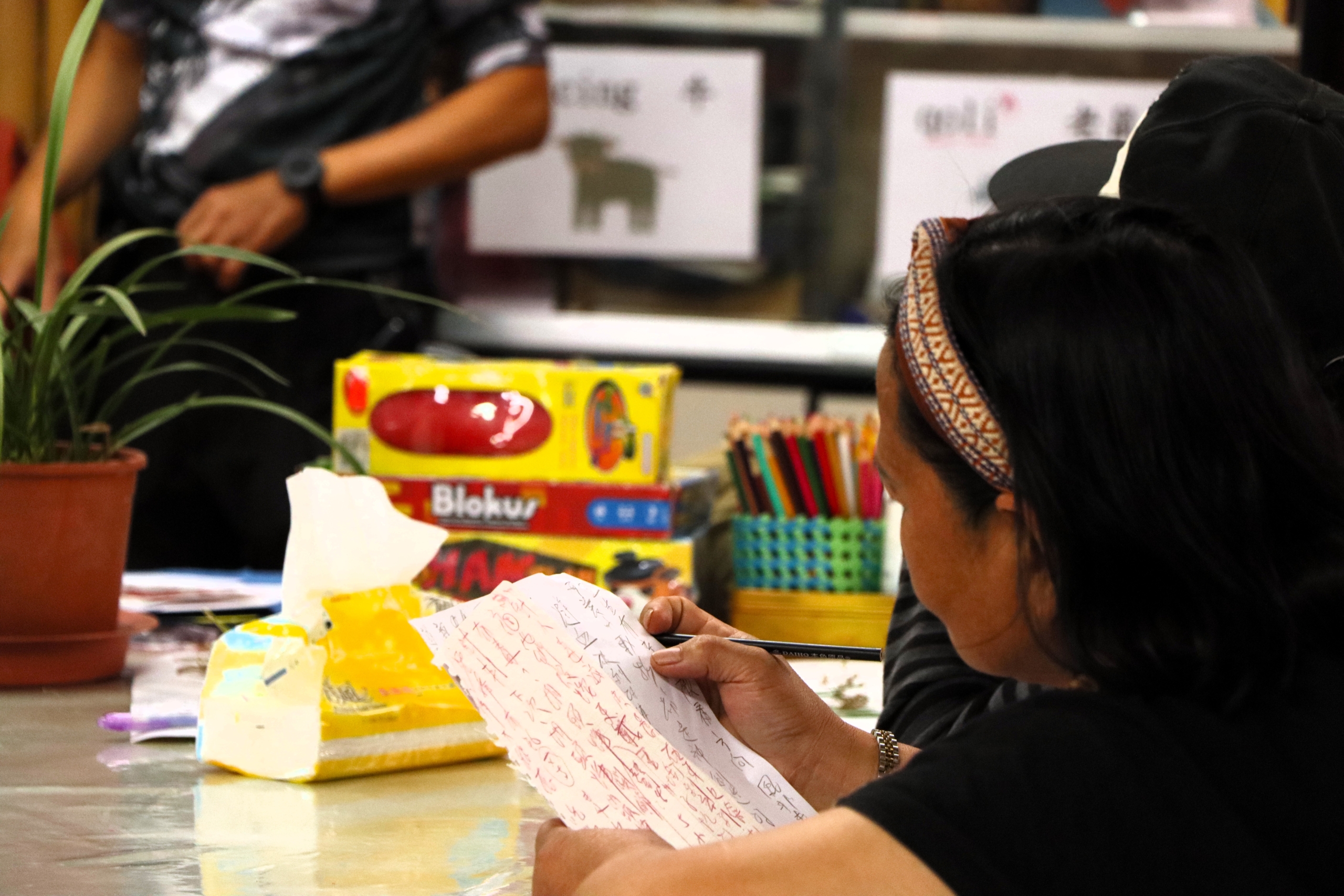
Even when the material got technical, the conversation kept flowing. The instructor’s demonstrations drew laughter, and residents chimed in with comments and questions. One woman in particular stayed with me. She took notes throughout the session with colored pencils from the community center and even asked the instructor if he could recommend any books.
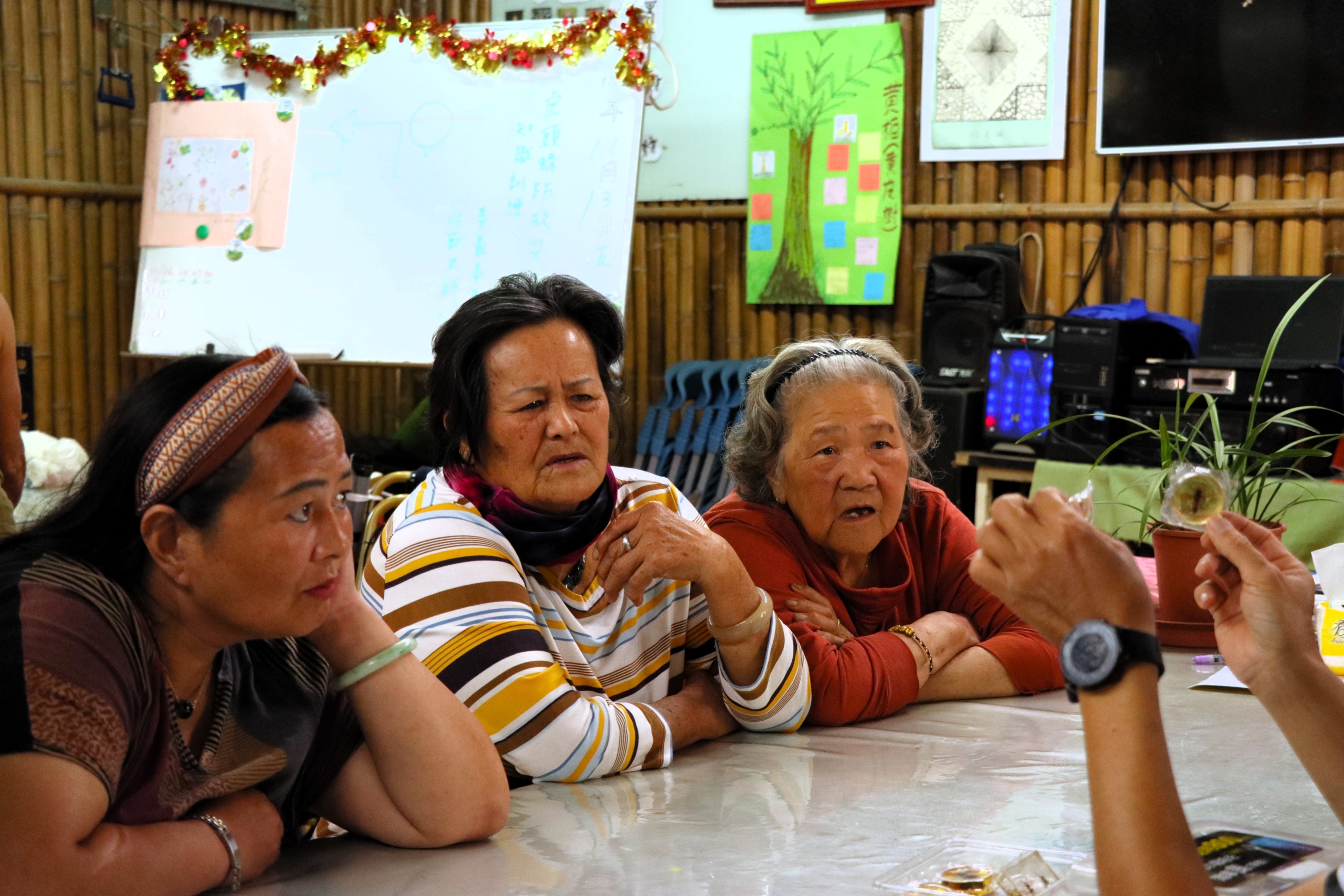
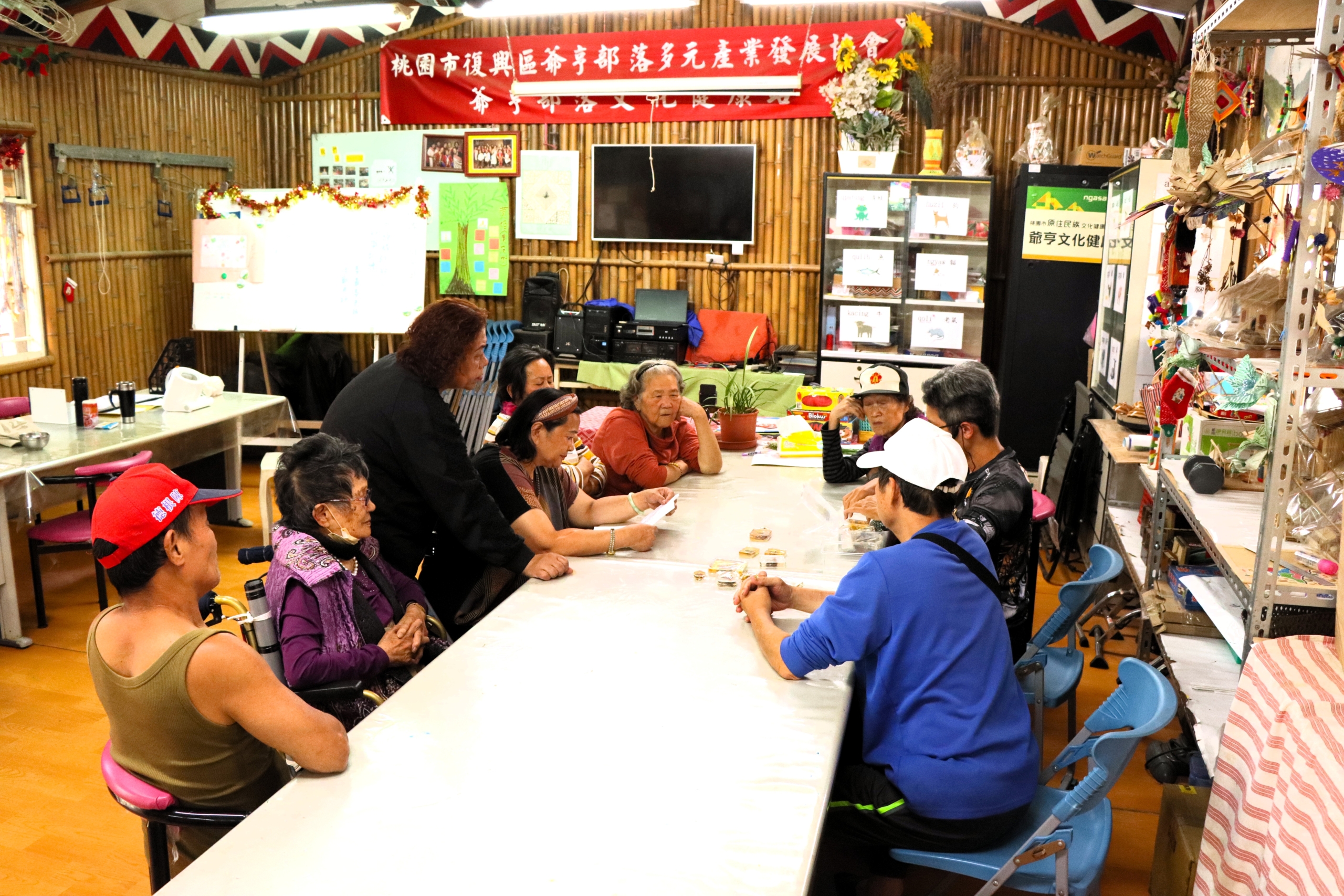
Toward the end of the session, the instructor brought out his prized collection of hornet and nest specimens. Everyone’s attention turned to the display, and soon the conversation shifted to the community’s Indigenous language. That was when I learned that different kinds of bees and hornets carry different meanings in the language. People talked and laughed as they looked over the specimens. I’d come to document the session, and I ended up learning a great deal from both the instructor and the residents.
After the session, we got back in the car and headed home. As we crossed Baling Bridge, the sunlight in the valley felt warmer than it had that morning. I found myself feeling a little closer to these mountains.
Written by Luo, Ning
Edited by Li, Ruo-Jia
Photos by Luo, Ning