This was my second visit to Kuihui Indigenous Cultural Health Station. As soon as I arrived, the elders and care workers warmly offered me something to eat. Their familiar hospitality immediately put me at ease and gave the day a welcoming start. Following our previous disaster preparedness session, this class focused on fire safety. The instructor was a firefighter from New Taipei City who has worked with our team on several occasions. Seeing him enter with a large bag, I could not help wondering what was inside, which made me even more excited about the class ahead.
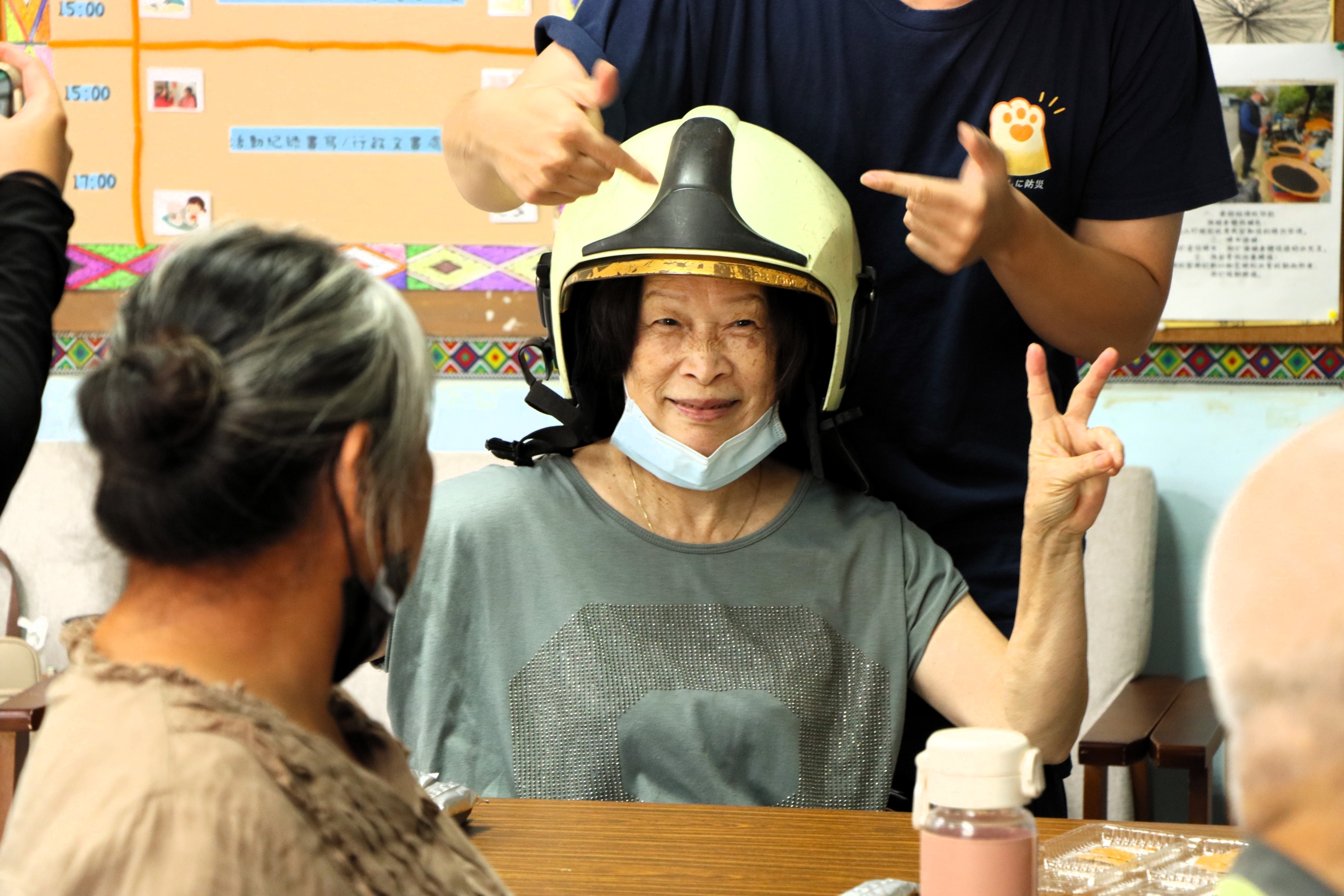
Once the elders had finished breakfast and settled into their seats, the class began. To my surprise, the instructor immediately revealed the bag’s contents—a complete set of firefighting gear! He had brought everything from a helmet and protective clothing to firefighting boots, and even an air cylinder for his breathing apparatus. As he put on each item, he explained its purpose and invited the elders to help him get dressed and try out some of the equipment, giving everyone a close look at what firefighters wear on duty.
Watching from the side, I could sense just how heavy and bulky the equipment was. Even fully dressed in his gear, the instructor continued explaining and interacting with everyone, which I found impressive. Thinking about firefighters carrying out rescue operations in burning buildings while wearing all this equipment deepened my respect for their dedication and professionalism.
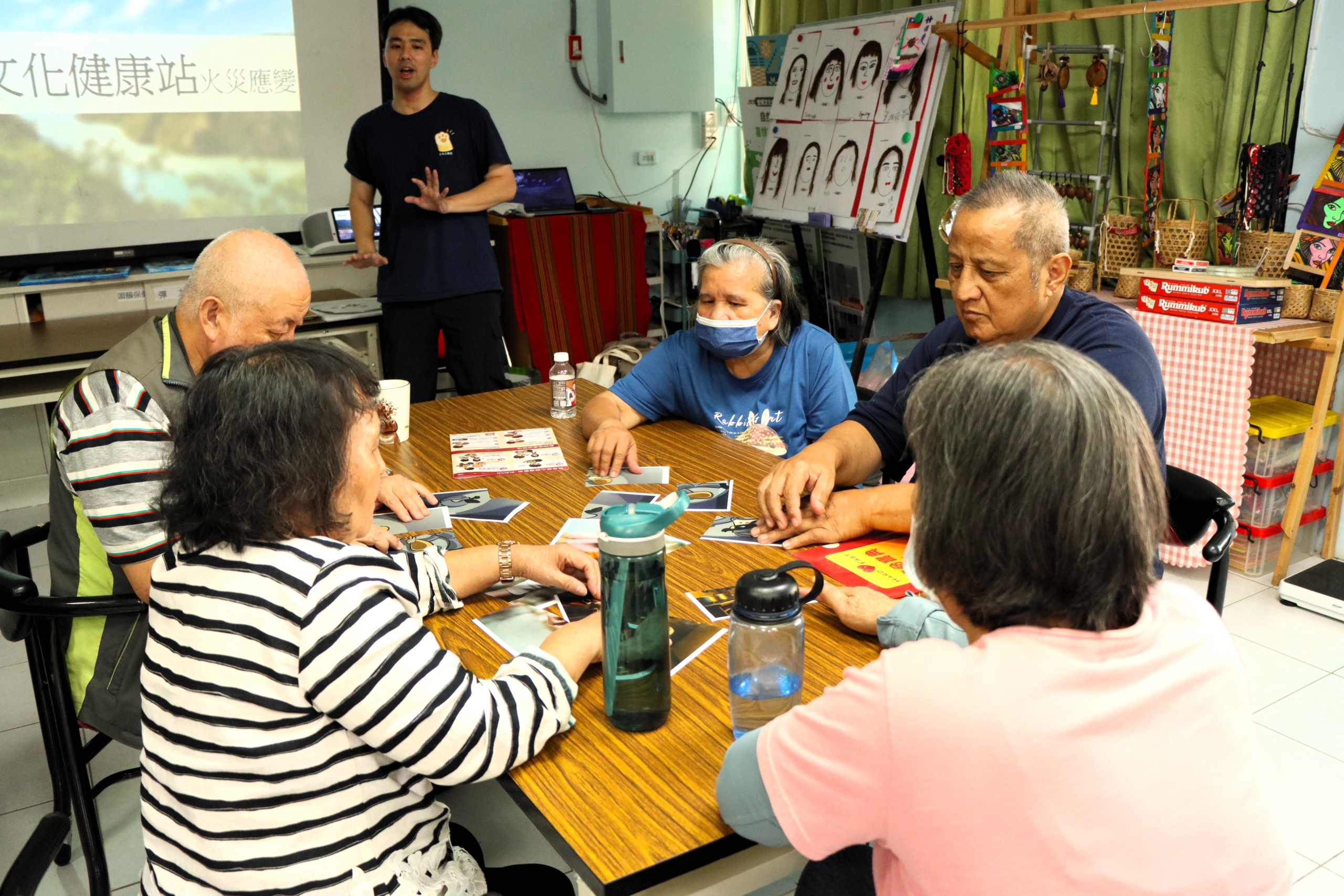
After introducing the firefighting gear, the instructor brought out a board game about power strip safety. Each table received an oversized illustration of a power strip and a set of appliance cards. Participants first chose the appliances they wanted to use, then turned the cards over to check their wattage. They had to consider whether all their chosen appliances could share one power strip without overloading it. What initially seemed like a simple choice soon sparked lively discussions. Everyone wanted to keep their selected appliances, but they also had to work together to decide which ones to set aside. The instructor visited each table to explain the power requirements of different appliances and the principles of safe power strip use. As the elders became increasingly engaged, abstract concepts about electricity turned into practical decisions connected to everyday life.
Next came puzzles featuring emergency telephone numbers. Alongside fire safety, the instructor introduced important numbers for seeking help in daily life. Pictures and puzzles helped the elders recognize what each number was used for and remember it more easily. As soon as the puzzles were handed out, everyone began searching for and fitting the pieces together. They occasionally checked the other tables’ progress, as though taking part in a friendly competition. Their focused expressions showed just how involved they were in the activity.
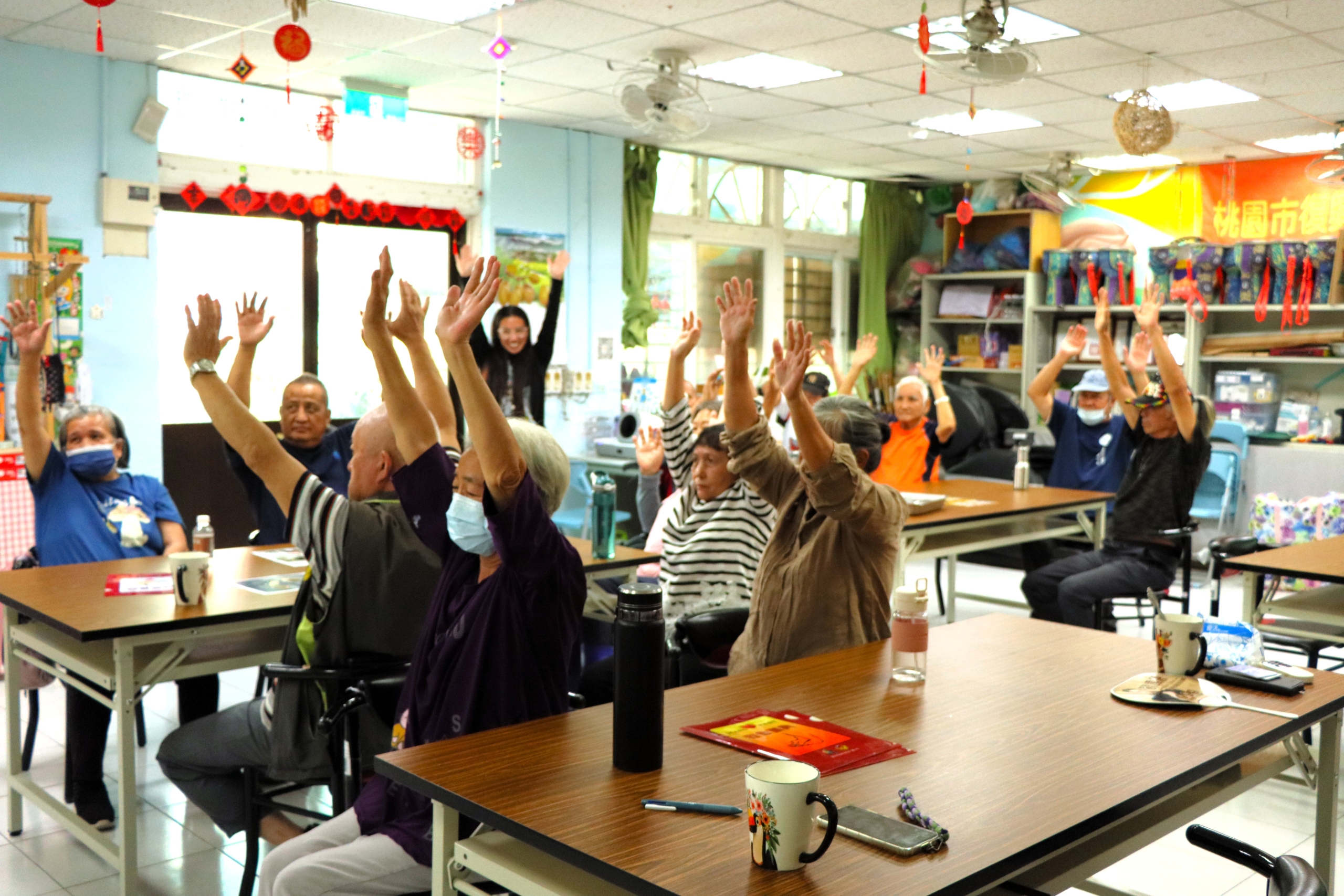
At the end of the class, the instructor guided everyone through fire response and evacuation practice. One activity involved shouting “Fire!” loudly to alert people nearby. Several elders demonstrated with strong, energetic voices, reminding me of similar drills I had attended at school. Compared with them, my voice back then was probably no louder than a kitten’s meow! It also reminded me to take drills seriously so that I could become more familiar with how to respond. Everyone then took part in an evacuation drill, first discussing how to assist elders with limited mobility so that all could participate. Through hands-on practice, verbal explanations became shared actions, helping everyone better understand how to look after one another in an emergency.
The class concluded after everyone completed the evacuation drill. For me, this approach made learning both enjoyable and memorable. The enthusiastic participation of the elders at Kuihui filled the session with laughter and energy. When lessons connect with everyday life and provide opportunities to participate and practice, fire safety becomes something everyone is willing to learn about together.
Written by Hsu, Chia-Jou
Edited by Li, Ruo-Jia
Photos by Hsu, Chia-Jou