
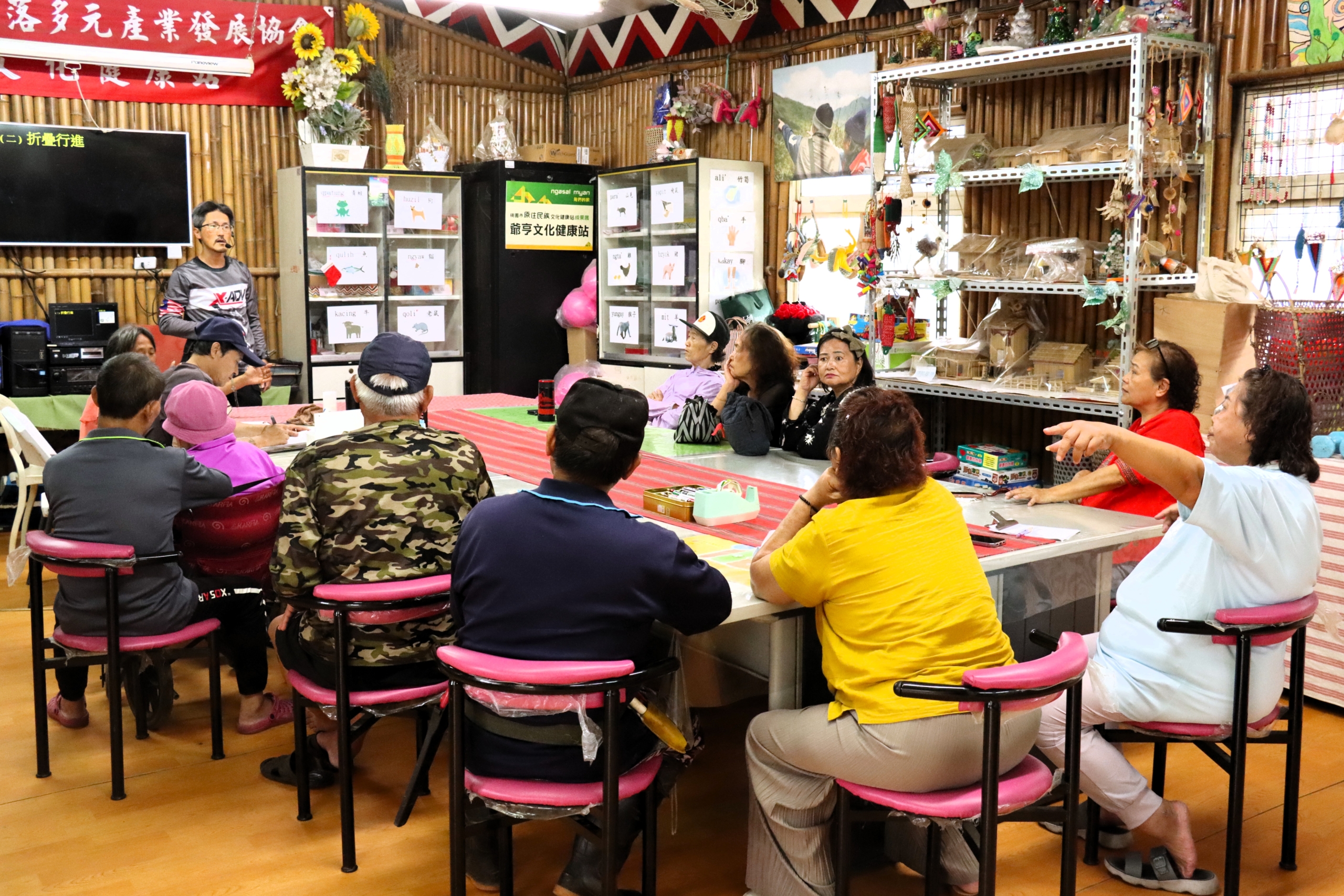
Early in the morning, I excitedly boarded the vehicle bound for the Yeheng Cultural Health Station. Today’s topic was the one I had been looking forward to most since becoming a student reporter—snakes! The journey to Yeheng was equally memorable, though for a different reason. It was the most distant place I had visited with the team so far, and the winding mountain roads brought back the motion sickness I had not experienced in quite some time. Before long, our instructor, known as “Monster Teacher,” arrived on the motorcycle that had reportedly accompanied him on trips all over Taiwan. The elders also began arriving in shuttle vehicles. Once everyone was seated, the much-anticipated snake education session began.
The instructor first introduced the basics of snakes, including their habits, species, and anatomy. What surprised me most was the structure of their mouths. Through his explanations and a slow-motion feeding video, I learned that snakes can swallow prey much larger than their heads thanks to their flexible jaws and the ligaments connecting their bones. Watching a snake gradually swallow its prey, I could not help marveling at the remarkable survival skills these creatures have developed despite having no limbs.
With the basics covered, we moved on to the main focus: recognizing venomous snakes and protecting ourselves when we encounter them. The instructor introduced species such as the many-banded krait, the bamboo pit viper, and the Taiwan habu. He explained that snakes often try to avoid humans but may react defensively when startled or threatened. When encountering a snake, we should therefore keep our distance, avoid approaching, chasing, or trying to catch it, and resist the urge to attack it.
This reminded me of two occasions about a month earlier when my mother found a snake outside our front door. Her first thought was to kill it with a broom. Fortunately, she was too frightened even to open the door and simply watched from inside as it moved away. Based on her description afterward, I wondered whether it might have been a common wolf snake, which can be mistaken for a many-banded krait. After the session, I felt even more strongly that, instead of acting out of fear or uncertainty, we should keep our distance and allow both ourselves and the snake some safe space.
The instructor also discussed how to assess a possible venomous snakebite. Different species can cause different symptoms, so pain, bleeding, or the appearance of bite marks alone cannot tell us whether venom has been injected. Some venomous snakebites produce few noticeable symptoms at first. Anyone bitten by a snake should therefore remain calm and seek medical attention promptly for professional assessment. Although I was glad to learn this information, I certainly hoped I would never need to use it!
At the end of the session, the instructor brought out the special guests he had taken up the mountain: snake specimens and live snakes. Among the specimens, the many-banded krait and a sea snake left the strongest impression on me. Their black-and-white bands looked very similar at first glance, reminding me that identifying snakes requires careful observation rather than relying on a single feature.
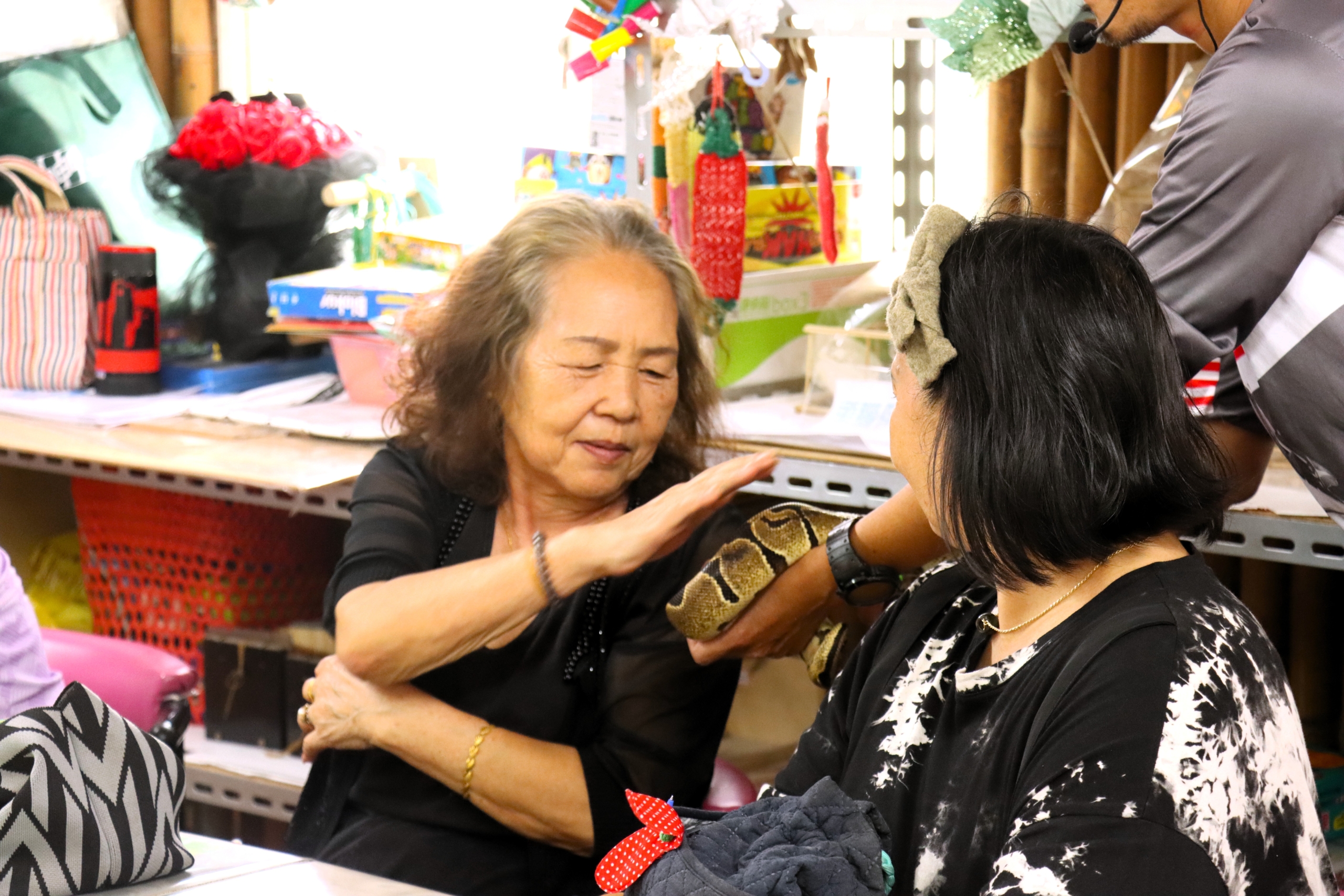
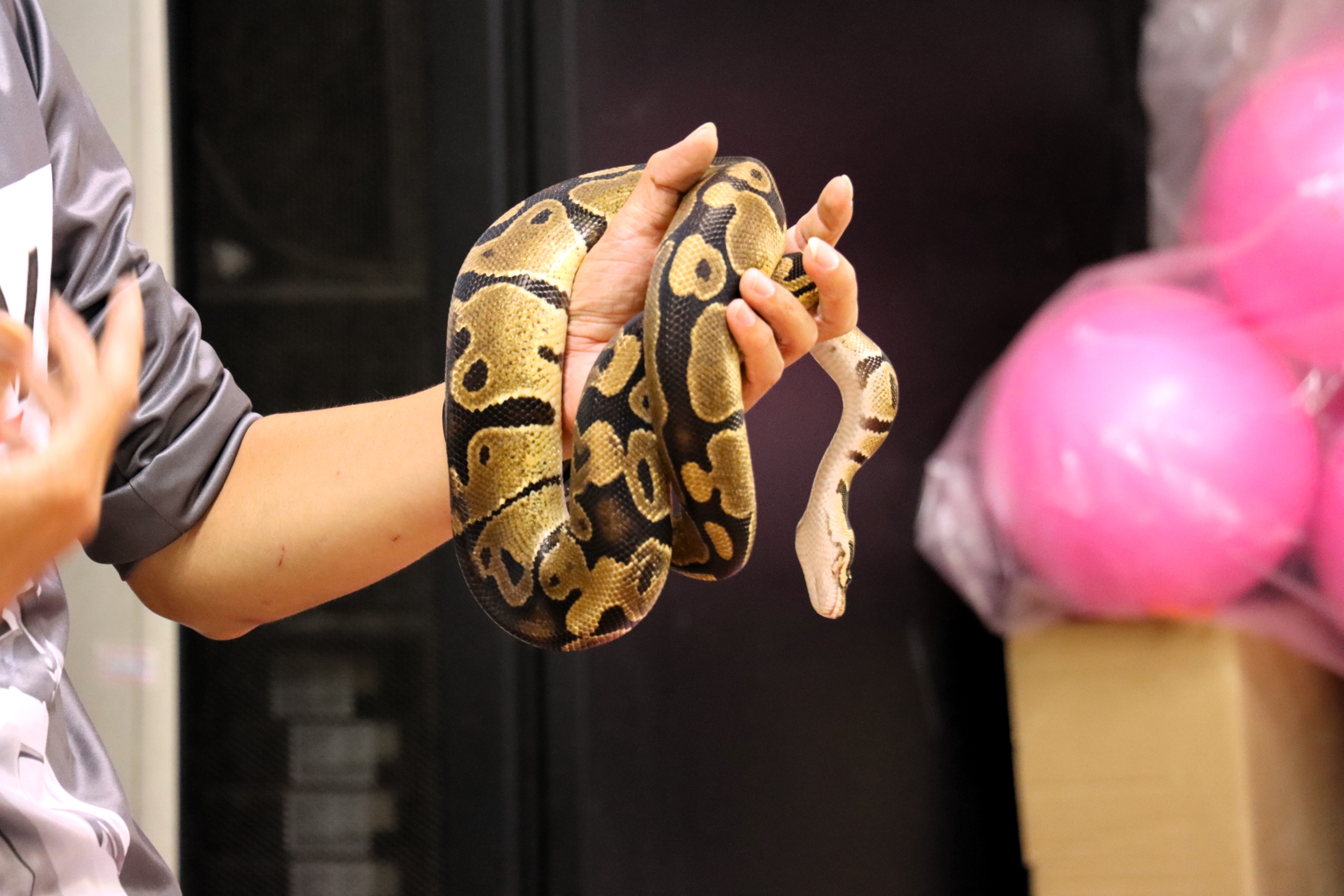
Then came the part I had been waiting for—the live snake demonstration! The instructor brought three snakes, including a black kingsnake and a ball python. They rested calmly in his hands and, apart from occasionally flicking their tongues, almost looked like beautifully crafted models. Under his guidance, the participants also had a chance to touch them gently. Everyone seemed both nervous and reluctant to miss the opportunity. Their hesitation and curiosity were endearing, and the room filled with surprised exclamations and laughter. The session drew to a close with an experience that was both a little nerve-racking and a lot of fun.
Written by Hsu, Chia-Jou
Edited by Li, Ruo-Jia
Photos by Hsu, Chia-Jou