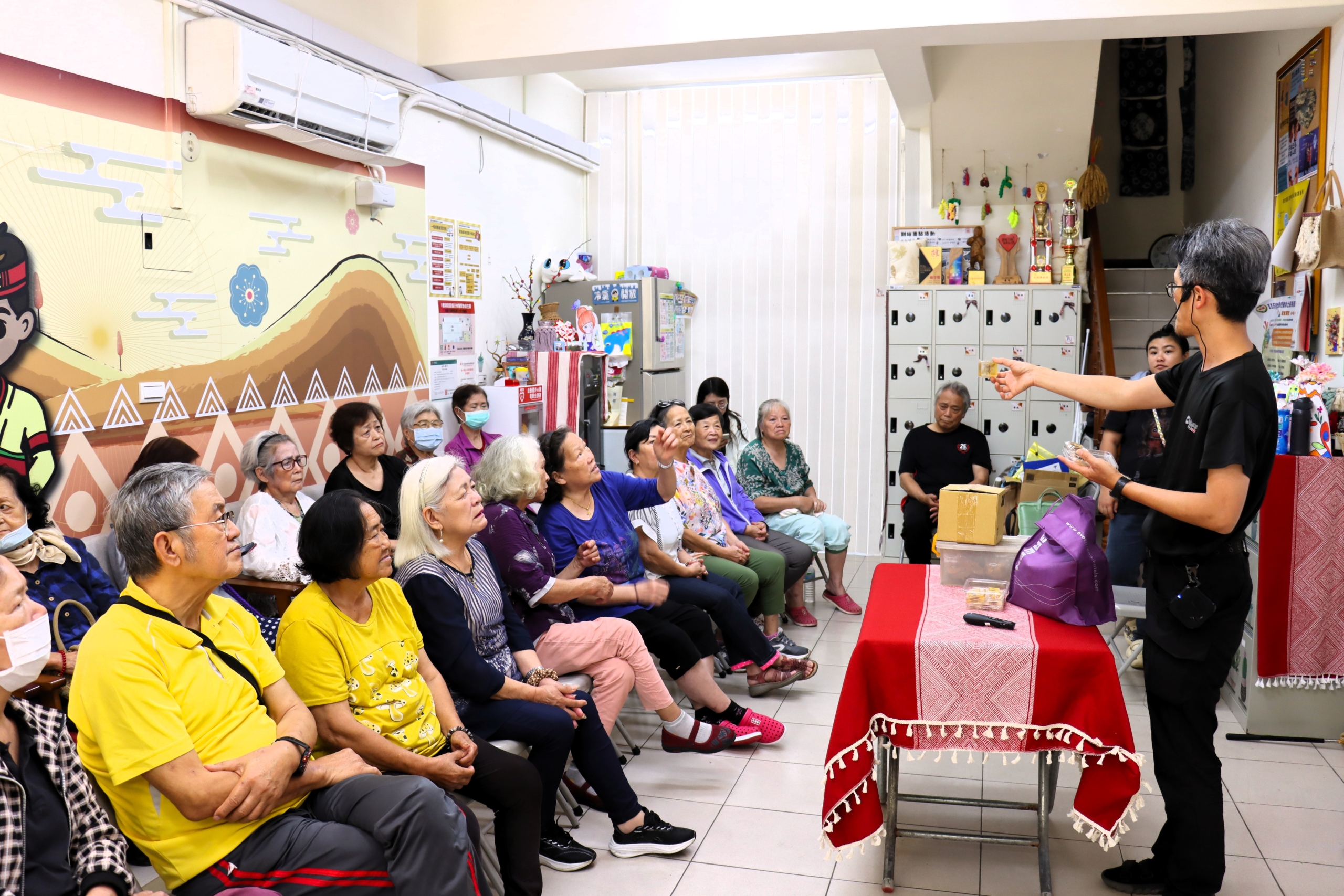
As a student reporter, I had the opportunity to attend a hornet safety awareness workshop at the Luofu Cultural Health Station. Unlike previous outreach activities, where our audience consisted mainly of elementary school students, this event brought me face-to-face with Indigenous elders, offering a completely new perspective on learning and community engagement.
The Cultural Health Station lives up to its name by integrating both cultural and health services into a single community space. Elders gather here to participate in handicraft activities, educational programs, and outings while catching up with friends and neighbors. The station is also equipped with basic health-monitoring facilities, allowing them to regularly check their blood pressure and other health indicators. In remote Indigenous communities, where resources are often limited, this multifunctional space has become an integral part of daily life rather than simply a venue for organized activities.
Before the workshop began, I sat quietly listening to the elders chatting in a natural blend of Atayal and Mandarin. They exchanged stories about recent community events and family life with warmth and ease. I had initially imagined the Cultural Health Station as little more than a gathering place for older adults, but after spending time there, I realized it serves a much deeper purpose. It is a place where friendships are strengthened, traditions are shared, and a strong sense of belonging continues to grow. Although the building itself is modest, the warmth and close-knit atmosphere felt even more genuine than that of many community centers in urban neighborhoods.
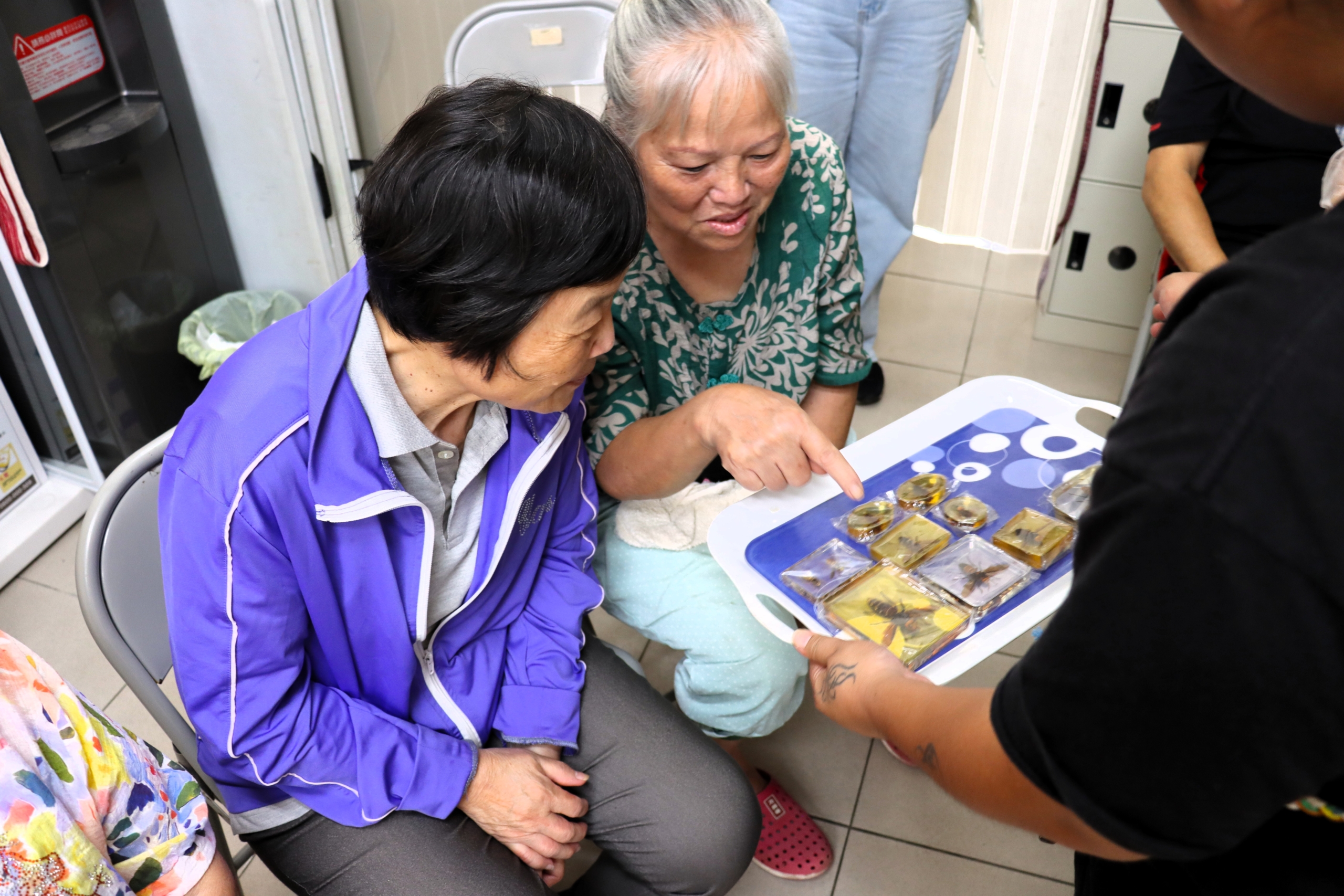
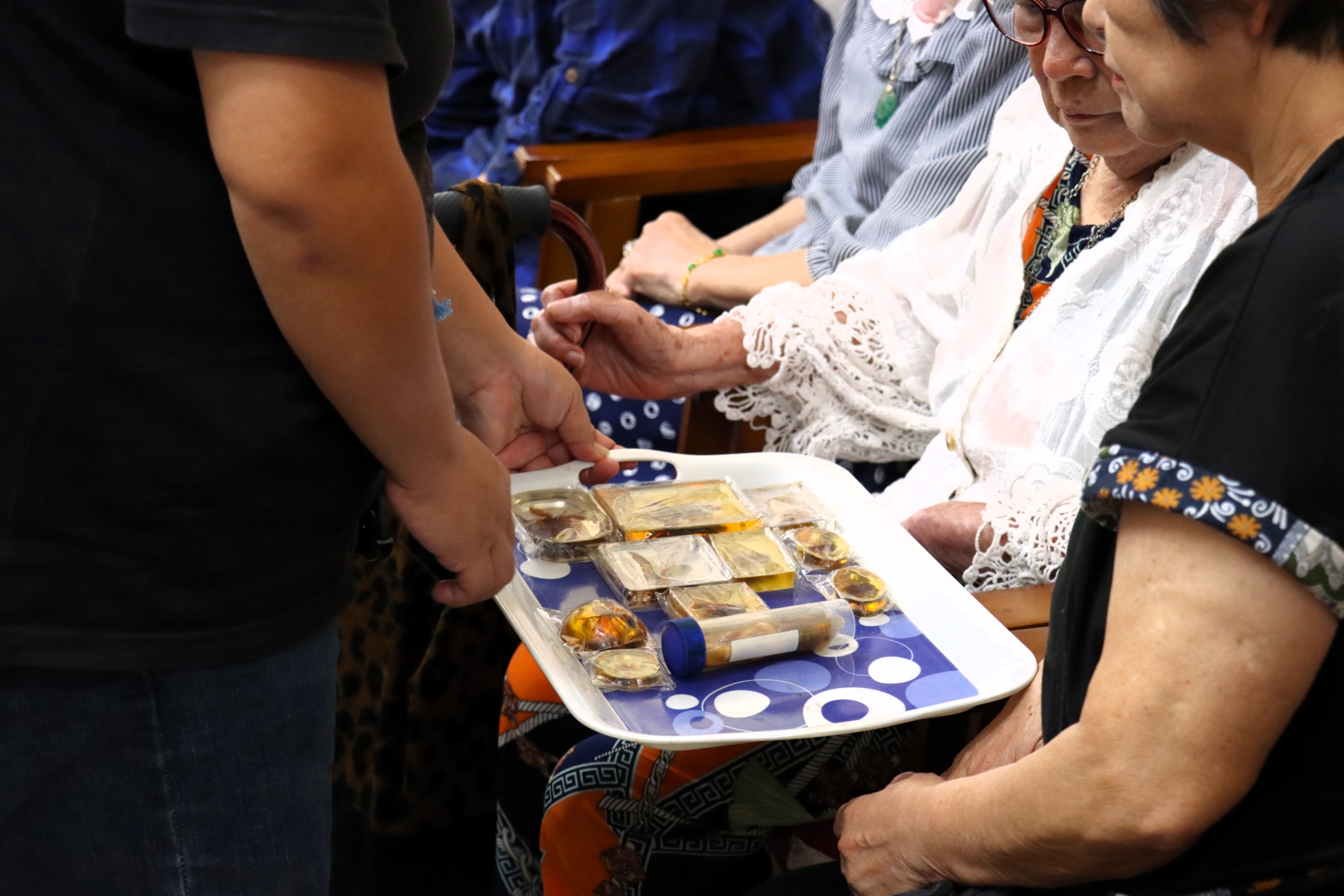
When I learned that the workshop would focus on hornet safety, I immediately recognized the familiar face of our instructor, affectionately known as “Monster Teacher.” The course covered topics similar to those presented during our summer camp at Sanguang Elementary School, including how to identify common bee and hornet species, what to do when encountering a swarm in the wild, and the proper first aid procedures for hornet stings.
Yet despite the familiar content, the atmosphere was entirely different because the audience was different.
For elementary school students, hornets are something they rarely encounter, so while they listened attentively, their interactions were relatively limited. The elders at the Cultural Health Station, however, had spent much of their lives farming or working in the mountains, and many had firsthand experience of being stung. Every time the instructor introduced a particular species, someone would immediately respond with a personal story, followed by another elder sharing a similar experience. The discussion flowed naturally throughout the session, turning what could have been a lecture into a lively conversation.
What impressed me most was the elders’ genuine curiosity. They were not trying to prove how much they already knew; they sincerely wanted to understand more. Some described how they had treated hornet stings in the past, while others asked whether different species were equally aggressive. As the instructor explained the science behind hornet behavior and corrected long-held misconceptions, the elders thoughtfully compared the new information with their own experiences. At that moment, I realized this was far more than a one-way educational session—it was a meaningful exchange of knowledge. The instructor contributed scientific expertise, while the elders brought decades of lived experience. Together, they built a richer and more complete understanding through open dialogue.
One moment, in particular, left a lasting impression on me. When the instructor asked, “Are there any questions?” numerous elders eagerly raised their hands. Their questions were not asked for participation or rewards, but because they reflected real situations they had encountered in their daily lives. Watching the discussion unfold, I was reminded that learning truly has no age limit. Curiosity does not fade with the passing of years; as long as we remain open to new knowledge, there will always be something new to discover.
This experience also prompted me to reflect on the true meaning of University Social Responsibility (USR). USR is about much more than bringing educational programs into a community or organizing a single outreach activity. If a university simply delivers a workshop and leaves, the knowledge shared may soon fade. However, when a team returns to the same community time and again, taking the time to know its people while allowing residents to become familiar with the university, trust gradually takes root and genuine partnerships begin to flourish.
This hornet safety workshop perfectly illustrated that spirit. It was not merely a lesson delivered by an expert. The elders openly shared their stories and practical experiences, while the instructor listened with respect and responded thoughtfully. Everyone became an active participant in the learning process rather than simply a speaker or an audience member.
In the end, what mattered most was not who was teaching and who was learning. Instead, every participant walked away with new insights gained through meaningful conversation. Perhaps this is what makes a university’s long-term engagement with local communities truly valuable—not a one-way act of service, but a journey of mutual understanding, shared learning, and collective growth.
Written by Su, Chi-Hsien
Edited by Li, Ruo-Chia
Photos by Su, Chi-Hsien