
Around noon, I joined the student teaching team on a visit to Yisheng Elementary School for an environmental education outreach program. The class consisted of four energetic and enthusiastic children, and the theme of the lesson was “Natural Resources and Their Sustainable Use.” Through a series of interactive activities, the students learned about environmental protection and the importance of using natural resources wisely.
The teaching team was made up of five university student instructors, accompanied by the class teacher and several faculty members from National Central University. Although the classroom was small, it quickly filled with energy and excitement.
The lesson began with an introduction to key concepts and environmental knowledge. Since it was right after lunchtime, some of the children were still shaking off their post-lunch drowsiness. Fortunately, the instructors soon incorporated interactive questioning and discussion into the lesson. By encouraging students to answer questions and share their ideas, the classroom atmosphere became much more lively, and it was clear that the children were actively thinking and engaging with the content.
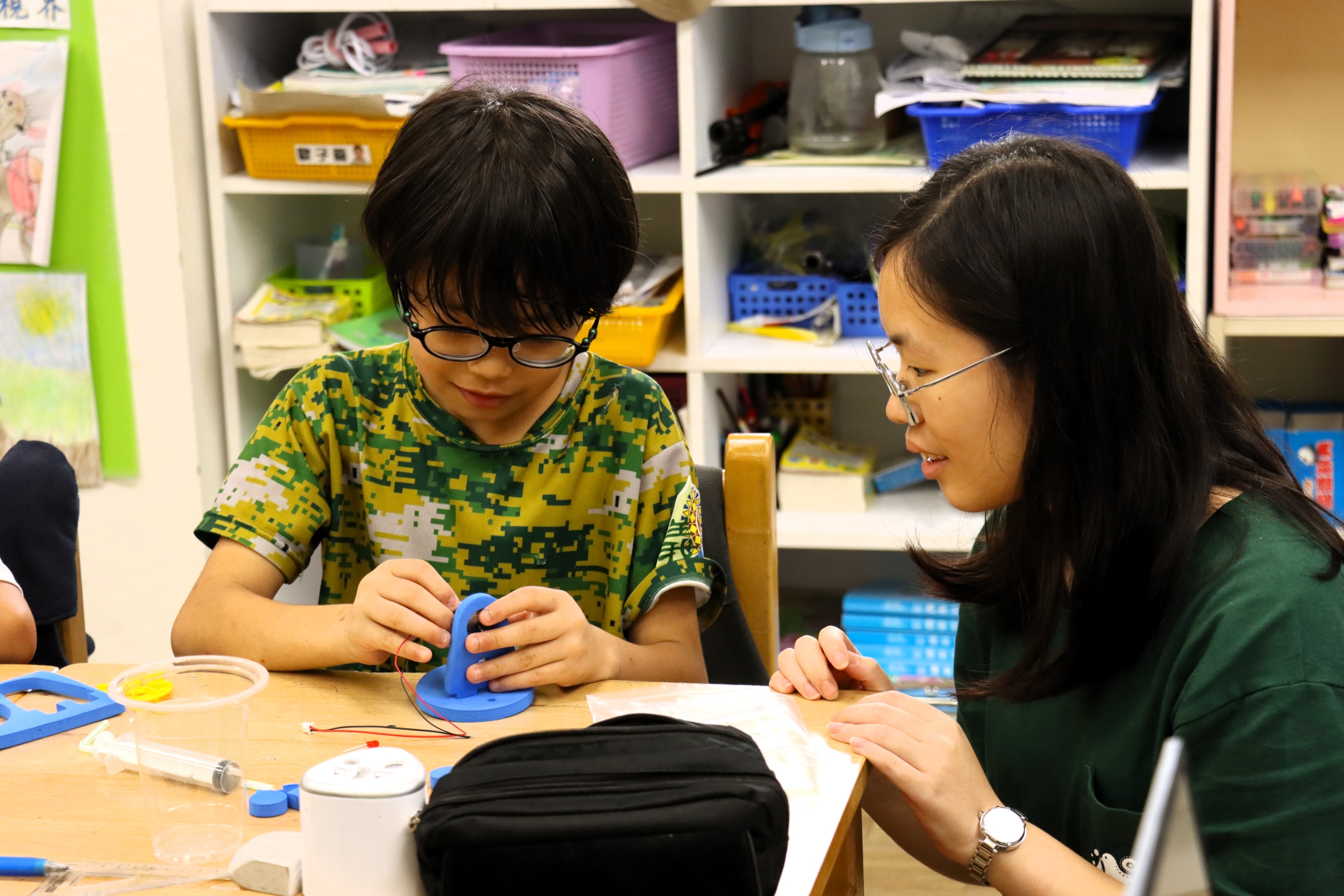
The highlight of the first session was a hands-on experiment in which the children built miniature models to simulate hydropower and wind power generation. Each student received a kit containing unassembled components, a syringe, and a small light bulb. While the final product looked simple, the assembly process required patience and teamwork, involving tasks such as threading wires and making small modifications to the materials.
With guidance from the instructors and teachers, all four students successfully completed their devices. The children then tested their creations: some blew through straws to simulate wind power, while others used syringes to inject water and imitate hydropower generation. After plenty of effort—and a lot of red faces from blowing and tired hands from pushing syringes—the light bulbs finally lit up. Cheers erupted throughout the classroom as everyone celebrated the success of the experiment.
Even when the class break began, the students continued enthusiastically experimenting with their devices, determined to make the bulbs shine even brighter.
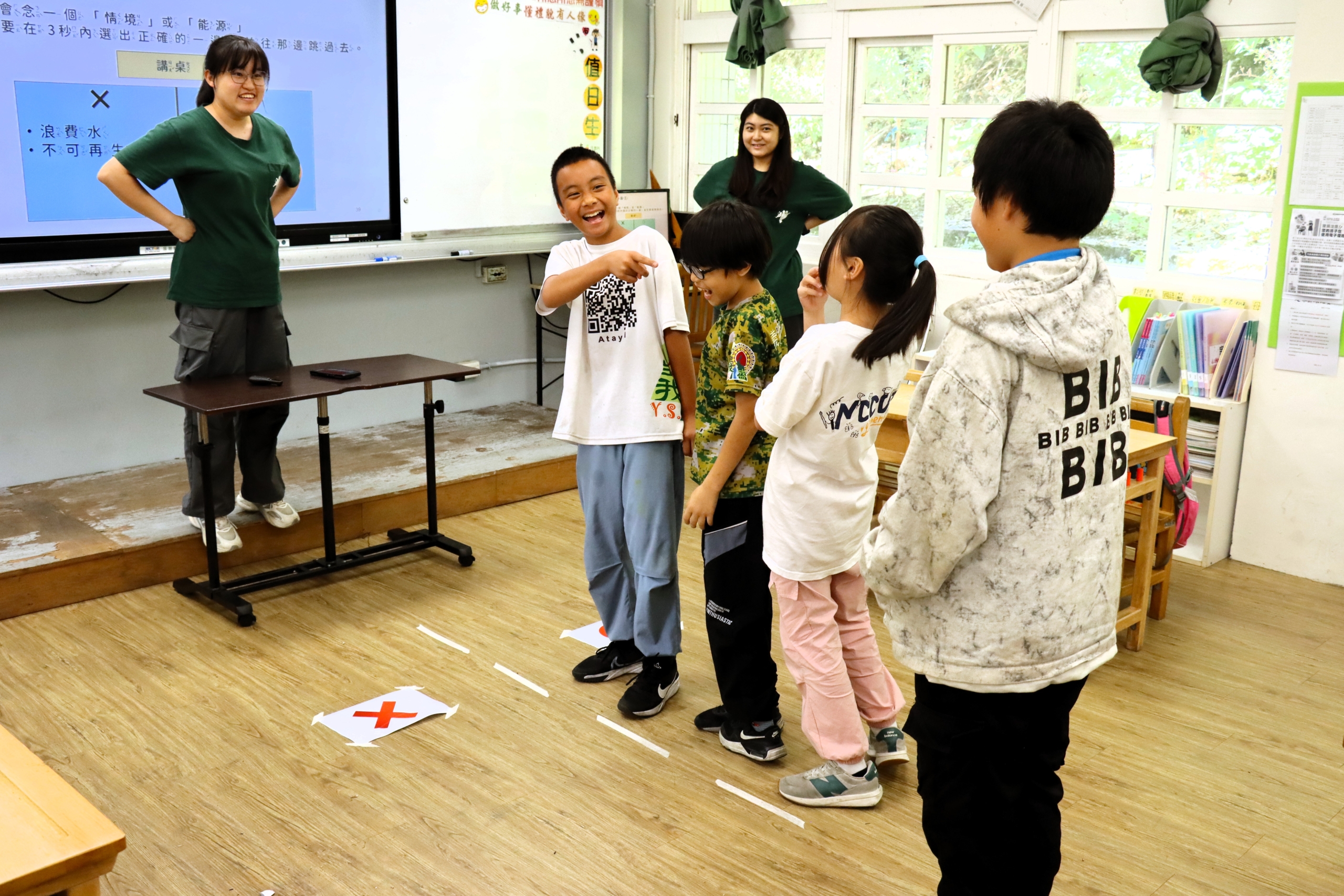
After a short break, the second session began with an educational game designed to review the concepts introduced earlier. The instructors cleared space in the middle of the classroom and marked a line on the floor with tape. One side represented “True,” while the other represented “False.” Students listened to a series of questions and demonstrated their answers by jumping to the corresponding side.
The game quickly became a favorite activity. The children eagerly participated, carefully considering each question before making their decisions. Occasionally, when the questions became more challenging, some students would sneak a glance at their classmates before deciding where to jump. This led to several adorable moments as everyone tried to avoid being the first to answer. The activity created a cheerful atmosphere and demonstrated how learning can be both educational and fun.
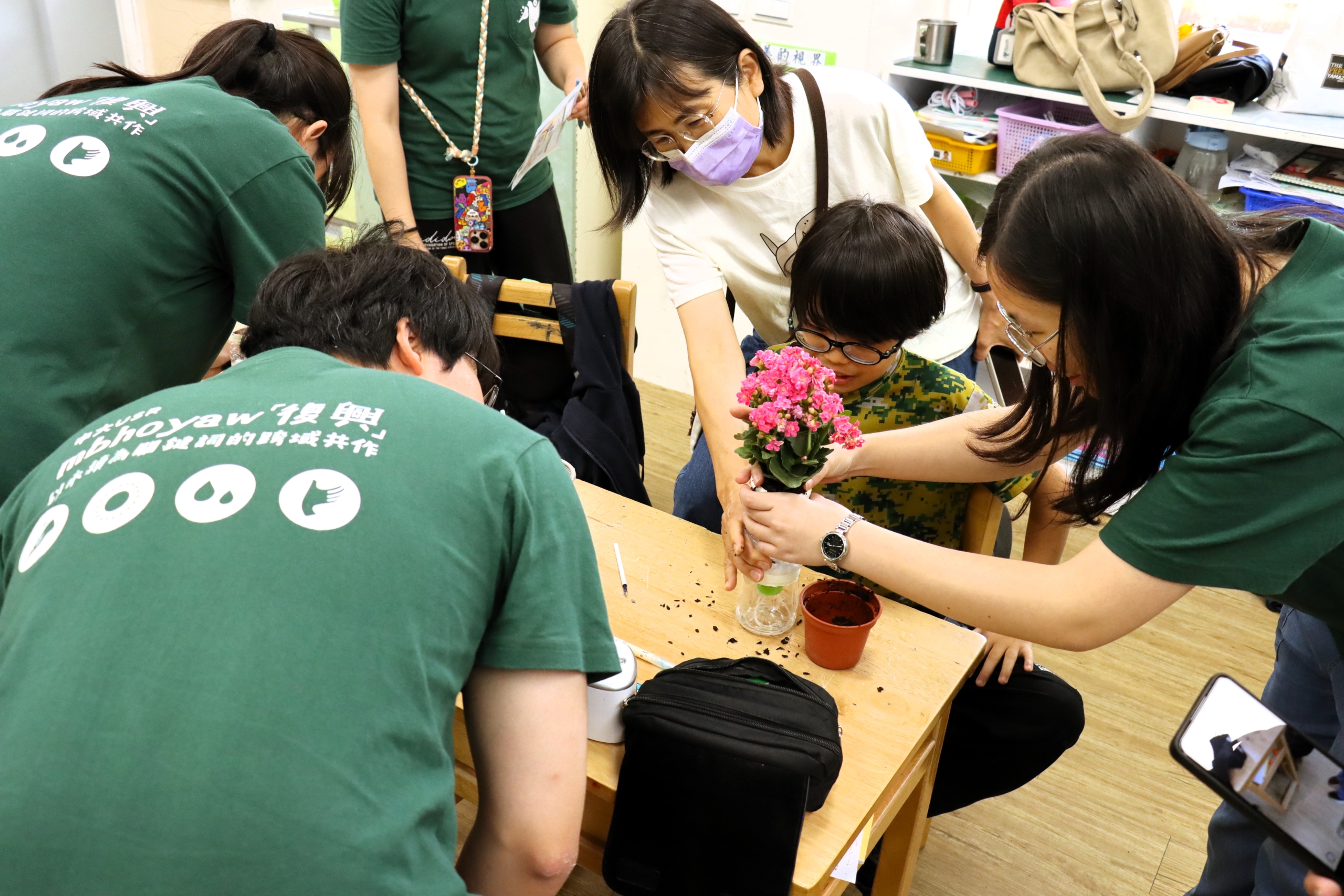
The second half of the lesson featured another hands-on project: creating a self-watering planter. Unlike ordinary potted plants, this design uses the principle of capillary action to continuously provide water to the plant.
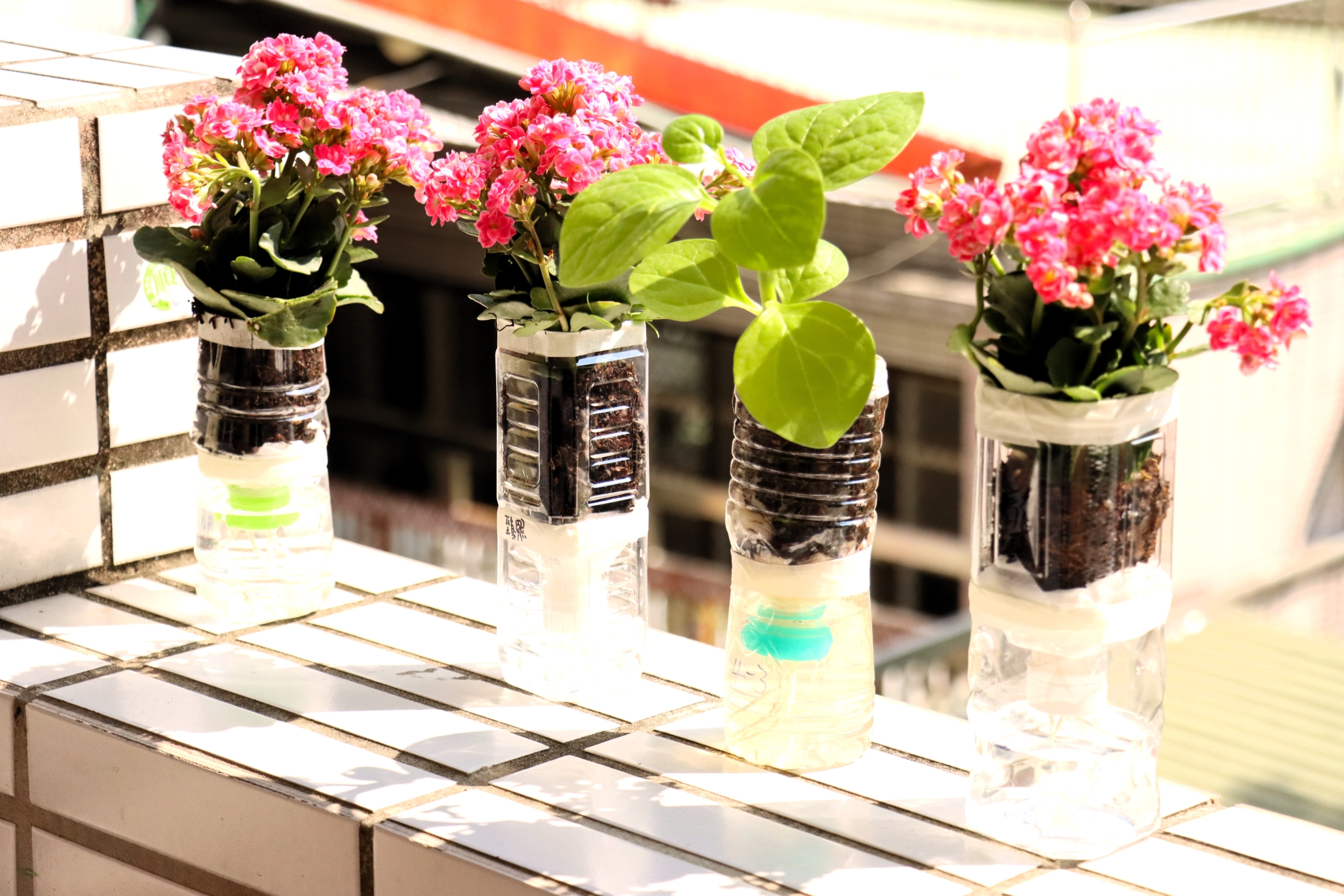
The planter consisted of three layers. Water was stored at the bottom, connected by a cotton string to a middle layer filled with moist cotton and absorbent material. The plant was then placed in the upper layer, with its roots surrounded by the moisture-retaining medium. Through capillary action, water could gradually move upward and nourish the plant without the need for frequent watering.
The most challenging part of the activity was cutting and assembling the recycled plastic bottles and properly arranging the materials in the middle layer. If assembled incorrectly, the plant would not be able to absorb enough water. Despite the challenge, the children demonstrated remarkable patience and creativity. Each completed planter was neatly assembled, and the plants were carefully placed and arranged.
As the lesson came to an end, the students proudly carried their finished planters outside to place them in the sunlight. Watching the small green plants lined up under the warm afternoon sun was a truly heartwarming sight. Hopefully, the next time we visit, these plants will have grown strong and healthy.
The event concluded with a group photo featuring all the students, teachers, and university volunteers. It was a joyful and memorable experience, made possible by the creativity and dedication of the student teaching team. Their engaging lesson design and enthusiastic teaching style created an inspiring learning environment for the children.
As graduation approaches, I am especially grateful to have participated in such a meaningful and enjoyable outreach activity. It was a rewarding experience for everyone involved, and without a doubt, the program was a great success.
Written by Hsu, Chia-Jou
Edited by Li, Ruo-Chia
Photos by Hsu, Chia-Jou